•
Boostiko Team

Forex Broker Registration to Activation Email Strategy
A Forex Broker Registration to Activation Email Strategy is not a longer welcome sequence. It is an operating system for moving a prospect from a stated interest to the next legitimate account step, while keeping service communications, financial promotions, consent, risk disclosure, and deliverability under control.
For a broker, registration is a weak signal. A visitor may create a profile, abandon a verification form, fail to confirm an address, need help with documents, or decide the product is not suitable. Treating every registrant as ready for a sales push creates pressure where the customer needs clarity.
The better job is simple: identify the account state, send the minimum useful message for that state, and give the recipient a clear path to help. The sequence should support informed decisions, not manufacture urgency. Local rules, product permissions, client classification, and the broker's licensing footprint determine what can be sent and to whom. Compliance and legal teams should review every market-specific journey before launch.
The business problem: registration does not equal activation
Broker funnels commonly leak at the handoffs. The acquisition system records a lead. The account system records a registration. The verification provider records an incomplete check. The platform records no first login. The support desk sees unanswered questions. None of those systems automatically tells the customer what to do next.
The result is usually one of two failures. The first is silence. A registrant who needs a document checklist receives nothing until a generic campaign arrives. The second is noise. A person waiting for an identity review receives pricing language, product promotion, and several conflicting calls to action.
Define activation in an operational, jurisdiction-aware way. It might mean a verified account with required agreements accepted and secure platform access established. It might include another permitted milestone for the product and market. Do not define activation as a deposit, a trade, or a commercial outcome unless your governance model specifically allows that measurement and its use. The email program should record behavior, not imply that a customer ought to fund or trade.
The program also needs a message-classification rule. An email that confirms registration, requests a missing document, reports a security event, or explains a status may be service or transactional content. An email that promotes a feature, bonus, product, or trading opportunity may be marketing. Under the US CAN-SPAM framework, the primary purpose matters, and mixed messages may be commercial when promotional content dominates or appears first.1 Keep the operational message operational. Do not hide a campaign inside an account-status email.
Lifecycle theory: use state, intent, and permission together
A reliable lifecycle combines three facts before deciding what to send: state, intent, and permission.
State is the verified record of where the person is in the account journey. Examples include registered but email unconfirmed, profile incomplete, documents submitted, verification pending, verification needs action, terms awaiting acknowledgment, platform access ready, and inactive after access. State must come from the system of record or an approved integration, not an email-platform guess.
Intent is the action that shows what help is useful now. A click on “finish verification” is stronger evidence than an open. A visit to the document guide may justify a support-oriented reminder, subject to applicable privacy rules. Do not treat an open as proof that someone read, understood, or agreed to anything.
Permission is the rule that decides whether marketing can be sent. In the UK, the ICO says marketing email to individuals generally needs specific consent, subject to a limited soft opt-in for an organisation's own previous customers under stated conditions.2 Other jurisdictions have different requirements. Capture the consent language, collection source, timestamp, market, and preference at registration. Then make the segment query that record before every promotional send.
This prevents a common mistake: using lifecycle labels as a workaround for promotion rules. “Unverified lead” is an account state, not marketing permission. Each email needs one trigger, owner, primary action, and exit condition. Stop document reminders when verification completes, preserve marketing suppressions, and do not promise a review time the operations team cannot meet.
Practical implementation: build the journey from events, not campaigns
Start with a shared event map. Agree the owner and definition of each event. “Document rejected” needs an approved reason and help route; “verification completed” needs a reliable timestamp. Never send credentials in plain email. The following is a starting design, not a legal template.
Account state | Email purpose | Primary action | Exit condition |
|---|---|---|---|
Registration created | Confirm email ownership and explain the next account step | Confirm email | Email confirmed or link expires |
Profile incomplete | Explain exactly which required fields are missing | Resume secure application | Required fields submitted |
Documents needed | Give an approved checklist and secure upload route | Upload documents | Documents received |
Review pending | Set an honest status expectation and support route | View application status | Review completed or needs action |
Review needs action | State the precise, approved correction needed | Resubmit through secure portal | Valid resubmission received |
Account access ready | Explain safe first login and where to find product education and risk information | Sign in securely | First secure login or support request |
Put account information first and state the reason for contact in the subject line, such as “Action needed: complete your identity check.” Avoid wording that implies urgency, returns, or a result. Use modular content. A service email needs the status, next step, support route, and approved disclosure. A marketing email needs separate approval, eligibility, consent, unsubscribe, and local disclosures. Do not add a promotional module to a service message.
Use a controlled decision tree for timing. Send a registration confirmation immediately when the address is submitted. Send a reminder only if the person has not completed the relevant action and has not entered a conflicting state. Pause non-essential reminders after a reasonable number of attempts. Route repeated friction to human support rather than automating more pressure.
Pass identifiers through documented events across account opening, verification, CRM, email, and analytics. Log consent changes, template versions, approvals, sends, bounces, complaints, and suppressions. Keep sensitive identity data, credentials, and risk decisions in authenticated systems, not inboxes.
Protect sender reputation from the beginning. Yahoo requires SPF and DKIM, a valid DMARC policy, aligned authentication, a one-click list-unsubscribe function for marketing or subscribed messages, and a visible unsubscribe link. It says bulk senders should keep spam complaints below 0.3%.3 Separate transactional and marketing streams. Test every branch, including secure-link expiry, suppressions, and duplicate events, with seeded accounts. Compliance should review the rendered email, not just the copy document.
Agency versus in-house: decide by control, not by headcount
An in-house team is closest to product changes and approvals, but may lack specialist production, integration, or deliverability capacity. An agency can add lifecycle discipline and production systems, but should never decide legal eligibility or approve a financial promotion.
Model | Best fit | Main strength | Control needed from the broker |
|---|---|---|---|
In-house | Stable stack and dedicated lifecycle owner | Direct access to operations and product changes | Specialist review for complex design, technical, or deliverability work |
Agency | Need to build or repair a lifecycle program quickly | Cross-functional execution method | Clear data access, approved claims, compliance sign-off, and accountable internal owner |
Hybrid | Most growing brokers | Broker owns policy and data; specialist partner accelerates execution | Shared brief, template governance, event documentation, and release process |
For most growing brokers, hybrid works well: retain customer data, policy, final approval, and accountability in-house while using specialists for execution and training.
A theory-led teardown: remove friction before adding persuasion
Consider a hypothetical email sent two days after registration: “Deposit today, unlock advanced tools, and do not miss market moves.” It goes to every registrant, including people who did not confirm their email, are under review, or opted out. It identifies no blocker and assumes intent.
The flaw is structural. It blends promotion into a lifecycle moment and can imply urgency. In the UK, the FCA requires communications and financial promotions to be fair, clear, and not misleading.4 Rules vary by jurisdiction, so local review is essential.
A better message says: “We need one more document to continue your account application.” It identifies the approved document category, gives a secure link and help route, and stops when the document is accepted. A separate promotional journey may follow only with valid permission and approval. In US retail forex, required written disclosure and signed, dated acknowledgment must occur before account opening.5 Email can guide a customer to the approved secure process; it should not replace it or alter disclosure language.
The Boostiko solution: five functions in one operating model
Boostiko brings together the five functions that a Forex Broker Registration to Activation Email Strategy needs: design, copy, operations, technical integration, and deliverability.
Design creates clear, mobile-readable hierarchy without hype. Copy turns account language into instructions while separating service from promotion. Operations defines triggers, owners, exceptions, and approvals. Technical integration connects approved events, suppressions, secure links, logging, and stop rules. Deliverability maintains authentication, stream separation, list hygiene, complaint monitoring, and preference controls.
If your registration emails are out of sync with verification and platform-access steps, contact Boostiko to map a broker-specific activation journey. Bring your current email examples, event list, target markets, and approval process. We can help turn them into a controlled lifecycle that supports account completion without making unapproved claims.
FAQs
What is the first email after forex broker registration?
Usually, it confirms the email address or account creation and explains the next secure application step. Review its content, timing, and classification for the relevant jurisdiction and product.
Should activation emails ask customers to fund or trade?
Not by default. Define activation around permitted operational milestones. Messages encouraging funding or trading may be financial promotions and need the right audience rule, disclosures, approval, and local review.
Can a verification reminder include a promotional offer?
Avoid mixing them. Send the verification message first. Consider a separate marketing message only where permission and compliance requirements are met.
How do we measure a registration-to-activation lifecycle?
Measure confirmation, application completion, document submission, verification resolution, secure access, support contacts, bounces, complaints, unsubscribes, and time in state. Do not claim financial outcomes without an approved method.
Who approves the sequence?
The broker retains accountability. Include the business owner, compliance or legal reviewer, operations, data/privacy, technical, and support owners. Partners can prepare and test work, but cannot replace regulated-entity accountability.
References
1. CAN-SPAM Act: A Compliance Guide for Business, Federal Trade Commission
2. Electronic mail marketing, Information Commissioner's Office
3. Deliverability: Sender Requirements & Recommendations, Yahoo
4. COBS 4.2 Fair, clear and not misleading communications, Financial Conduct Authority Handbook
5. 17 CFR § 5.5 Distribution of Risk Disclosure Statement for Retail Forex Transactions
Continue reading



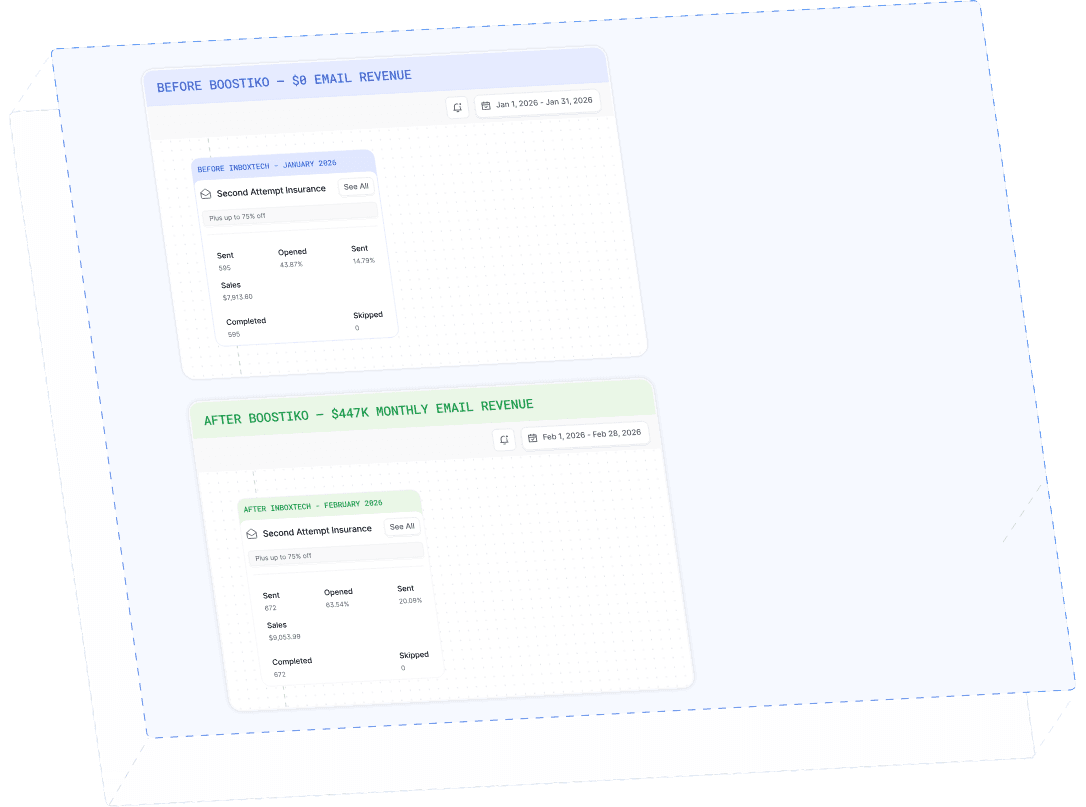
Case Study 01
Leading Prop Firm
$0 - $447K in 3 months
40.7% of total revenue
14 days time to first revenue
$0 to $447,115/month in Email Revenue in 90 Days