•
Boostiko Team

Crypto Prop Firm Account Emails: Keep Updates Clear
A crypto prop firm account email should answer one question fast: what changed, what does it mean, and what should the trader do now?
That sounds simple. It is where many inboxes become confusing.
A trader gets an account status update, but the top of the message promotes a new offer. A rule change email does not link to the exact rule that changed. A verification update uses the same template as a campaign. A support link leads to a general help center instead of the relevant action.
Those details create tickets and reduce trust. They also make it harder for a marketing team to know whether a message is a service notice or a promotion.
A good crypto prop firm email marketing system keeps the two jobs separate. Account notices explain a real account event. Promotional campaigns invite a subscriber to consider an offer. Each message has its own trigger, audience, template, review path, and measurement.
This article is general marketing and operations guidance. It is not legal, financial, trading, or regulatory advice. A firm should have qualified reviewers assess its product, markets, permissions, and final copy before sending.
Start with a message map, not a campaign calendar
The fastest way to improve account emails is to list the events that can change a trader's experience. Do this before writing any copy.
A useful first map may include:
Account created
Email address confirmed
Identity or verification status changed
Evaluation started
Evaluation milestone reached
Account rule updated
Account access issue detected
Payment or payout status updated
Support case received or resolved
Account paused, closed, or restricted
Each event needs an owner and a source of truth. The source might be the account platform, payment system, support desk, or a reviewed policy record. The email platform should receive a clean event with the right account state. It should not decide a trader's status by itself.
For every event, record five fields:
Trigger: What system event starts the message?
Audience: Which exact account state should receive it?
Message type: Is it operational, security related, support related, or promotional?
Required facts: What must the trader see to understand the update?
Next action: Where should the trader go to resolve the issue or learn more?
This map prevents a common failure: sending a broad campaign because a real account update is difficult to automate. Broad sends create noise. A real account message should be tied to the account state that caused it.
Separate operational notices from promotional email
An operational notice exists because something about a current account, account relationship, or requested action changed. A promotional email exists to advertise or promote a product or service.
The distinction matters for content, consent, and internal review. The FTC explains that the primary purpose of a message determines whether it is commercial or transactional or relationship email. A message that updates a customer about an ongoing account relationship can qualify as transactional or relationship content, but the categories are narrow. When commercial copy dominates the subject line or early part of a mixed email, the message can be treated as commercial instead.1
Use that as an operations rule, not as a shortcut around legal review.
Keep account notices focused
A good account notice should contain:
A plain subject line that names the update
The relevant account identifier or non sensitive reference
What changed and when it took effect
The impact on the trader's next available action
A direct link to the relevant account page or policy record
A clear support path
For example, an account rule update email should lead with the rule name, effective date, affected account type, and link to the current rule page. It should not open with a limited time discount or a new evaluation offer.
If a team wants to add a campaign block, create a separate promotional message. This keeps the account notice useful when a trader searches for it later. It also makes reporting cleaner because account open rates do not get mixed with offer interest.
Treat security and access updates as a separate class
Security related emails need even tighter controls. Examples include a new device alert, password reset request, login problem, or account recovery update.
Keep these messages short. Do not include promotional copy. Do not ask the user to share credentials or sensitive information by email. Link to the authenticated account area where possible, and use a familiar sender identity so the recipient can recognize the message.
The goal is clarity, not clever copy.
Build one fact record for every account message
A message is only as reliable as the facts it receives.
For each operational template, create an approved fact record. It should include the event name, approved subject line, required account fields, allowed links, fallback language, support owner, and review date. The message should pull from that record rather than from a freeform campaign brief.
For an account rule change, the record might include:
Rule title
Current version link
Effective date and time zone
Affected products or account states
Short plain language summary
Approved risk or eligibility wording where relevant
Support route
Revision owner
This gives operations, support, and compliance teams the same source to check. It also reduces the risk of one channel saying something different from the account dashboard.
For cryptoasset promotions directed at UK consumers, the FCA says the financial promotions regime applies broadly across communication types and requires relevant promotions to be fair, clear, and not misleading. The FCA also notes that certain journeys require risk warnings and positive frictions.2 The exact scope depends on the communication, audience, product, and jurisdiction. Treat this as a reason to use a real review process for promotions, not as text to paste into every account notice.
Write the account email in this order
A clear email follows the reader's decision path.
1. Name the update in the subject line
Use a subject that reflects the actual message. Examples:
Your account verification status has changed
Update to the rules for your account type
Your support request has been received
Action needed to complete your account setup
Avoid vague subjects such as “Important update” when the email can say what changed. Avoid promotional wording in an operational subject line.
2. Put the account fact first
The first screen should explain the event in plain language. State the update, the affected account or account type, and the date or time that matters.
Do not make the reader scroll through branding, testimonials, or an offer before finding the reason for the email.
3. Explain the effect on the next action
A trader needs to know whether they can continue, need to upload something, need to review a rule, or should contact support. Give one clear next step. If no action is needed, say that too.
4. Link to the exact destination
A generic home page creates more work. Link to the account page, verification page, rule record, support form, or policy page that matches the update. Check the destination after the message is built. A correct CTA label with the wrong link is still a broken experience.
5. Give a human support route
End with a simple support path. Include the relevant help category or ticket route where possible. The support team should know which template was sent and which event triggered it.
Keep promotions in a separate crypto prop firm email flow
Promotional messages still have a place. The point is to send them with clear consent, accurate terms, and a purpose that is separate from account operations.
The Information Commissioner's Office says marketing emails to individuals generally require specific consent unless a limited exception applies. It also requires a clear opt out route and says marketers must not conceal their identity.3
That means a promotion flow should have its own audience rules:
A recorded permission state
A suppression check before every send
A clear sender name and reply path
An unsubscribe route that works
A source of truth for offer terms and eligibility
A review step for claims, risk language, and relevant market requirements
Do not use an account update to bypass a marketing suppression. If a recipient opted out of marketing, that does not remove the need for real operational notices. It does mean a promotion belongs in a separately governed campaign.
For marketing communications within the stated MiCA scope, Article 7 requires the communication to be clearly identifiable and fair, clear, and not misleading. It also requires consistency with the cryptoasset white paper where one is required.4 A firm should determine whether and how the rule applies to its own product and audience.
Use a simple template library
A template library makes email operations faster without making them generic.
Start with four templates:
Account status update
Use for a change that affects access, progression, or an account state.
Include the account fact, date, impact, direct action link, and support route. Exclude promotional copy.
Policy or rule change
Use when an approved rule, term, or product detail changes.
Include what changed, why the firm is sending the notice, effective date, time zone, affected audience, exact policy link, and support route. Do not summarize a complex rule so aggressively that the summary creates a new meaning.
Support confirmation
Use when a ticket is received, updated, or resolved.
Include the ticket reference, concise issue summary, current status, expected next step if known, and a secure route to reply or review the case.
Promotional campaign
Use for a separate offer, education campaign, or product announcement.
Include the exact offer or topic, eligibility information, end date when there is one, current terms link, clear sender identity, and unsubscribe mechanism. Send only to the audience that is eligible and permitted to receive it.
Each template should have an owner. No template should be copied into a campaign without checking the current rule or offer record.
Protect deliverability while the program grows
Clear account emails also support deliverability. People are less likely to mark a message as spam when they recognize the sender and understand why they received it.
Google says all senders to personal Gmail accounts need SPF or DKIM. Bulk senders need SPF, DKIM, and DMARC, and marketing or subscribed messages must support one click unsubscribe and include a visible unsubscribe link in the message body.5
Apply the technical basics across the whole program:
Authenticate every sending domain
Keep the From domain aligned with the authenticated domain
Use separate internal labels for operational and promotional templates
Suppress recipients who opted out of marketing before campaign sends
Watch bounces, complaints, and engagement by message type
Keep a plain text version and stable sender identity
Test account links and unsubscribe routes before release
Operational and promotional messages can use the same sending domain if the program is well managed. The important part is governance. Teams need to know why a message was sent, who received it, and what the recipient can do next.
Measure the right outcome for each message type
Do not judge every email by revenue.
For operational notices, useful measures include successful completion of the next action, support ticket rate, repeat contact rate, time to resolution, and link success. If a rule change notice produces a large volume of identical tickets, the content or destination needs work.
For promotional email, measure eligibility, delivery, opens and clicks in context, conversion events where they are valid, opt outs, spam complaints, and revenue attribution with appropriate limits. Do not turn an account update open rate into a campaign performance claim.
Keep a short monthly review:
Which account messages created the most support demand?
Which templates had broken or unclear destinations?
Which promotional segments had rising opt outs or complaints?
Which facts or rules changed and need new template approval?
Which account events still require manual work?
This review turns email from a creative queue into a reliable product operation.
How Boostiko builds clearer account email systems
Boostiko helps crypto prop firms map the account journey, separate operational notices from promotional campaigns, and build templates that are easier for traders and support teams to use.
The work starts with the source events, account states, consent rules, current terms, and support process. Then we build the email structure, campaign logic, copy, design, QA checklist, and deliverability controls around the real product journey.
The goal is not to send more messages. It is to make every necessary message easier to understand and every promotion easier to govern.
If you want to map your current crypto prop firm email marketing system, book a strategy call with Boostiko.
References
Continue reading



Case Study 01
Leading Prop Firm
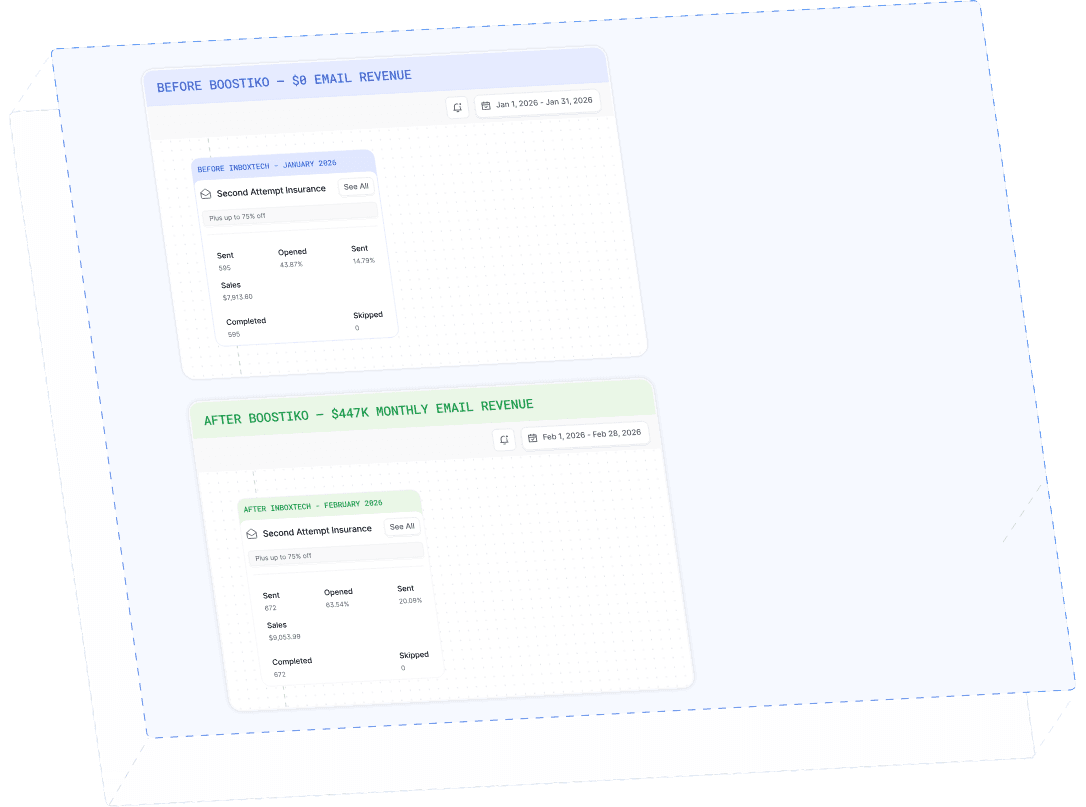
$0 - $447K in 3 months
40.7% of total revenue
14 days time to first revenue
$0 to $447,115/month in Added Revenue in 90 Days