•
Boostiko Team

Perpetual Prop Firm Offer Emails: Make Every Term Clear
A perpetual prop firm offer email has one job: tell the reader exactly what the offer is and where to verify it.
That sounds basic. It is also where many campaigns go wrong. A discount appears in the subject line, a code does not work for every plan, the deadline uses the wrong time zone, or a terms link sends the reader to a generic home page. Support gets tickets. The customer loses trust. The offer may still generate clicks, but the buying path is harder than it needs to be.
Good perpetual prop firm email marketing does not hide the important details. It gives the customer a clear offer, a real end time when one exists, the relevant eligibility rules, and a direct path to the current terms. It also keeps the message separate from account notices and respects the subscriber’s choices.
This article is general marketing and operations guidance. It is not legal, financial, trading, or regulatory advice. Each firm needs qualified review of its own product, target markets, data permissions, promotion terms, disclosures, and final campaign copy.
Start with one approved offer record
The email is not the source of truth for a promotion. The approved offer record is.
Before design or copy starts, a perpetual prop firm should have one current record that defines what the campaign actually does. That record may live in a promotion system, checkout platform, internal operations document, or approved product database. The key point is that the marketing team, support team, and checkout all use the same version.
A useful offer record answers these questions:
What is the exact offer?
Which plan, account type, product, or market does it apply to?
Is the offer a percentage discount, a fixed price, a credit, a bundle, or something else?
Does a code need to be entered?
Who is eligible and who is excluded?
What is the start time, end time, and time zone?
Can it be combined with another offer?
Where can the reader see the complete terms?
What account, payment, refund, or support states should suppress the campaign?
Who approves a change before the email sends?
If the team cannot answer one of these questions in a sentence, the email is not ready. A vague offer record becomes vague copy. Vague copy becomes support volume and lost confidence.
Do not make the subject line bigger than the offer
The subject line should describe the message the customer will find after opening it. It should not turn a conditional discount into a blanket promise.
For example, a subject line such as “Your 20% off code is ready” only works if the recipient has a valid code, the code applies to the expected product, and the conditions are accessible in the email. If the code applies only to selected plans, ends on a specific date, or excludes existing customers, those material conditions need clear treatment in the body and on the linked offer page.
Clear subject line patterns include:
A current offer on eligible evaluation plansYour approved code and offer detailsOffer ends Friday at 23:59 UTCSee eligibility and terms for this promotion
These are not exciting for the sake of it. They are accurate. The email can still have strong design and a clear action, but the headline must not create a different impression from the actual offer.
The FTC says commercial email must not use deceptive subject lines and that the primary purpose of an email determines whether it is commercial. 1 Put simply: if a message is selling an offer, treat it as marketing and build the email accordingly.
Put the material terms where people can see them
A customer should not need to hunt through a footer, open a chat, or complete checkout to understand the basic promotion. The email does not need to reproduce every legal or product term. It does need to make the material conditions easy to find.
A strong offer block can be short:
20% off eligible evaluation plans
Use code: START20
Valid until 23:59 UTC on 15 October 2026. Applies to the plans listed on the offer page. Exclusions and full terms apply.
Primary action: View offer details
The linked page should be the current offer page, not a generic pricing page unless the pricing page contains the same full terms. The code in the email, landing page, checkout, and support macros should all come from the same approved source.
For any material restriction, choose plain wording. If an offer is not valid in a territory, say so. If it cannot be combined with another code, say so. If a customer must meet a stated condition, name it and link to the exact detail. Do not write “limited time only” when the offer is routinely extended or silently reissued.
Use real deadlines, not pressure devices
A deadline can be useful when it is genuine. It tells the customer when the current offer ends. It becomes a problem when it is a visual device that does not reflect the actual promotion.
Before using an expiration email, test the deadline in the systems that matter:
email template
campaign audience rule
offer landing page
checkout code validation
payment and account logic
support documentation
time zone handling
Do this from a test account in the target market. A customer in a different time zone should not see a code expire unexpectedly because one system is using local time and another is using UTC.
Do not add fake countdown timers, invented scarcity, or language that suggests a customer will miss a trading result. An offer can end. A trading outcome should not be implied.
For firms marketing cryptoasset products to UK consumers, the FCA says the financial promotions regime can apply regardless of where the firm is based. It says in-scope promotions need to be fair, clear and not misleading, and describes specific routes, risk warnings, and friction requirements for the relevant customer journey. 2 Product structure and jurisdiction matter, so a firm should have qualified review before treating a promotion as suitable for a particular audience.
Keep promotions separate from account notices
A perpetual prop firm may send operational messages about account status, access, an account change, or a support issue. Those messages should stay focused on their purpose.
Do not take an account notice and fill it with a large discount promotion. That creates two problems. First, a customer who opens an important account message may not find the information they expected. Second, the primary purpose of the email may become promotional.
Use separate audience and template rules:
Marketing offer email: promotes an approved offer and includes the appropriate consent, suppression, and unsubscribe handling.
Account or support notice: addresses a current request, account state, security item, billing question, or product change. It should not be used as a hidden promotional campaign.
The FTC explains that a message with both commercial and transactional content is judged by its primary purpose. 1 That is a practical writing rule too. If the point of the message is to sell, write and govern it as a commercial email. If the point is to solve an account issue, solve the issue first.
Build the audience from permission and account state
A strong offer will still damage the sender domain if it reaches people who did not expect it or should not receive it.
Each campaign should check at least these conditions before a send:
marketing permission or the appropriate lawful basis for the market
current unsubscribe and do-not-contact status
hard bounce and complaint suppression
recent email frequency
current customer status and product eligibility
active refund, dispute, chargeback, or sensitive support state
promotion exclusions and prior use of the code
The ICO says that electronic marketing to individuals generally needs specific consent, with a limited soft opt-in for certain existing-customer situations. It also says senders must not conceal their identity and must provide a valid contact address for opting out or unsubscribing. 3
The exact rule can change by person and market. That is why a “last purchase” export is not an email audience. The audience needs a current permission field, a current suppression status, and a documented reason for receiving the offer.
Do not treat an old contact list as a campaign list. Do not rebuild an audience outside the primary customer record. And do not rely on a person’s prior purchase to ignore an unsubscribe choice.
Write the offer email in a predictable order
A good email should be easy to scan on a phone. Give the reader the key information in the same order each time.
What the offer is. Name the offer in one clear line.
Who it is for. State the eligible product, plan, or customer group.
How to use it. Show the code or direct route to checkout.
When it ends. State a real deadline with a time zone, when relevant.
Where the full terms live. Link directly to the current offer terms.
How to get help. Give a real support route for questions or code issues.
How to opt out. Keep the unsubscribe route visible and functional for marketing messages.
That sequence works because it reduces unnecessary choices. The reader sees the offer before the call to action. They see the material conditions before checkout. And they have a support route instead of being pushed into an unclear transaction.
The design should make this hierarchy obvious. Use a prominent offer line, a visually distinct code if one exists, one primary button, and a legible terms line. Do not shrink important conditions into unreadable grey type while making the price or discount huge.
Control codes and links like product changes
Promotion codes are small pieces of operational infrastructure. Treat them that way.
Every code should have an owner, start and end time, eligible products, usage limit if any, audience rule, and fallback process when the code fails. The person writing the email should not have to copy a code from a chat message. The designer should not have to guess the current price. Support should not be given a different condition sheet than marketing.
Before launch, run a simple proofing pass:
test the primary email link on mobile and desktop
test the code against an eligible plan
test the code against an excluded plan
confirm code behavior at the deadline
confirm terms page content matches the email
confirm the visible discount and checkout total match where applicable
check that the support route reaches an active team
check that suppression rules exclude unsubscribed and ineligible recipients
This is not slow bureaucracy. It is cheaper than correcting a public promotion after customers have shared it.
Protect deliverability while you promote
Offer emails can trigger strong engagement. They can also trigger complaints when frequency is too high or the offer feels disconnected from what the customer signed up for.
Google requires SPF or DKIM for all senders to personal Gmail accounts. For bulk senders, Google requires SPF, DKIM, DMARC, aligned From domains, one-click unsubscribe for marketing and subscribed messages, and spam rates below 0.3% in Postmaster Tools. 4
Practical controls for perpetual prop firm promotion emails include:
send from a stable, recognizable domain and From name
authenticate the sending domain before scaling
maintain one-click unsubscribe where required
cap campaign frequency across all promotional campaigns
exclude people who recently unsubscribed, complained, or hard bounced
pause sends when support or complaint signals rise
separate marketing traffic from critical account or support traffic where appropriate
review reputation, complaints, and delivery outcomes after every major promotion
Avoid optimizing only for open rate or last-click revenue. A campaign with a high open rate and a rising complaint rate is not healthy. Review the full journey: email delivery, clicks, code use, support contacts, checkout completion, refund patterns, complaints, and opt-outs.
Measure the offer without overstating the result
A promotion report should explain what happened without turning correlation into a promise.
Start with direct operational numbers:
eligible recipients
successfully delivered messages
unique visits to the offer page
code entries and successful redemptions
checkout starts and completed purchases
support contacts tied to the campaign
opt-outs, complaints, and hard bounces
refunds, cancellations, or chargebacks where relevant
Use a documented attribution rule. For example, define the window in which a redeemed code is assigned to a campaign. Keep the raw event data available so finance, support, and operations can review it. Do not state that an email “created” every later purchase unless the evidence supports that exact claim.
Segmentation is often more useful than a larger blast. A person who has already used the offer should not get repeated reminders. A person in a support case may need help, not a countdown. A person who opted out should not receive a new promotional message through another list.
What Boostiko builds for perpetual prop firms
Boostiko helps perpetual prop firms build email systems that connect campaign strategy with clean offer logic, strong design, clear copy, audience controls, and deliverability operations.
The work can include lifecycle mapping, offer campaign strategy, copy, design, template production, segmentation, code and link QA, deliverability review, and campaign reporting. Your team retains responsibility for product terms, pricing, technical checkout behavior, customer data, jurisdictional review, trading disclosures, and final approval.
If your promotion emails are unclear, inconsistent across channels, or generating avoidable support tickets, book a call with Boostiko. Bring your current offer terms, email templates, checkout pages, support macros, audience rules, and campaign history. We can identify where the experience breaks and build a clearer system.
FAQs
Should a perpetual prop firm put full terms inside every email?
No. The email should state the material conditions clearly and link to the current full terms. Avoid burying important restrictions in a footer or sending readers to a generic page that does not contain the offer details.
Can an email use a countdown timer?
Use one only when it reflects a real, approved deadline that matches the offer page and checkout logic. Do not use a timer to create scarcity when the offer is routinely extended or available again immediately.
Can a support email include a promotion?
Keep support and account messages focused on their stated purpose. If the primary purpose is promotional, use a separate marketing template with the right permission, suppression, and unsubscribe handling.
How often should a firm send offer emails?
There is no universal number. Start with a documented frequency cap and review delivery, complaints, opt-outs, support signals, and actual redemption behavior before increasing volume.
What should happen when a person opts out?
The customer should be suppressed from future marketing promptly. The same suppression status should be used by the email platform, manual campaign exports, and any other marketing tool.
References
Continue reading



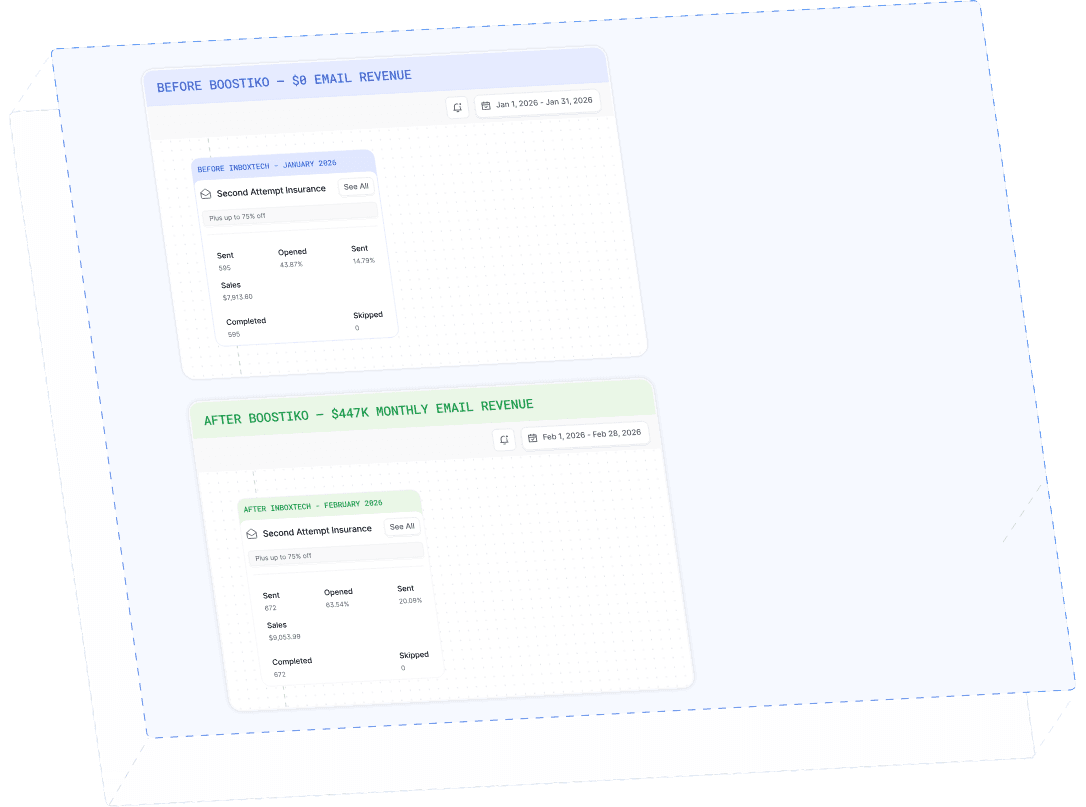
Case Study 01
Leading Prop Firm
$0 - $447K in 3 months
40.7% of total revenue
14 days time to first revenue
$0 to $447,115/month in Added Revenue in 90 Days