•
Boostiko Team

Crypto Prop Firm Win-Back Emails: Re-Engage Without Pressure
A crypto prop firm win-back email is not a countdown timer for every person who stopped clicking. It is a controlled way to reconnect with someone who asked to hear from you, has not been active, and may benefit from a clear update about your program.
For crypto prop firms, that distinction matters. The product can involve high-risk markets, changing rules, account requirements, and a customer base that quickly spots generic hype. A message that says “come back before you miss out” may create a short click spike. It can also create complaints, unsubscribes, support workload, and a weaker sending reputation.
A better system starts with a simple question: why did this person go quiet, and is there a helpful reason to contact them now?
This article explains how to build a direct, compliance-aware re-engagement program. It does not provide legal, financial, or investment advice. Each firm needs its own qualified review for its product, customer markets, permissions, disclosures, and promotional claims.
Do not treat every inactive contact as the same
An inactive list is not one audience. Someone who abandoned a checkout yesterday is different from a trader who lost access six months ago. A customer who opted out is different from a person who never opened your welcome series. A lead who received product information is different from a person who purchased a program.
Start with customer states, not a vague “cold list” label. A practical map may include:
lead who opted in but has not started checkout
checkout starter who did not purchase
buyer waiting for access or verification
customer whose program access is active
former customer with a closed or expired relationship
marketing contact with no engagement over a defined period
person who opted out of marketing
contact with an open support or complaint case
The last two groups are important. An unsubscribe is not a signal to test a new subject line. An open complaint is not a reason to send a promotion. Both need to be excluded from marketing automation.
The Information Commissioner’s Office says marketing emails to individuals generally need specific consent, subject to a limited soft opt-in for a sender’s own similar products and existing customers. It also says firms should maintain a do-not-contact list and avoid hiding their identity. 1
Your internal definition of inactive should therefore be operational. It should include the recipient’s consent status, last meaningful event, customer status, current support state, and market or jurisdiction controls. It should not be based only on whether a pixel registered an open.
Give the email a real reason to exist
The best re-engagement messages have a specific reason to contact the person. That reason should be true, relevant, and easy to confirm on the current product pages.
Useful reasons may include an updated educational guide, a clarified program rule, a change to account setup instructions, a new support resource, or an invitation to choose communication preferences. The message should not pretend that a generic sale is urgent because a market is moving.
If you mention a program update, state what changed, who it affects, when it applies, and where the customer can read the complete current terms. If the update is not relevant to the recipient, do not use it as an excuse for a campaign.
The Financial Conduct Authority says its UK financial promotions regime can apply to a broad range of cryptoasset communications, including websites, social media, and online advertising. It says relevant promotions must be fair, clear, and not misleading, with specific risk warnings and positive friction where required. 2
A crypto prop firm may not fall within the scope of every UK rule. That question belongs with qualified legal and compliance reviewers. The useful operating principle is broader: do not let an offer hide material product information or replace a customer’s chance to understand the product.
Build a permission-first win-back sequence
A short sequence is enough. The goal is to give the recipient control, not to exhaust them into clicking.
Message one: The preference check
Start with a plain message. State who is writing, why the person is receiving the email, and what they can choose next.
A subject line such as “Do you still want crypto prop firm updates?” is clearer than “Your account is waiting.” The latter can be misleading if the person has no active account.
The message should offer simple choices: keep receiving product updates, receive only education and program changes, or unsubscribe. It should link to a preference center where possible. It should not force the person to log in or enter extra personal details to stop receiving marketing.
Google recommends that mailing list managers send only to people who want messages, confirm email addresses before subscribing them, periodically check whether recipients still want messages, and make unsubscribing easy. 3
Message two: The clear value update
Send this only to people who remain eligible and have not opted out. Share one useful, current piece of information that connects to their original intent.
For example, a firm could point to a plain guide explaining evaluation steps, account rules, support routes, or the difference between operational notices and promotional updates. Keep the message focused. Do not turn an educational email into a long sales page with an unrelated promotion at the top.
Use links to the official current rulebook or product page. Do not rely on an old campaign landing page when product details have changed.
Message three: The return path
For contacts who continue to show interest, explain how to return. This could be a program overview, a call with support, an updated FAQ, or a simple invitation to review current terms before deciding.
Avoid phrases that promise a funded account, a payout, a trading outcome, or a return. Avoid using a funding rate, market volatility, or a short-lived chart move to pressure someone into buying.
A useful re-engagement message lets the recipient leave with more clarity even if they do not buy. If the person needs help with a past order, show the support route. If they only want research or product updates, let them choose that. If they do not want messages, let them exit in one step.
Separate operational notices from promotional email
Crypto prop firms often send messages that serve different purposes: access notices, verification updates, account policy changes, platform issues, educational campaigns, and commercial offers. Treating them all as one sending stream creates confusion.
The Federal Trade Commission says a message’s primary purpose determines whether it is commercial or transactional under CAN-SPAM. A commercial email needs accurate header information, a non-deceptive subject line, a postal address, and a clear opt-out path. 4
That matters for mixed messages. An account notice that leads with a large commercial offer may be treated as promotional in practice. A better pattern is to keep the operational information at the beginning, or better still, send the marketing offer separately to the eligible marketing audience.
Build two controlled template families:
Operational templates for account, access, policy, security, and support information.
Marketing templates for education, program updates, announcements, and offers.
Each template should have an owner, an approval route, approved claims, clear suppression rules, and a current source of truth. This makes a win-back campaign easier to review and safer to run.
Suppress first, then decide who qualifies
Before selecting an audience, run the exclusion rules. A solid suppression list includes people who have unsubscribed, opted out through another channel, made a data deletion request, reported spam, bounced repeatedly, have an open support case, or are subject to a market or jurisdiction restriction.
Then check consent and customer state. A person who agreed to marketing is not automatically eligible for every campaign. If the product, market, or customer relationship changed, the program may need a new review.
Yahoo advises senders to support easy unsubscribes, avoid sending to people who do not want messages, and keep a clean sending reputation. 5 Google similarly says ongoing spam reports can lower domain reputation and recommends considering the removal of recipients who do not read or engage with messages. 3
This is why a smaller win-back audience can be better than a large blast. The right question is not “how many dormant profiles can we email?” It is “which contacts have a valid expectation of this message and a reason to receive it?”
Build a frequency rule before you need one
A re-engagement sequence should have a fixed stopping point. For example, a firm may allow one preference check and one follow-up value message. After that, it pauses promotional sends unless the person takes a meaningful opt-in action.
Do not use repeated sends to people who ignored the first message. Do not keep resending from a new name or subdomain. Do not add a higher discount each time someone does not respond.
Frequency controls protect more than deliverability. They reduce the chance that an old contact experiences your brand as relentless or confusing. They also make campaign results more honest. If a person re-engages after one clear message, that is useful signal. If they convert after five increasingly urgent emails, the risk of complaints may outweigh the result.
Document the rule in the campaign brief. Include the entry event, qualification criteria, exclusion list, maximum number of messages, pause condition, and exit condition. A lifecycle manager should be able to answer those questions without opening an old flow at midnight.
Measure useful signals, not just opens
Open data is affected by mailbox privacy and image loading. It is not a complete measure of interest. For a crypto prop firm win-back program, the more useful signals are qualified actions.
Look at preference updates, requests for support, clicks to current rule content, verified account setup, negative feedback, complaints, unsubscribes, and downstream conversions that can be tied to an eligible campaign audience.
Review the result by segment. A recent checkout starter may respond differently from a former customer. A person who chose educational content should not be judged against an offer audience. Separating those groups makes the next campaign more relevant.
The measure that matters is not “we sent a lot.” It is whether the firm communicated clearly, respected permissions, protected the sender reputation, and gave an eligible person a useful next step.
Keep claims and risk information under control
Crypto-related marketing often fails when copy moves faster than review. A marketer finds an old winning subject line, a designer adds urgency, and a promotion goes live with claims that no longer match the product or the market.
Create a small approved content library for win-back campaigns. It should include current product descriptions, approved risk language, prohibited promises, current rule links, customer-support escalation routes, and required local disclosures. The library should be versioned. If a campaign uses it, record which version was approved.
ESMA’s MiCA Article 7 requires marketing communications in its stated scope to be clearly identifiable as marketing, fair, clear, and not misleading, and consistent with the relevant cryptoasset white paper. 6 Again, not every crypto prop firm message will be in that scope. But it is a strong reminder that marketing language should match the official product information, not compete with it.
Agency versus in-house work
A crypto prop firm must keep ownership of its program rules, eligible markets, legal interpretation, approved claims, consent basis, and final approval. An outside team cannot make those decisions for the business.
The execution, however, takes several roles. Someone must map customer states, write copy, design emails, build automations, connect the customer data, protect deliverability, manage quality checks, and interpret campaign results. One in-house hire is often asked to cover all of it.
Boostiko brings the lifecycle strategist, copywriter, designer, technical operator, and deliverability specialist into one team. Your internal owners retain control of the product and compliance decisions. Together, the teams build a win-back program that is clear enough for the customer and controlled enough for the operator.
The Boostiko solution
Boostiko helps crypto prop firms turn dormant lists into a governed lifecycle system. We audit existing flows, identify incorrect or risky campaign logic, separate operational and promotional messages, build the preference and suppression rules, create the email system, and monitor the deliverability signals that keep important messages visible.
We do not promise trading performance, funded accounts, payouts, or returns. We help brands communicate more clearly and run a stronger email operation.
If your re-engagement emails are built around pressure instead of a real reason to contact people, talk to Boostiko about a lifecycle audit.
FAQs
What is a crypto prop firm win-back email?
It is a marketing email sent to an eligible, previously engaged contact to offer a clear reason to reconnect. It should include an easy preference or unsubscribe route and should not make trading or payout promises.
How many win-back emails should a crypto prop firm send?
There is no universal number. Start with a short, controlled sequence and a clear pause rule. The right frequency depends on consent, customer state, the reason for contact, market restrictions, and complaint signals.
Can a crypto prop firm send promotions inside account notices?
It is safer to separate account notices from commercial offers. A message that promotes a product may be treated as commercial based on its primary purpose, even if it also contains service information.
What should a preference center include?
At minimum, it should let people choose relevant communication categories, unsubscribe from marketing, and access a clear support route. The exact categories should match the firm’s actual message types and consent basis.
Can Boostiko approve crypto prop firm marketing claims?
No. Boostiko builds email lifecycle strategy and execution. The client owns product facts, legal and regulatory review, consent, data use, disclosures, and final approval.
References
Continue reading



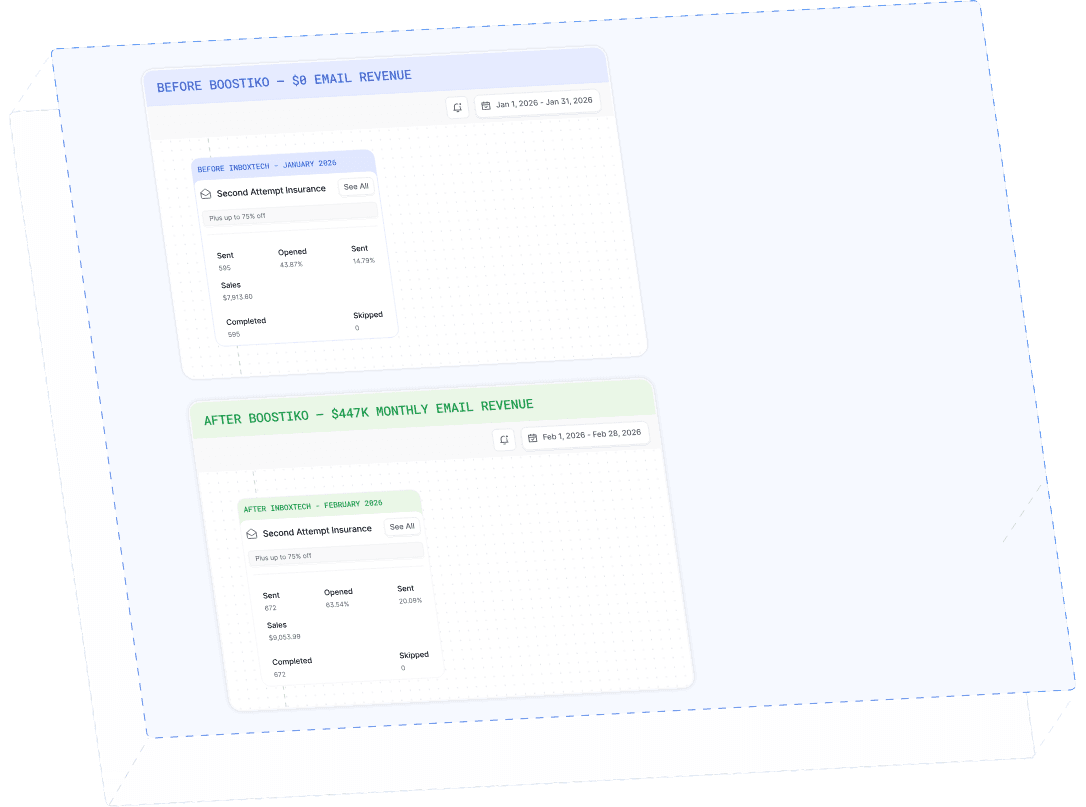
Case Study 01
Leading Prop Firm
$0 - $447K in 3 months
40.7% of total revenue
14 days time to first revenue
$0 to $447,115/month in Email Revenue in 90 Days