•
Boostiko Team

Email Marketing for Forex Brokers: The Lifecycle System That Turns Registrations Into Retained Traders
Email marketing for forex brokers should be designed as a lifecycle system, not as a stream of generic market commentary or promotions. It should help a permissioned prospect move through the legitimate stages of the broker relationship: registration, account completion, onboarding, activation, ongoing education, inactivity, and preference based retention.
The central problem is simple. A registration is not the same as an activated client, and an activated client is not automatically a retained one. When every new lead receives the same broadcast, the broker loses the context that makes communication useful. When the CRM, client portal, platform data, and email service provider are disconnected, the team cannot reliably tell what message a person should receive or whether the person should receive promotional email at all.
Boostiko builds the email and SMS retention infrastructure that connects lifecycle data, campaign execution, deliverability controls, and measurement. The result is not “more emails.” It is a more controlled way to communicate with the right audience at the right point in the relationship.
The theory: lifecycle relevance beats broadcast volume
The relevant question for a broker is not, “What should we send this week?” It is, “What action, information, or support does this client need next?” The answer changes as the person moves through the lifecycle.
A new registrant may need a clear explanation of the next account step and a route to support. A prospect who has not completed a required process may need factual onboarding guidance. An active trader may benefit from relevant product education or an update that they have elected to receive. A dormant contact may need an opportunity to update preferences, review current resources, or opt out cleanly. None of those audiences should automatically be placed into the same promotional campaign.
This is the core of lifecycle marketing: use accurate, permissioned events and customer data to make communication relevant. It requires a defined event map, a clear distinction between account service and promotional messages, and safeguards that prevent irrelevant or ineligible sends.
A broker does not need more campaign ideas. It needs a system that knows who the client is, where they are in the journey, and which communications are appropriate at that moment.
Start with the broker event map
Before a team designs a template or writes a subject line, it should identify the events that matter. The exact implementation will depend on the broker’s platform, regulatory model, products, customer relationship management system, and recipient permissions. A working map may include:
Lifecycle stage | Example data signal | Communication objective | Control to verify |
|---|---|---|---|
Lead capture | Form submission and documented permission | Set expectations and deliver the requested information. | Consent source, jurisdiction, and preferences. |
Registration | Account created but next step incomplete | Clarify the next operational step and offer support. | No misleading urgency or unsupported benefit claim. |
Onboarding | Account approved or enabled | Help the client understand access, available resources, and current documentation. | Separate account service information from promotions. |
Activation | First meaningful platform or product interaction | Provide relevant education and enable informed next actions. | Approved segmentation and current disclosures. |
Active relationship | Engagement, product, or preference signal | Send useful, permissioned content relevant to the relationship. | Frequency, channel preference, and suppression status. |
Inactivity | Defined period without meaningful engagement | Offer a preference update, relevant resources, or a respectful win back path. | Unsubscribe, complaints, and recipient eligibility. |
The map is only useful if it has a data owner. A completed account action must stop a recovery message. An unsubscribe must propagate to every promotional sending system. A preference update must not remain trapped in one tool while another platform continues to send. These rules should be tested with controlled records before a flow goes live.
The core forex broker email flows
1. Welcome and registration completion flow
The welcome flow should establish sender identity, provide the information the person requested, and explain the next appropriate step. If registration is incomplete, the message can offer support and point to current account information. It should not imply a guaranteed financial outcome, make product suitability assumptions, or create pressure through incomplete terms.
A useful welcome program also sets a frequency expectation and makes preferences easy to manage. This reduces the temptation to treat every new registrant as an unlimited marketing audience.
2. Onboarding and client education flow
Onboarding is the best opportunity to prevent avoidable confusion. It can guide the client to the authoritative account documentation, support channels, platform resources, and any approved education relevant to the relationship.
Account notices and promotional email should not be casually blended. A message that contains a material promotion may be treated differently from a purely transactional or account service message depending on its primary purpose and the laws that apply. The actual classification and content should be reviewed by the broker’s qualified compliance function.
3. Activation and relevant engagement flow
Activation messaging should be based on what the broker can lawfully and accurately observe. A client may need support completing a legitimate account step, help locating a platform feature, or access to approved educational content. The message should not create an impression of easy profits, risk free trading, fixed returns, or guaranteed success.
Segmentation can make the program more useful without becoming intrusive. Examples include geography, language, stated product interest, account type, client status, consent state, engagement level, and content preference. Each segment needs a documented reason for its inclusion and an unsubscribe path.
4. Active client retention flow
The purpose of retention is not to generate constant promotional pressure. It is to sustain a useful, compliant relationship. A broker may use campaign content to explain platform updates, educational resources, approved market content, service changes, or product information where the client has permission to receive it.
The team should set frequency rules and suppress contacts who are disengaged, unsubscribed, ineligible, or otherwise outside the intended audience. This protects client experience and reduces avoidable deliverability risk.
5. Inactivity and preference aware win back
An inactivity program should make room for the possibility that the person simply does not want more marketing. A respectful flow can ask the recipient to update their preferences, select a lower frequency, access relevant resources, or unsubscribe. Promotional reactivation should use only current, approved offers and audience rules.
Do not treat a later click, open, or last click conversion as proof that the email caused a deposit, trading activity, retention, or revenue outcome. Define the event being measured, the time window, the comparison method, and the relevant limitations before reporting a business result.
Deliverability is part of the broker operating system
Deliverability problems are often treated as a copywriting or template issue. They are usually a systems issue. The audience source, permission record, sender authentication, domain reputation, complaint handling, suppression logic, frequency, content review, and testing process all affect whether a sender can maintain a healthy email program.
Google’s sender guidelines require SPF or DKIM for all senders. Higher-volume Gmail senders have additional authentication, alignment, unsubscribe, and spam-rate expectations. 1 These controls are requirements and operational safeguards; they do not guarantee a particular inbox location or engagement outcome.
A responsible broker email program should include:
Directly collected, documented permission and a centralized record of unsubscribe, complaint, and preference signals.
Validated sending domains and clear separation of promotional and account service traffic where the operating model calls for it.
List-hygiene rules for invalid contacts, persistent lack of engagement, bounces, and complaint signals.
A quality assurance step for links, mobile rendering, localization, risk language, promotional terms, and current product information.
A campaign and flow calendar that prevents contradictory messages and records the owner of each send.
Compliance conscious communication is clearer communication
Commercial email requirements are not an optional footer exercise. The U.S. Federal Trade Commission explains that CAN-SPAM applies to commercial messages, including business to business email. Its requirements include accurate headers, truthful subject lines, ad identification, a valid physical address, a clear unsubscribe route, and prompt unsubscribe handling. The FTC also states that responsibility cannot simply be contracted away to a sender or agency. 2
For UK audiences, the Information Commissioner’s Office explains that marketing email to individuals generally requires consent, subject to a limited current customer soft permission for the sender’s own similar products or services when the required conditions are met. The rules vary by recipient type, and sender identity and a valid unsubscribe route remain important. 3
Forex broker content also needs review for financial promotion risk. The Financial Conduct Authority’s guidance says financial promotions must be fair, clear, and not misleading, and highlights risks around unauthorised influencers and affiliates. 4 Boostiko does not provide regulatory approval or legal advice. The broker’s authorised and qualified reviewers must approve the final claims, disclosures, audience, and campaign purpose.
Agency versus an internal team: why email retention needs a full team
A well run broker lifecycle program is not one job description. It needs a designer to build and test effective email assets, a copywriter who can communicate clearly in a regulated setting, an operations lead to manage calendars and quality assurance, a technical specialist to connect CRM, platform, and event data, and a deliverability expert to protect sending infrastructure.
Hiring and coordinating those five functions inside the company takes time, management capacity, and an ongoing tool stack. For the price of one internal hire, Boostiko gives brokers access to the designer, copywriter, operations lead, technical implementer, and deliverability specialist working from one lifecycle plan. That means one accountable retention team rather than a set of disconnected freelancers, agencies, or internal handoffs.
The benefit is not merely cost consolidation. It is faster coordination: flow logic, copy, creative, data, quality assurance, and deliverability are planned together. In a scoped proposal, Boostiko can compare the required internal roles and responsibilities with the specific managed program the broker needs.
How Boostiko implements the system
Boostiko begins with a lifecycle and infrastructure audit. The audit documents the existing capture points, consent records, sender domains, ESP configuration, CRM fields, client portal or platform events, current automations, suppressions, templates, reporting, and approval process.
Next, the team maps the priority flows and defines their trigger and exit conditions. Then Boostiko handles the implementation work that typically gets split across an internal team: creative direction, copy, template production, technical integration, automation buildout, deliverability controls, campaign operations, testing, and reporting.
The result is a retention system tailored to the broker’s actual data and operating constraints. It is not a promise of deposits, revenue, profitability, or regulatory compliance. It is the infrastructure and specialist execution required to operate the lifecycle with more control.
Request a Broker Retention Flow Map
If your broker is collecting registrations but lacks a clear system for onboarding, activation, retention, and preference based reactivation, Boostiko can map the current lifecycle and identify the top priority implementation gaps.
Request a Broker Retention Flow Map to review the available data, sending infrastructure, consent process, lifecycle opportunities, and practical next steps. Boostiko brings the strategic, creative, technical, operational, and deliverability functions together so the broker can focus on running the business.
This article is operational marketing guidance, not legal, regulatory, financial, or trading advice. Recipient location, product, license, message purpose, consent status, and current platform policies can change the appropriate approach. Have qualified legal and compliance reviewers approve client communications before launch.
References



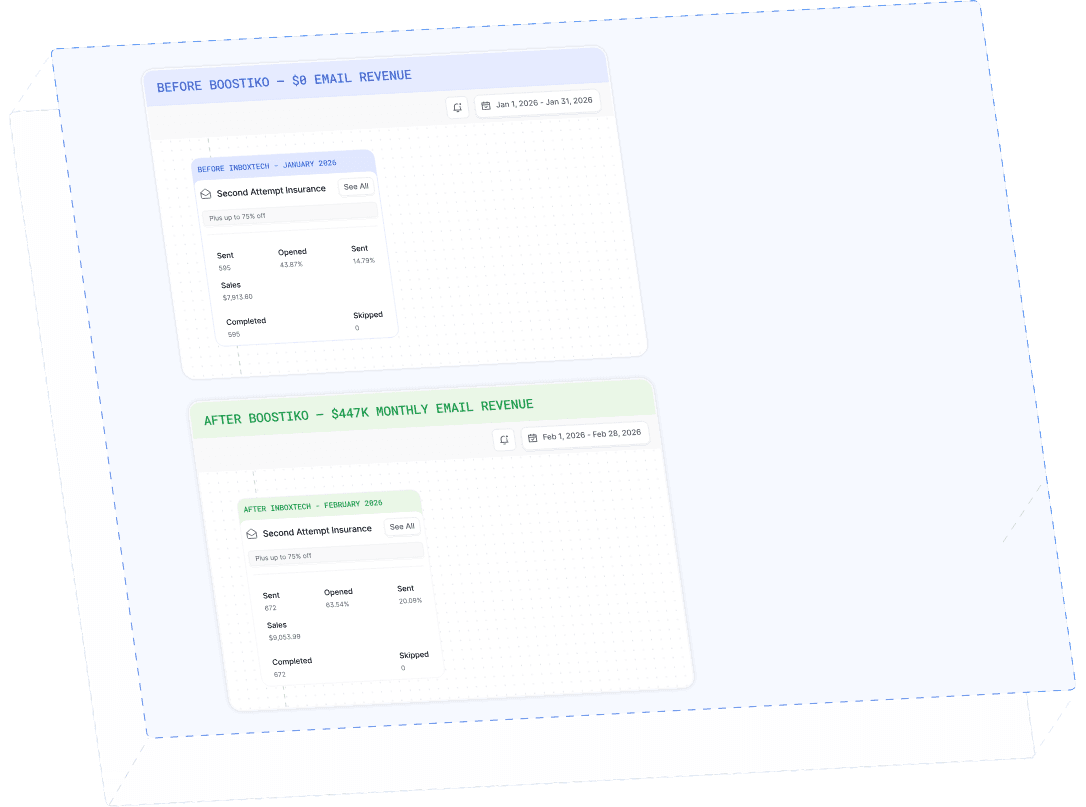
Case Study 01
Leading Prop Firm
$0 - $447K in 3 months
40.7% of total revenue
14 days time to first revenue
$0 to $447,115/month in Email Revenue in 90 Days