•
Boostiko Team

Email Marketing for Futures Prop Firms: The Lifecycle Playbook for Challenge Leads and Funded Traders
Email marketing for futures prop firms needs to reflect the actual trader journey. A person who downloads information, starts a challenge checkout, begins an evaluation, fails an evaluation, reaches a funded account milestone, or becomes inactive has a different question and a different relationship with the firm. Treating every person as one newsletter list creates avoidable friction and weakens the relevance of every send.
A better approach is lifecycle marketing. The firm defines the important events, connects the appropriate systems, applies consent and eligibility rules, and automates communication that helps the person take the next legitimate step. That combines theory with operations: a sound strategy only works when the data, flow logic, creative, quality assurance, and deliverability are built together.
Boostiko implements that system for high consideration trading businesses. We turn the futures prop firm lifecycle into working email and SMS flows, then run the creative, technical, operational, and deliverability work required to keep the program useful.
The theory: every lifecycle moment has a different job
A futures prop firm often spends heavily to acquire an audience through affiliates, content, communities, referrals, and paid distribution. But acquisition is only the first input. The next step depends on where the person is in the journey.
A new lead may need a factual explanation of the evaluation model. A person who leaves during checkout may need help resolving a genuine question or technical interruption. A buyer may need onboarding guidance and a link to current program documentation. A person who does not complete an evaluation may need education, support, a different message frequency, or no more marketing at all. A funded trader may require accurate account service communication rather than another generic offer.
Lifecycle marketing assigns a purpose to each of those moments. It does not assume that a transaction, a Discord membership, an affiliate lead, or a past interaction automatically creates unlimited permission for promotional email. It starts with documented permissions, current preferences, and the firm’s legitimate data sources.
The goal is not to push more offers. The goal is to make the right message operationally relevant, preference aware, and easy to measure.
Map the futures prop firm journey before building campaigns
The specific event model should reflect the firm’s current platform, program rules, support process, audience permissions, and data availability. A practical map can look like this:
Journey stage | Typical question | Useful communication role | Implementation dependency |
|---|---|---|---|
Lead capture | “What is this program and where can I learn more?” | Deliver the requested material and set expectations. | Documented consent source and channel preference. |
Registration or checkout start | “What stopped me from finishing?” | Offer support, accurate information, and a return path. | Live start and conversion event; exit rule after completion. |
Challenge purchase | “What happens now?” | Guide the buyer to current onboarding and support resources. | Purchase status, account provisioning, and current documentation. |
Evaluation stage | “Where do I find the relevant rules and support?” | Direct traders to approved resources and account service routes. | Current, reviewed rule references and appropriate event logic. |
Failed or incomplete evaluation | “What is the appropriate next action?” | Provide relevant education, support, preference options, and approved reactivation where appropriate. | Status data, audience rule, suppression, and frequency controls. |
Funded or active account | “What account information or service communication applies?” | Send accurate account service messages and limited, eligible promotions where approved. | Verified status data and a review of transactional and promotional content. |
Inactivity | “Do I still want these messages?” | Offer resources, preference management, and a respectful win back path. | Inactivity definition, unsubscribe, complaint, and eligibility data. |
The valuable work is hidden in the operating details. A completed challenge purchase must stop an abandoned checkout flow. A preference update must be reflected in every promotional sending tool. A system must not send an irrelevant challenge offer to a contact who is excluded, unsubscribed, or no longer eligible. That is why a lifecycle plan needs clear triggers, exit conditions, data ownership, and quality assurance, not just a list of campaign ideas.
The core email flows
1. Welcome and evaluation education
The welcome flow should help a permissioned prospect understand the program and find reliable resources. It can direct the person to the firm’s current information, support channel, rules documentation, and approved education. It should be clear about what it is and what it is not: marketing content should never imply a guaranteed evaluation pass, payout, funded account, trading profit, or risk free outcome.
A useful welcome flow also establishes the sender identity, sets communication expectations, and gives the recipient an easy way to manage preferences. This increases control from the first message rather than trying to repair an audience that has received too many emails.
2. Registration and abandoned checkout recovery
A person who starts an account or challenge checkout is not necessarily ready for a pressure campaign. The recovery flow should answer legitimate barriers: Can the person resume? Is there a technical issue? Which current resource answers the relevant question? How can support help?
The trigger needs to be accurate. The buyer must leave the flow immediately after completing the relevant action. Promotions, terms, and urgency must be reviewed so the message does not hide material conditions or create a misleading impression of the product or trading outcome.
3. First day onboarding
The first day journey is an operational moment. It should reduce support burden by pointing the buyer toward verified onboarding resources, platform access information, current account documentation, and the correct support route. It should not become an excuse to bundle account notices with aggressive cross sell messages.
The distinction between transactional or account service communication and promotional material can depend on the message’s primary purpose, the recipient, and the jurisdiction. The firm’s qualified legal and compliance reviewers should make the final classification.
4. Evaluation stage support and education
Evaluation-stage communications should help the trader find approved information, not encourage unsuitable conduct or misstate current rules. Where a message refers to drawdown conditions, platform behavior, payout criteria, fees, or program eligibility, it should link to the current authoritative source and be assigned a content owner and review date.
Futures prop firm programs, platform permissions, and rules can change. Stale lifecycle messaging can become a support, trust, and compliance problem. A review workflow is therefore part of the retention system, not an administrative afterthought.
5. Failed evaluation and win back journeys
A person who did not complete or pass an evaluation may have very different needs from a new lead. A thoughtful journey may begin with resources, support, or preference options. If a promotional offer is approved and appropriate, it must be targeted only to the correct audience, use current terms, and be easy to decline.
Good segmentation separates new prospects, recent buyers, repeat buyers, inactive contacts, unsubscribed contacts, and excluded audiences. It avoids sending the same discount or message to every person who happens to be in the database.
6. Funded trader and account status messages
Funded-trader communications require the highest standard of accuracy. Account updates, payout status, program changes, and other operational notices must use verified system data and clear sender identity. The support team should be prepared to resolve questions generated by the message.
Promotional material for active traders should only send after an explicit consent, preference, and eligibility check. Do not imply that a prior account result, evaluation outcome, or payout predicts future outcomes.
Deliverability is the infrastructure beneath the flows
Email deliverability is not a subject line trick. It is the outcome of permission, list quality, authentication, frequency, content, complaint handling, sending domain reputation, and technical configuration.
Google requires SPF or DKIM for all email senders. High volume Gmail senders have additional requirements for authentication, alignment, unsubscribe handling, and spam rates. 1 Those requirements are important delivery controls, but they are not a guarantee that an email will land in a specific inbox category or generate a business result.
For futures prop firms, the practical deliverability checklist includes:
Directly collected consent records that identify the source, channel, purpose, and relevant preference state.
Centralized suppression of unsubscribes, complaints, invalid contacts, and other excluded audiences.
Authenticated sending domains and monitored sender reputation.
Sensible separation of promotional and account service traffic when the architecture requires it.
Mobile and link testing before launch, including current program documents, support destinations, and disclosure language.
A documented review process for claims, testimonials, rules, promotions, and case study content.
Agency versus an internal team: one lifecycle system, five specialist functions
A futures prop firm email program does not run on copy alone. It needs a designer to create and test the emails, a copywriter who understands the trader lifecycle, an operations lead to manage schedules and quality assurance, a technical specialist to connect checkout, CRM, platform, and event data, and a deliverability expert to maintain the sending environment.
That is five specialist functions to recruit, coordinate, manage, and retain inside the company. For the price of one internal hire, Boostiko brings the designer, copywriter, operations lead, technical implementer, and deliverability specialist into one managed retention team. The same team owns the plan from flow strategy through creative, implementation, campaign execution, and delivery controls.
The advantage is not only that a firm can avoid coordinating multiple contractors or new hires. It is that the people building the flows are working from the same event map, the same consent rules, the same creative standards, and the same measurement model. That produces a more coherent operating system and clearer accountability.
How Boostiko implements the futures lifecycle
Boostiko begins by auditing the existing lead capture, consent language, sending domains, ESP setup, CRM data, checkout actions, trader management events, current flows, templates, suppression logic, campaign calendar, and reporting. We identify which events can safely power automation and which data points need to be cleaned, connected, or governed first.
We then design the lifecycle architecture. Each flow receives a purpose, segment, trigger, exit condition, frequency rule, creative direction, copy framework, review path, and reporting definition. The team builds the automation, designs and tests the templates, connects the required systems, applies deliverability controls, and operates the program.
A theory based implementation approach gives the firm a reusable system. It does not promise a funded account, pass rate, payout, revenue figure, or inbox placement result. It gives the firm the specialist infrastructure required to communicate more clearly and operate retention with more control.
Request a Futures Lifecycle Implementation Consultation
If your firm is acquiring challenge leads but lacks a controlled lifecycle from registration through onboarding, evaluation, inactivity, and win back, Boostiko can map the flow architecture and technical prerequisites.
Request a Futures Lifecycle Implementation Consultation to review your event data, sending infrastructure, consent process, current flows, and priority gaps. Boostiko gives futures prop firms one integrated team for design, copy, operations, technical execution, and deliverability, so the retention system does not depend on five separate hires.
This article provides operational marketing guidance, not legal, financial, trading, or regulatory advice. Rules, permissions, account conditions, recipient status, message purpose, and platform policies can change. Have qualified legal and compliance reviewers approve client communications before they send.
References
Continue reading



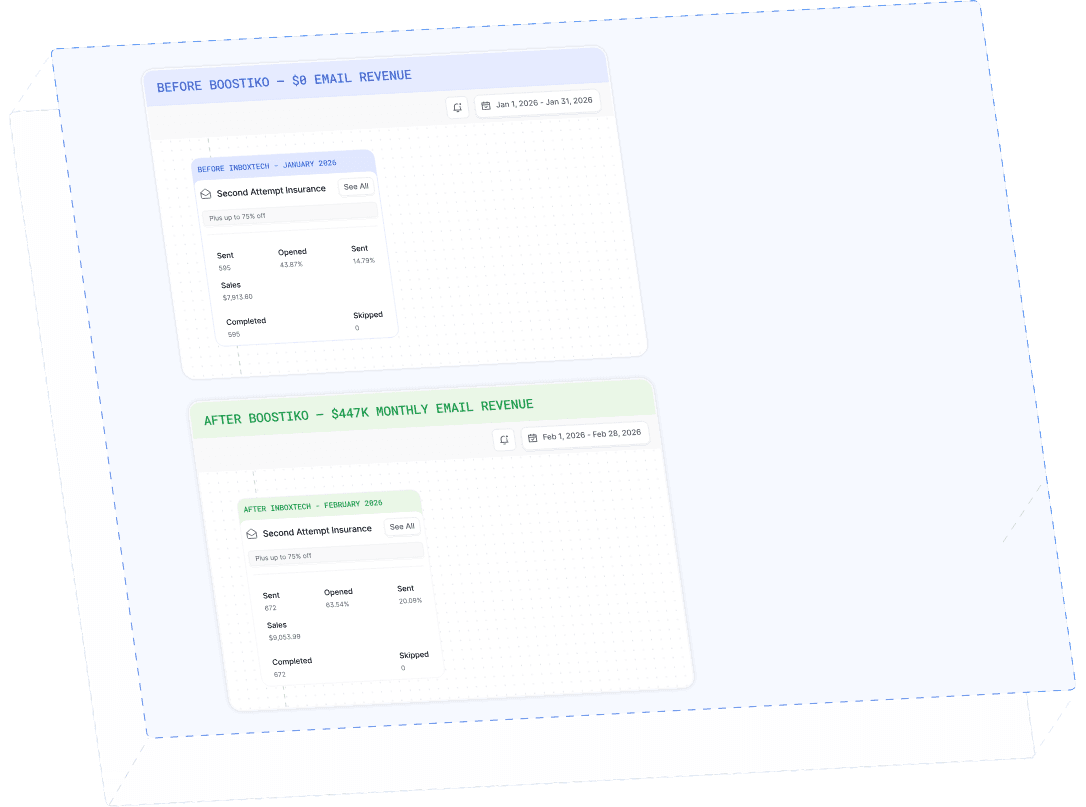
Case Study 01
Leading Prop Firm
$0 - $447K in 3 months
40.7% of total revenue
14 days time to first revenue
$0 to $447,115/month in Email Revenue in 90 Days