•
Boostiko Team

Email Marketing for Perpetual Prop Firms: Build Trust Across the Trader Lifecycle
Email marketing for perpetual prop firms is not a weekly promotion calendar. It is the operating layer that explains the offer, sets expectations, supports traders at important moments, and protects the sender reputation that makes future campaigns possible.
A perpetual prop firm has a relationship to manage, not just a checkout. Prospects need to understand the program, customers need clear next steps, and inactive contacts need a respectful reason to re-engage or leave. If every person gets the same discount email, the list becomes less useful.
Match the message to the relationship, use a setup that reaches the inbox, control commercial claims, separate account notices, and provide an easy marketing opt-out. Review applicable rules before launch.
The business problem: growth messaging can create operational debt
Perpetual prop firms operate in a high-attention category. Prospects compare rules, platforms, pricing, trading conditions, access requirements, payout policies, and support while seeing aggressive claims across trading and crypto marketing.
Vague email marketing creates debt. A subject line that promises an unsupported outcome can create support tickets, complaints, and distrust. A broad promotion can reach someone who purchased, has an unresolved support issue, or opted out. An account email with a sales block can also change how it should be treated.
The US Federal Trade Commission explains that an email with transactional and commercial material is assessed by its primary purpose. If commercial content leads the subject line or dominates the email, it may be commercial rather than transactional. 2 That affects templates, audience rules, unsubscribe behavior, and approvals.
Inbox providers judge more than copy. Yahoo requires bulk senders to use SPF, DKIM, and DMARC, maintain a spam rate below 0.3%, support easy unsubscribe, and honor unsubscribes within two days. 1 Relevance is therefore part of acquisition economics. Less relevant mail can weaken delivery of important mail later.
A sound program explains the offer accurately, helps customers take the next useful action, separates service from promotion by purpose, and protects consent, suppression, and sender reputation as shared business assets.
Lifecycle theory: the message should match the job
Lifecycle marketing starts with one idea: a subscriber is in a relationship state, not just a source segment. The email should help them complete the next job in that state.
For a perpetual prop firm, the lifecycle may include visitor, lead, consideration, customer, active trader, at-risk trader, inactive contact, and former customer. Privacy-appropriate events such as an opted-in signup, purchase, support request, account-status event, or non-engagement move people between states.
Visitor and lead emails should reduce uncertainty. Explain the program, point to current terms and risk disclosures, and do not present hypothetical upside as likely. Consideration emails can answer questions about setup, rules, or policy changes.
Customer emails have a different job: successful onboarding. Send the confirmation and necessary access information, then an orientation series explaining where to find rules, how to reach support, what communications to expect, and how to manage preferences. Keep essential account information prominent. Do not bury it beneath unrelated promotions.
Active-trader communications can include accurate education, platform updates, rule reminders, and support resources tied to the customer’s setup. Marketing content should remain clearly distinguishable from account notices.
At-risk and inactive contacts require restraint. Use a limited re-engagement sequence, ask whether they still want the material, and offer an obvious preference or unsubscribe route. Repeated sends do not create genuine interest.
Consent and suppression must override campaign eligibility. Account-service status should control operational messaging. Engagement can inform frequency, but should not drive unverified assumptions about a person’s finances or trading behavior.
Practical implementation: build the system before the calendar
Start with an event map. For each trigger, document the data owner, purpose, eligible audience, suppressions, and fallback. Typical events include signup, account creation, checkout, purchase confirmation, platform access, support ticket, policy update, inactivity, and unsubscribe.
Separate communication by purpose. Put security, account access, receipts, and critical service notices in transactional templates and streams where appropriate. Put newsletters, education series, and offers in marketing flows. When an email has both purposes, review the classification against applicable law and the actual content.
Build a preference center with a simple global marketing unsubscribe. The FTC says CAN-SPAM opt-outs must be honored within 10 business days and the mechanism must process requests for at least 30 days after sending. 2 Yahoo advises a faster, two-day timeline. 1 Use the stricter applicable operational standard and validate policy with counsel.
Treat list growth as a quality issue. Store signup source, timestamp, consent language, and purpose. Do not rely on purchased lists or pre-checked boxes. Yahoo advises mail only to users who requested it and warns against purchased lists and pre-checked opt-ins. 1 For UK individuals, the ICO says marketing emails generally need specific consent, subject to a limited existing-customer, similar-product soft opt-in. 3
Configure deliverability before scaling. Authenticate sending domains with SPF, DKIM, and DMARC, align the From domain, and separate marketing from critical user mail where possible. Use list-unsubscribe headers and a visible body link. Monitor delivery, bounces, complaints, unsubscribes, clicks, and engagement by source, flow, domain, and mailbox provider.
Do not treat opens as the only health signal. Privacy protections can make them incomplete. A flow that gets clicks but raises complaints is not healthy.
Create a review gate for financial and crypto-adjacent language. Do not state or imply guaranteed performance, easy income, predictable payouts, or reduced trading risk unless a claim is accurate, appropriately qualified, and permissible where sent. The FCA says financial promotions must be clear, fair, and not misleading regardless of media type. 5 The applicable rules depend on the product, audience, claims, channel, and jurisdiction. Use qualified legal and compliance review where applicable.
Agency versus in-house: choose accountability, not a label
An in-house team has close access to product changes, support themes, and leadership decisions. It can work when the firm has lifecycle ownership, technical support, design, and compliance review.
The constraint is coverage. One person may write campaigns, build flows, clean data, debug integrations, review deliverability, and report results. The calendar then wins while the system gets deferred.
An agency adds specialist capacity and a repeatable process. It can combine design, copy, flow architecture, platform implementation, and deliverability practice without requiring every specialty in-house. The risk is distance from product truth. An agency cannot approve its own assumptions about rules, claims, or local legal requirements.
The strongest model is shared accountability. The firm supplies accurate product information, approved claims, technical access, and a decision-maker. The agency builds and documents the email system, then routes sensitive material through the firm’s compliance process. The FTC notes that a company cannot contract away its CAN-SPAM responsibility when another company handles email marketing. 2
Theory-led teardown: the generic perpetual-offer blast
Consider a hypothetical email sent to every contact: “Last chance to unlock your next payout.” It has a discount, countdown, and large call to action. It reaches new leads, active customers, people who recently changed preferences, and contacts who have not engaged for months.
The issue is not the button color. The theory is wrong.
First, the message assumes every contact has the same job. A new lead may need a neutral explanation of the program. An active customer may need platform support. An inactive subscriber may need a consent check, not more urgency. A broad promotion fails because the audience is not one state.
Second, “next payout” can read as an outcome-oriented implication. If it cannot be supported in context, it creates avoidable trust and compliance risk. Use factual language about the current offer, eligibility conditions, timing, and where to review terms. Put material conditions close to the call to action.
Third, the send ignores reputation. Mailing dormant contacts can raise complaints, bounces, and disengagement. Yahoo recommends monitoring inactive recipients, promptly removing invalid addresses, and considering reconfirmation for inactive subscribers. 1
A better approach uses three paths. Leads receive education that answers core questions and links to terms. Eligible, marketing-consented prospects receive a time-bound offer with transparent conditions. Active customers are excluded unless the promotion is relevant. Inactive contacts receive a limited repermission flow. The campaign is smaller, but more coherent and more defensible.
The Boostiko solution: five connected functions
Boostiko helps perpetual prop firms replace disconnected sends with an email program that operates as one system. We combine design, copy, operations, technical integration, and deliverability because any missing function can weaken the whole program.
Design makes emails easy to scan while keeping conditions, support paths, and calls to action visible. Copy turns approved program information into plain-language lifecycle messaging without manufacturing outcomes or hiding important limits.
Operations provides the calendar, audience rules, approval workflow, testing rhythm, and reporting cadence. Technical integration connects the email platform to the events and data that make lifecycle logic possible, with ownership and fallbacks documented. Deliverability covers authentication, sender identity, unsubscribe mechanics, suppression, list hygiene, and monitoring.
The work begins with an audit of the lifecycle, data sources, sending setup, templates, and approval path. We then prioritize the flows that reduce friction first: opt-in welcome, customer onboarding, essential notices, education, re-engagement, and carefully segmented promotions. We work with your internal compliance and legal stakeholders where required. We do not present the work as legal advice or a compliance certification.
If you operate a perpetual prop firm and need to turn promotions, onboarding, support updates, and list health into one accountable program, talk to Boostiko about an email lifecycle and deliverability audit.
FAQs
What is different about email marketing for perpetual prop firms?
The category combines high-interest commercial decisions with ongoing customer communication. Lifecycle state, accurate expectations, service-message separation, deliverability, and jurisdiction-specific review matter more than a batch newsletter plan.
Should a perpetual prop firm put promotions in account emails?
Be careful. An email with service and commercial content may be treated according to its primary purpose. Keep essential service information prominent and route promotions through marketing templates where possible. Review the message under laws that apply to your audience. 2
Do we need double opt-in?
It is not a universal legal requirement, but it can improve list quality and reduce accidental or abusive signups. Yahoo recommends a confirmation email to improve recipient experience and list quality. 1 Assess the right approach with privacy and compliance advisors.
Can we use a purchased email list?
Do not assume a purchased list is usable. Yahoo advises against it. 1 In the European Union, an organisation acquiring contact data must be able to demonstrate that it was collected in compliance with the GDPR and can be used for advertising; individuals also have the right to object to direct-marketing processing. 4
What should we measure?
Track list growth by consent source, delivery, bounces, spam complaints, unsubscribes, clicks, downstream conversion events, support feedback, and flow-specific engagement. No single metric establishes that a program is healthy or compliant.
References



Case Study 01
Leading Prop Firm
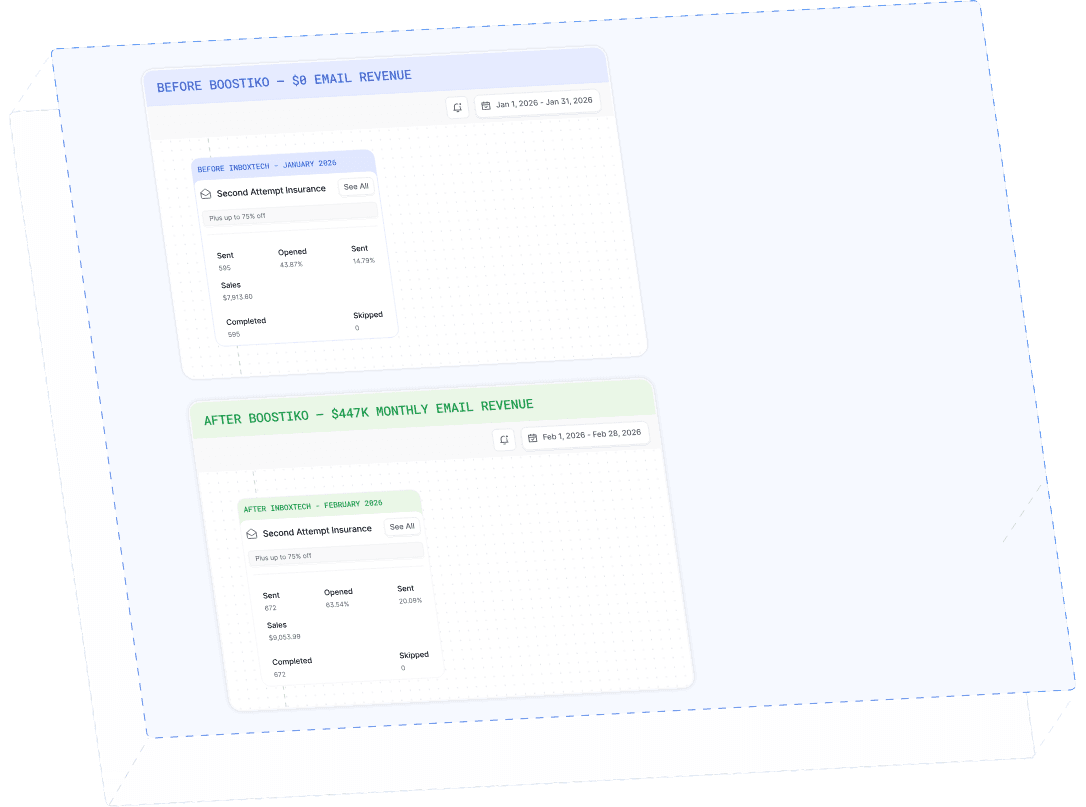
$0 - $447K in 3 months
40.7% of total revenue
14 days time to first revenue
$0 to $447,115/month in Email Revenue in 90 Days