•
Boostiko Team

Email Marketing for Web3 Prop Firms
Email marketing for Web3 prop firms is not a weekly promotion calendar. It is the operating layer between a prospect’s first question, a trader’s program journey, and the notices that must arrive when something changes.
That distinction matters. Your audience is deciding whether your rules, platform, fees, risk language, and support process are understandable enough to trust. A loud launch email cannot repair a confusing evaluation path. Nor should email turn a trading program into a promise of earnings.
The job is simpler and harder: make the next legitimate step obvious. State why someone is receiving the email, explain one relevant point in plain language, and give them one path forward. Keep commercial messages separate from account, security, and program-status communications.
This is practical guidance, not legal advice. Financial and crypto marketing are jurisdiction-dependent. Have qualified legal and compliance reviewers assess your product, claims, disclosures, targeting, privacy basis, and local obligations before launch.
The business problem: high consideration, little room for ambiguity
A Web3 prop firm often has a long decision before it has a transaction. Prospects compare program structure, eligibility, payment methods, platforms, drawdown mechanics, country access, and support. They may arrive from a creator, community, referral, paid ad, or product update. Those entry points do not show the same intent.
The common failure is putting every new address into the same discount sequence. A person who downloaded rules guidance gets the same final-call promotion as someone who started checkout. An active participant receives sales copy in the same thread as a material program notice. Support then has to resolve the ambiguity the lifecycle created.
Start with one operator question: what should this person understand or do next? If the answer is “buy now” for every email, the lifecycle is too shallow.
Deliverability is part of that business problem. Gmail requires all senders to use SPF or DKIM. Senders of more than 5,000 messages per day to personal Gmail accounts must use SPF, DKIM, and DMARC, support one-click unsubscribe for marketing messages, and keep spam rates in Postmaster Tools below 0.30%.1
Compliance is also a design constraint. In the United States, commercial email must have accurate header information and non-deceptive subject lines, include a valid postal address and clear opt-out method, and honor opt-outs within 10 business days.2 In the United Kingdom, marketing emails to individuals generally require specific consent, subject to a limited soft opt-in for an organisation’s own previous customers and similar products.3
Lifecycle theory: build around states and events
The useful lifecycle has two dimensions: the person’s state and the event that changes it. State decides what they can reasonably receive. Events decide when a message becomes useful.
For a Web3 prop firm, states may include prospect, verified subscriber, checkout starter, customer, active evaluator, participant, paused participant, and former participant. These must be operational labels based on reliable system data, not assumptions about a person’s value.
Events can include a guide request, checkout start, payment completion, account creation, evaluation start, rule update, support resolution, inactivity window, or cancellation. Not every event deserves an email. Send when the message reduces confusion, supports an agreed service, or presents a relevant next step.
Use a three-part message model:
Context: Say why the recipient is receiving this message now.
Clarity: Explain one policy, decision, or action in ordinary language.
Control: Give one primary CTA and an easy way to manage marketing preferences where appropriate.
This is a workable approval unit. Reviewers can inspect a defined audience, trigger, purpose, claim set, disclosure placement, and CTA rather than signing off on a vague campaign concept.
Keep transactional and promotional logic distinct. A password reset, security alert, or program-status notice needs clarity and timely delivery. Do not add a sales block that changes its primary purpose. The FTC considers subject lines and placement of promotional content when assessing mixed commercial and relationship messages.2
Practical implementation: start with data, then messages
Do not begin in the email editor. Begin with a controlled data map. Record the source, owner, update frequency, and allowed use of each field. At minimum, capture consent or lawful-basis status, consent source and time, country, language, product interest, account state, program status, suppression reason, and lifecycle timestamps.
Build a compact first set of flows. A welcome and education flow should confirm what the person requested, explain what they will receive, and link to the most useful resource. It should not lead with an offer before explaining the firm’s model and rules.
An evaluation-consideration flow should answer one real question per message: program structure, key rules, platform access, pricing presentation, or support route. Link to the current source of truth. Do not state or imply that an evaluation assures income or program progression.
Use checkout recovery only after a real checkout event, with a short expiry window and suppression for purchasers or people in a support case. Surface a likely blocker, such as a payment step or eligibility question. Do not use manufactured scarcity, resettable countdowns, or performance claims.
Customer and evaluator onboarding is operational. Explain first login, where to find the current rules, security basics, support channels, and what happens after a relevant program event. Send changes as standalone notices with an effective date and a link to the complete policy. Keep a version-controlled archive.
For reactivation, define inactivity clearly and offer a choice: useful education, a preference update, or an unsubscribe. Do not mail unengaged contacts forever. Google recommends periodically confirming that recipients still want messages and considering removal of people who do not open or read them.1
Maintain global suppressions for unsubscribes, complaints, hard bounces, policy exclusions, and sensitive support cases. Check suppression before every send, including one-off campaigns and agency-operated lists. Configure SPF, DKIM, DMARC, TLS, aligned sender domains, and reputation monitoring before expanding volume.
Do not assume a purchased or partner list is usable. The European Commission says an organisation acquiring third-party contact data must be able to demonstrate GDPR-compliant collection and permission for advertising use, respect objections, and tell people about the processing by the first communication.4
Agency versus in-house: choose ownership first
An in-house model works when you have stable product ownership, accessible data, and someone who can operate email every week. It gives the team immediate context when rules or customer journeys change. The risk is a single person becoming the creative, technical, and deliverability dependency.
A specialist agency fits when you need lifecycle design, campaign production, or technical remediation quickly. It can bring cross-functional capacity and a more disciplined build process. Your firm still owns product facts, system access, customer data, approvals, and final claims.
A hybrid model is often strongest. Keep rules, disclosures, and final approvals with internal owners. Use external specialists for strategy, production, integration, and deliverability. Put the roles in writing. The FTC makes clear that a company cannot contract away commercial-email responsibility; the promoted company and the sender may both be responsible.2
A theory-led teardown: what weak email reveals
Consider a weak lifecycle. A visitor joins for an education guide, then receives a discount, a vague “funded trader” success-style creative, a rule update mixed with an offer, and a final-warning subject line. The same cadence goes to active participants.
The flaw is not only frequency. The program has broken the state-and-event model. The welcome message ignores the stated request. The copy adds pressure instead of resolving uncertainty. The rule update is contaminated by promotion. The absence of meaningful preferences turns a relevance problem into a complaint risk.
Repair the structure. Create a guide-request segment with a short education sequence and a clear next choice. Send policy updates from a dedicated operational template. Offer preference categories such as learning, product updates, and offers where lawful. Exclude active, sensitive, or recently supported accounts from broad promotions until a defined review says otherwise.
Review every claim. Replace “start earning” with a factual service explanation. Link to current eligibility, rules, and risk disclosures. In EU crypto-asset contexts within MiCA’s relevant scope, marketing communications can carry specific requirements. Where a white paper is required, Article 7 states that marketing communications cannot be disseminated before its publication.5 Obtain jurisdiction-specific legal review to decide whether and how that applies.
The Boostiko solution for Web3 prop firm email
Boostiko combines five functions that are usually fragmented: design, copy, operations, technical integration, and deliverability. The objective is not more email. It is a programme that is usable, governable, and easier to improve.
Design makes education, program notices, offers, preference controls, and support handoffs easy to scan. Copy turns policies and product facts into direct language, accurate claims, and useful CTAs. Operations defines the calendar, ownership, approvals, suppressions, QA, and change control. Technical integration connects forms, CRM fields, checkout events, program states, and support signals to the right logic. Deliverability covers authentication, reputation monitoring, list hygiene, complaint response, and mailbox-provider requirements.
If you run a Web3 prop firm and need a lifecycle that respects trading-program complexity and inbox reality, talk to Boostiko about a Web3 prop firm email audit and build plan. Bring your current flows, sending platform, core program rules, and markets served. We will map the gaps between what your team intends to say and what your systems actually send.
FAQs
How often should a Web3 prop firm email its list?
Use the cadence that the recipient’s state, consent, and relationship support, not a fixed volume target. Educational subscribers may need a brief sequence and then a lower-frequency newsletter. Separate operational notices from promotions. Watch complaints, unsubscribes, engagement, support feedback, and deliverability signals.
Can we send promotions to active program participants?
Possibly, but an existing relationship does not automatically make every promotional message transactional. Review marketing consent, local rules, the message’s primary purpose, and customer context. Never let a promotion obscure a service or policy notice. Seek appropriate legal and compliance review for the jurisdictions served.
What belongs in the first email after sign-up?
Confirm the request, identify the firm accurately, set expectations for future messages, and provide the promised resource or next step. Put preference controls within reach. Do not overload the first email with every product claim, rule, and offer.
Do crypto payment options change email compliance?
They can change the review required, but they do not eliminate core email obligations. Treatment may depend on the payment flow, customer location, service structure, data processing, and claims. Treat this as a jurisdiction-specific compliance question, not a template decision.
References
2. CAN-SPAM Act: A Compliance Guide for Business, Federal Trade Commission
3. Electronic mail marketing, Information Commissioner’s Office
4. Can data received from a third party be used for marketing?, European Commission
5. Article 7: Marketing communications, European Securities and Markets Authority



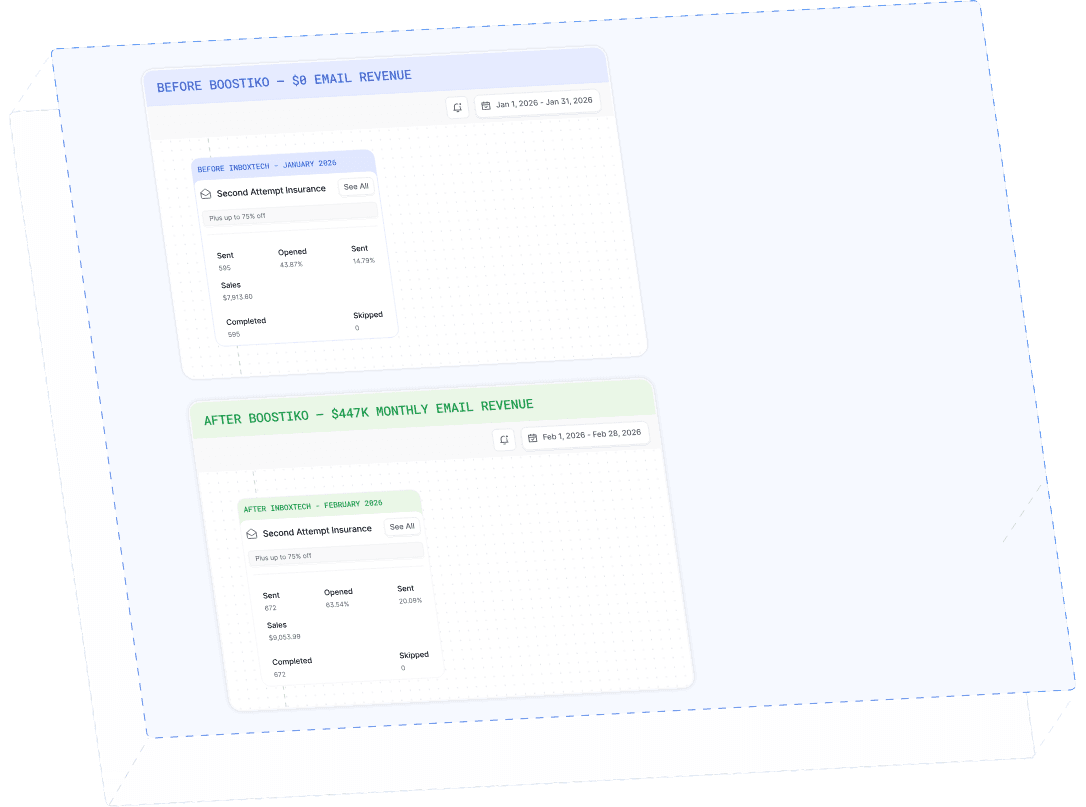
Case Study 01
Leading Prop Firm
$0 - $447K in 3 months
40.7% of total revenue
14 days time to first revenue
$0 to $447,115/month in Email Revenue in 90 Days