•
Boostiko Team

Email Marketing for Crypto Prop Firms
Crypto prop firms do not have a simple ecommerce lifecycle. A prospect can read rule pages for days, start checkout, buy a challenge, pass or breach an evaluation, receive an account update, become inactive, then return for another attempt. The email program has to understand that journey without overstating the opportunity, hiding risk, or treating every contact as the same lead.
That is the business case for email marketing for crypto prop firms. It is not a weekly promotional calendar with a few countdown timers. It is an operating system for consented communication, customer education, lifecycle triggers, and inbox reputation.
This article is practical guidance, not legal advice. Crypto, financial promotion, privacy, and consumer-protection rules vary by jurisdiction, offer structure, audience, and message. Have qualified legal and compliance reviewers assess claims, segmentation, required disclosures, risk warnings, approval routes, and local rules before launch.
The business problem: traffic is not a lifecycle
A crypto prop firm commonly sends paid traffic to a product page, then tries to recover every non-buyer with the same discount. That misses the actual job. The prospect may be uncertain about rules, platform access, eligible jurisdictions, pricing, drawdown mechanics, or what follows a breach. A generic “complete your purchase” email does not answer those questions.
The other failure is operational. Marketing sees list sign-ups, support sees account questions, the platform sees evaluation milestones, and payments sees checkout status. Without controlled data feeds, customers get irrelevant messages: buyers receive acquisition offers, opt-outs remain on exports, or a breach triggers a celebratory promotion.
Trust is particularly fragile in this category. Promising outcomes, displaying vague “earn” language, or implying that a customer will receive funding, profits, payouts, or a particular trading result creates both commercial and regulatory risk. Treat an email as a durable customer record, not throwaway ad inventory.
The baseline is also technical. Google requires senders delivering more than 5,000 messages per day to personal Gmail accounts to use SPF, DKIM, and DMARC, align the From domain with SPF or DKIM, support one-click unsubscribe for marketing and subscribed messages, and keep reported spam rates below 0.30%.1 Yahoo similarly requires SPF, DKIM, a passing DMARC policy, visible and one-click unsubscribe support for relevant mail, and a spam rate below 0.3%.2 These are operating requirements, not optional clean-up work after a campaign underperforms.
Lifecycle theory: match the message to the job
A useful lifecycle model has four layers: permission, state, intent, and risk.
Permission answers whether you may contact the person, through which channel, and for what purpose. Keep source, timestamp, form language, jurisdiction, and subscription preference with the profile. Do not assume a lead-magnet opt-in covers every promotional use. In the UK, marketing email to individuals generally requires specific consent, subject to a limited existing-customer exception with conditions; every message also needs an opt-out route.3 Other markets take different approaches, so build a jurisdictional review into the program.
State is the factual customer position: lead, checkout started, purchaser, evaluation active, support case open, inactive, or unsubscribed. Use it to prevent contradictions, not to infer financial sophistication.
Intent is what the person needs now. A new subscriber may want to understand the evaluation, an abandoner pricing clarity, and an active trader a concise rule reminder. Reduce the next decision, not increase pressure.
Risk includes privacy, frequency, substantiation, suppression, emotional timing, and jurisdiction. For UK consumers, the FCA says cryptoasset financial promotions must be fair, clear, and not misleading, including where overseas firms market to UK consumers.4 Put important limitations where readers see the claim.
The principle is one event, one audience, one job, one next step. Keep promotions out of sensitive transactional notices.
Practical implementation: build the minimum reliable machine
Start with an event map before you write a single flow. List every trigger, its source system, the fields passed, the owner, the allowed audience, the suppression rules, and the email’s purpose. Do not send from a webhook until you can explain its failure mode.
Lifecycle moment | Helpful email job | Minimum data needed | Guardrail |
|---|---|---|---|
Newsletter sign-up | Set expectations and orient the subscriber | consent source, time, locale, preference | Confirm what they signed up to receive |
Challenge-page visit or checkout start | Clarify rules, price, and support route | product viewed, checkout status, locale | Do not imply a result or use false urgency |
Successful purchase | Confirm the order and explain the next verified step | order ID, product, account status | Keep promotional content separate |
Active evaluation milestone | Deliver factual, approved education or account navigation | event type, status, platform | Review language for jurisdiction and accuracy |
Breach or completion | Give the applicable factual status and support path | verified status, support link | Avoid celebratory or exploitative automation |
Inactivity | Ask whether the subscriber still wants relevant updates | last engagement, preference | Reduce frequency and stop mailing disengaged records |
Then set up the data model. Use a stable customer ID and a controlled event taxonomy, such as checkout_started, order_paid, evaluation_active, and preference_updated. Limit data to what the email needs and document whether account-status data is live, delayed, manual, or derived.
Next, separate message classes. Transactional notices, lifecycle education, product marketing, and critical operational alerts need different templates, approvals, and sending rules. At a minimum, transactional mail must not be used as a loophole for promotional content. The U.S. FTC notes that whether a mixed email is commercial turns on its primary purpose, including what the subject line signals and where promotional material appears.5
Build the first five flows in this order:
Welcome and expectation setting. Confirm the subscription, explain the content cadence, give links to rules and support, and allow preferences.
Checkout clarification. Send a short sequence only while checkout is genuinely incomplete. Answer the one or two objections the page data and support tickets show most often. Stop immediately after payment or opt-out.
Post-purchase orientation. Confirm what was bought, point to authoritative account setup instructions, and explain where official rule information lives.
Active-customer education. Trigger only from verified status events. Focus on navigation, policies, and support, not trading advice or performance promises.
Repermission and sunset. Reduce frequency, invite a preference update, then suppress inactive people under the firm’s approved policy.
Track delivery, bounces, complaints, unsubscribes, clicks, conversion events, and support contacts. Treat opens as directional, not proof that a flow caused an outcome. Use valid test design before making any causal claim.
Agency versus in-house: choose by operating constraint
Model | Works best when | Main advantage | Main watchout |
|---|---|---|---|
In-house | You have dedicated lifecycle, design, engineering, and compliance capacity | Deepest product context and fastest access to data | Specialist gaps can leave flows, testing, or deliverability unmanaged |
Generalist agency | The need is mainly campaign production | Flexible execution bandwidth | May not understand trading events, crypto sensitivity, or the system model |
Specialist partner | You need a lifecycle program while internal owners retain final approvals | Combines a repeatable operating method with category context | The firm still owns product facts, legal decisions, and approval accountability |
A partner should not replace compliance. It should make review easier with clear briefs, approved language, version control, and an automation kill switch. Internal owners should approve event definitions, data access, audience logic, and risk wording.
A theory-led teardown: why the common “discount blast” breaks
Consider a familiar pattern: every lead gets a daily challenge promotion, abandoners get the same offer, purchasers are not suppressed promptly, and all mail shares the corporate domain.
That is message-market mismatch, missing state management, reputation concentration, and unreviewed persuasion. People in different states get the same pressure; a payment event does not stop the campaign; marketing volume shares reputation with essential notices; and claims are not reviewed for a jurisdiction-dependent category.
Fix it in order: define events and suppressions; write one message for one job; place approved limitations beside claims; authenticate the sender and configure list-unsubscribe; then ramp to engaged, consented segments while watching complaints and bounces.
The Boostiko solution for crypto prop firms
Boostiko helps crypto prop firms build an email program across the five functions that normally get split across several owners.
Design makes mobile-first emails clear. Copy makes the lifecycle job plain without manufactured certainty. Operations covers calendars, QA, approvals, audience rules, and reporting. Technical integration connects approved website, checkout, CRM, support, and account events to automation. Deliverability covers authentication, sender structure, list hygiene, opt-outs, and reputation monitoring.
The functions are interdependent: design needs data logic, copy needs inbox placement, and events need QA. The firm’s product, legal, and compliance stakeholders retain decisions requiring their authority.
If you need to turn checkout, account, and support signals into a governed lifecycle program, contact Boostiko to map a crypto prop firm email system. Bring your current ESP, event sources, approved markets, and top customer questions. The first goal is a sensible flow map, not an inflated promise.
FAQs
What emails should a crypto prop firm launch first?
Start with welcome, checkout clarification, post-purchase orientation, factual active-customer education, and inactive-subscriber preference or sunset flows. Launch only after the purchase and unsubscribe suppressions work reliably.
Can a crypto prop firm use purchased email lists?
Treat them as high risk. The European Commission says a provider must show data was obtained lawfully and may be used for advertising, including onward marketing where consent was the basis.6 A vendor assurance is not a substitute for documented review.
Are crypto prop firm marketing emails financial promotions?
It depends on the message, offer, recipient location, legal structure, and jurisdiction. Do not self-classify casually. For example, the FCA’s cryptoasset promotion regime applies broadly to firms marketing cryptoassets to UK consumers, including overseas firms.4 Get advice tailored to the actual promotion and audience.
What is the minimum deliverability setup?
At minimum, authenticate the sending domain, align the From domain as required, use a visible unsubscribe route, honor opt-outs, monitor complaints and bounces, and separate nonessential marketing from critical operational mail. Bulk senders should implement the Google and Yahoo requirements cited above before scaling.12
How often should we email prospects?
Use the consented expectation and lifecycle moment, not a fixed “more is better” rule. Start restrained, offer preferences, monitor complaints and unsubscribes, and reduce frequency when relevance falls. Yahoo advises honoring a list’s stated frequency.2
References



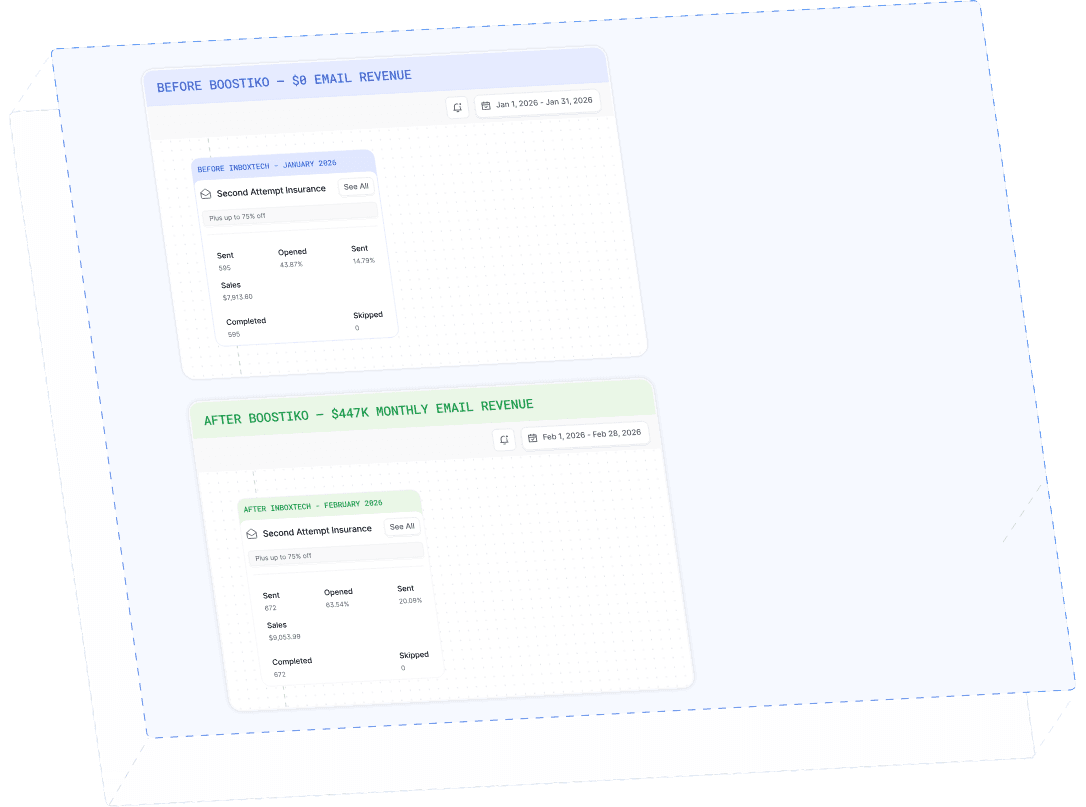
Case Study 01
Leading Prop Firm
$0 - $447K in 3 months
40.7% of total revenue
14 days time to first revenue
$0 to $447,115/month in Email Revenue in 90 Days