•
Boostiko Team

Forex Broker Retention Emails: Keep Clients Active With Clear Updates
A new client does not become a retained client because they made a first deposit.
After funding, many broker teams move people into a generic newsletter or a campaign built around market noise. That creates two problems. The customer receives messages that do not match their account state. The broker loses the chance to help them understand the platform, find support, and make informed decisions about how they use the service.
A stronger forex broker retention email system has a simpler job. It keeps clients informed after they become active, without turning every update into a promise about trading outcomes. It uses account events, useful education, clear service messages, and sensible limits on promotional mail.
This is general marketing and operations guidance, not legal, financial, trading, or regulatory advice. A broker should have qualified compliance, product, privacy, and legal reviewers approve the actual messages, disclosures, permissions, and claims for every market it serves.
Retention starts with the account state
A broker cannot retain clients with a single definition of “active.” A recently funded client, a client who has not opened the platform in several weeks, and a client whose account has a support issue have different needs. Sending each of them the same promotion is lazy marketing and weak customer service.
Start with the events that the broker can verify. Useful signals may include account approval, first funding completed, first platform login, a completed platform action, a support request, a change to account terms, a verified preference update, and a period without activity.
Each signal needs a clear source of truth. If the client portal records account status, use the client portal event. If support owns a ticket status, use the support system event. Do not assume that an email open, a link click, or a tracking pixel proves a client completed an account step.
This gives the team a practical rule:
Send a retention email only when the broker can explain why this client received it and what the client can do next.
That rule also makes messages easier to support. A client who asks “why did I receive this?” should get a plain answer from the account record, not a guess from a campaign calendar.
Separate account updates, education, and promotions
The most useful retention programs do not treat every email as the same thing. They separate messages by their actual purpose.
Account updates explain a status, a required action, a change to a feature, or a secure next step. These messages should be factual. They should state what happened, what it means, and where the client can get help. If the client needs to sign in, the email should link to the official secure area rather than ask for account information by reply.
Education helps clients understand the broker’s own platform, available tools, account settings, support process, and approved general resources. It should not make a trade recommendation or imply that a person will profit by acting. A short platform guide is more useful than an email that tells clients to “catch the next move.”
Promotions advertise a product, offer, or commercial opportunity. They need their own permission checks, eligibility rules, final terms, frequency limits, and unsubscribe controls. A promotion does not become an account email just because it is sent to an existing customer.
This distinction matters under U.S. commercial email rules. The FTC explains that the primary purpose of a message determines whether it is commercial. A message about an ongoing account relationship can be transactional or relationship content in certain circumstances. But when promotional content leads the subject line or dominates the message, it is likely commercial and should meet the relevant commercial email requirements. 1
For regulated communications within scope in the UK, the FCA says a firm must ensure that a communication or financial promotion is fair, clear, and not misleading. 2 The operational takeaway is straightforward: do not use a service update to hide a sales message, and do not use a promotional subject line to blur a material condition.
Build the retention flow around useful moments
A broker does not need an enormous flow map to improve post funding communication. It needs a small number of useful messages with real trigger and stop rules.
1. The settled account message
Trigger: The client has completed the broker’s approved funding and account setup steps.
Purpose: Confirm where the client can find the client area, account settings, platform access, support, and the information that applies to their account.
Primary action: Open the official client area.
Stop rule: Stop when the client completes the relevant onboarding action or enters a support or eligibility state that requires a different message.
Keep the copy factual. State that the account setup is complete if the system confirms it. Point to the secure area. Tell the client where approved guides and support are located. Do not turn the welcome email into a claim about potential trading results.
2. The platform confidence message
Trigger: The client is active but has not viewed a relevant platform guide, help resource, or account preference area after a reasonable period.
Purpose: Help the client use the service they have already chosen.
Primary action: View a platform guide, update a preference, or contact support.
Stop rule: Stop after the action is completed, a support ticket opens, or the client receives the planned maximum number of messages.
This is where a broker can explain practical basics: where account documents appear, how to find an approved platform guide, where contact options are listed, and how to update communication preferences. Keep any product details current and market specific. Do not state a fee, a feature, or availability condition unless it has been approved for that recipient.
3. The education message
Trigger: The client has opted in or can otherwise receive the relevant content, and the message fits their account stage and market.
Purpose: Give a useful explanation that makes the broker easier to understand.
Primary action: Read the resource, view an approved guide, or manage preferences.
Stop rule: Stop when the client opts out, changes preferences, reaches a frequency limit, or enters an account state where this topic is no longer relevant.
A good education email does not need to predict the market. It might cover how to find account support, how to recognize official broker communications, how to set notifications, or where the firm publishes required information. When a message discusses a financial product, risk, or a product feature, the correct review path matters more than a punchy headline.
The CFTC says that U.S. retail forex rules include disclosure, recordkeeping, reporting, conduct, and customer protection requirements. It also says that retail forex counterparties and intermediaries must distribute forex specific risk disclosure statements to customers. 3 A lifecycle email can direct a client to approved information. It should not replace, shorten, or bury a required disclosure within campaign copy.
4. The quiet account check in
Trigger: The client has no meaningful account activity for a defined period, is eligible for communication, and has not opted out of the relevant category.
Purpose: Give the client a calm path back to their account, education, support, or communication controls.
Primary action: Open the secure client area, review a guide, contact support, or update preferences.
Stop rule: Stop after a relevant action, an opt out, a complaint, a hard bounce, a support request, or the frequency cap.
Do not call this a “last chance” message unless there is a real, approved deadline that applies to the individual recipient. Do not imply that a dormant client has missed a profit opportunity. A quiet account message should help the person understand what remains available to them, not manufacture urgency.
5. The human support handoff
Trigger: A client’s response, support event, or account state requires an individual answer.
Purpose: Move the person out of automation and toward the correct help route.
Primary action: Contact the designated team or use the official secure support channel.
Stop rule: Stop automated marketing messages that would conflict with the open case.
This step is often missed. A person with an unresolved identity, funding, platform, or complaint issue should not keep receiving unrelated campaign mail. Feed key support states back to the email platform so the automation can pause or change course.
Make every sender and link easy to verify
Retention messages often ask a client to visit a dashboard, review an account notice, or contact support. That makes trust visible in the details.
Use the broker’s established sender name and an authenticated sending domain. Link to the official website and secure client area. Do not ask a client to send passwords, payment details, identity documents, recovery phrases, or other sensitive information by email. If account action is needed, explain the action in plain language and send the client to the secure location.
Google’s sender guidelines require SPF or DKIM authentication for all email sent to personal Gmail accounts. For bulk senders, Google requires SPF, DKIM, and DMARC, aligned sender domains, and one click unsubscribe for marketing and subscribed messages. Google also says senders should keep Postmaster Tools spam rates below 0.3%. 4
For a forex broker, these are not just technical tasks for an IT ticket. The marketing, operations, and deliverability teams should agree on which domains send account messages, which domains send marketing, which links clients should expect, and how an unusual event is investigated.
A client should be able to recognize a genuine message without reading every word. Consistent names, correct domains, clear subjects, secure links, and an obvious support route do real retention work.
Respect permission and give clients control
A client relationship does not erase marketing preferences. Retention campaigns should use the consent and suppression data that apply to the recipient and market.
The ICO says marketing email to individuals generally requires specific consent under the UK electronic mail rules, subject to a limited soft opt in for an organization’s own similar products or services when the required conditions are met. The guidance also says senders must not conceal their identity and must provide a valid contact address for opt out or unsubscribe. 5
The FTC’s CAN SPAM guidance requires commercial messages to have accurate header information, non deceptive subject lines, a valid postal address, and a clear opt out method. It says opt out requests must be honored within 10 business days. 1
Build the controls into the workflow instead of adding them at the end:
Store the permission source, date, location, and category where applicable.
Keep account notices separate from promotional flows.
Apply opt out, complaint, hard bounce, and frequency exclusions before each send.
Let people reduce marketing topics without losing genuine account or security notices.
Screen every new audience against the current suppression list.
Stop manual campaign uploads that bypass the client’s preferences.
A preference center can be simple. The important part is that it works. A client should be able to stop marketing messages without having to call support or find a hidden link.
Measure whether the program helps clients
Open rate is not a retention strategy. It may be one signal, but it cannot tell a broker whether a message was clear, welcome, or useful.
Start with measures that reflect the actual journey:
secure client area visits after a service message
platform guide completion or support resource visits
time from a documented account event to the correct next action
support tickets connected to unclear account communication
opt outs, complaints, bounces, and delivery by message type
duplicate messages prevented by stop rules
reactivation activity that follows a permitted check in
Then review commercial performance with those quality signals. A campaign that generates clicks but also creates complaints or support confusion is not a healthy retention program. A smaller permissioned audience may be more useful than a large list that has stopped engaging.
Review the data with the broker’s operations, support, compliance, product, technical, and privacy owners. If a message drives repeated questions, improve the copy or the client area destination. If a client reaches a support state, make sure the marketing flow stops. If an account event arrives late, make sure the system does not send a duplicate or misleading update.
Build it without adding five internal hires
A mature forex broker email program needs more than a copywriter. It needs lifecycle planning, audience operations, technical event mapping, responsive email design, deliverability monitoring, quality assurance, and a sensible review process.
That is why the in house versus agency question is not simply about who writes the next campaign. An in house team may need a designer, email developer, lifecycle operator, copywriter, technical resource, and deliverability specialist to cover the full system. Boostiko brings these working roles together for high consideration and restricted verticals, while the broker keeps control of its product facts, customer data, regulatory review, and final approvals.
What Boostiko builds for forex brokers
Boostiko helps forex brokers turn scattered account events into a clear retention system. That includes event mapping, audience logic, lifecycle strategy, copy, design, deliverability controls, campaign operations, and testing across the client journey.
The broker remains responsible for its markets, product accuracy, required disclosures, permissions, and approval process. Boostiko helps the internal team turn those approved inputs into messages that clients can understand and teams can operate.
If your current program jumps from first deposit to generic campaigns, book a call with Boostiko. Bring your account events, current retention emails, target markets, client area steps, and approval process. We can map the gaps and build the system around real client states.
FAQs
What is a forex broker retention email?
It is an email that helps an existing client understand a relevant account status, platform resource, support route, preference setting, or permitted marketing offer. The message should have a clear reason for sending and one relevant next step.
Should a broker use trading performance claims in retention email?
Not by default. A retention email can normally explain the account or platform action without claiming that a client will profit or implying a specific trading result. Any financial promotion or performance reference needs the broker’s appropriate compliance review.
How often should a broker send retention emails?
There is no universal number. Set frequency limits based on the account event, client permissions, market, complaint signals, and support capacity. Stop messages when the client completes the relevant action, opts out, opens a conflicting support case, or reaches the cap.
Can account updates include promotions?
They can create classification and review issues. Keep genuine account messages focused on the account status. Send promotional content separately when the recipient is eligible to receive it and the full commercial email controls apply.
Who should own the retention flow?
The broker should give ownership to a team that can coordinate product, operations, support, compliance, privacy, technical systems, and marketing. A specialist partner can build the lifecycle, but the broker retains responsibility for the accuracy and approval of its communications.
References
Continue reading



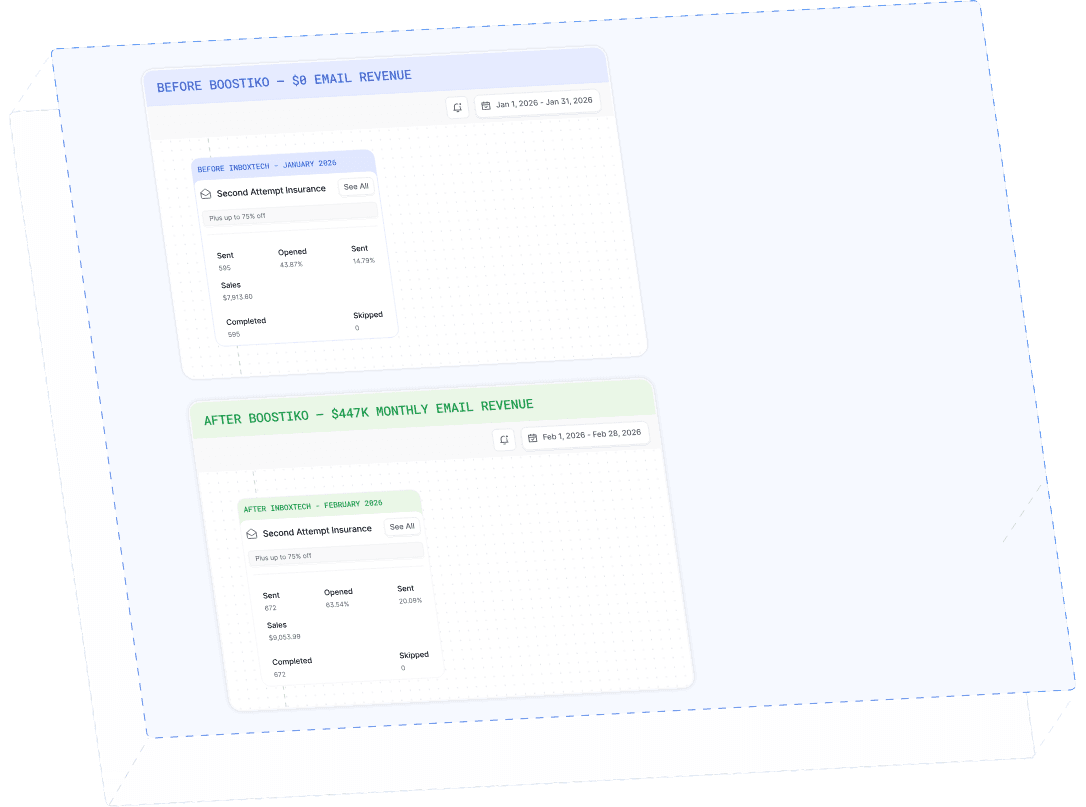
Case Study 01
Leading Prop Firm
$0 - $447K in 3 months
40.7% of total revenue
14 days time to first revenue
$0 to $447,115/month in Added Revenue in 90 Days