•
Boostiko Team

Futures Prop Firm Rule Reminder Emails: Keep the Evaluation Path Clear
A trader should not have to hunt through a long FAQ to find the rule that affects their next decision.
That is where a well-built futures prop firm email marketing system helps. It sends a short, accurate reminder when it has a real reason to do so. The message points to the current rule page, tells the trader where to get help, and does not turn every account update into a sales pitch.
This matters because evaluation rules are not background details. A daily loss limit, trailing drawdown, minimum trading-day rule, consistency rule, reset condition, or payout requirement can change what a trader needs to do next. When the rule explanation is late, vague, or mismatched to the account state, support volume rises and trust drops.
This article is general operations guidance. It is not legal, financial, trading, or regulatory advice. A futures prop firm should have its own qualified team review the exact product, customer terms, jurisdiction, permissions, disclosures, and communication process before sending any campaign.
Start with the real account event
The biggest mistake is triggering a reminder because it feels useful rather than because the underlying account system confirms a specific state.
For example, a customer who has opened an evaluation account may need a welcome message. That is different from a customer whose account is approaching a daily-loss threshold. A person who has already completed a required minimum day is different from a person whose account is inactive. The email flow needs to know the difference.
Build each message around a controlled event. A practical event list might include:
evaluation account created
first platform login completed
no first trade after a defined period
daily-loss warning threshold reached
drawdown threshold reached
minimum trading-day milestone reached
rule acknowledgement or education page completed
support ticket opened
account status changed
marketing permission changed
These event names are for the operations team. They do not need to appear in the email. Their job is to make sure the right template reaches the right person at the right time.
Every event should have a source, a timestamp, an owner, and a plain-language definition. If an event is delayed, duplicated, or corrected later, the system should avoid sending a second message that contradicts the first. A good rule reminder is reliable because the event data is reliable.
Remind people of rules without sounding punitive
Rule emails work best when they help the trader understand their next step. They become less useful when they read like a threat, a vague warning, or an attempt to force a purchase.
A useful daily-loss reminder could say:
Subject: A reminder about your daily loss limit
Your account is close to the daily loss limit set out in your evaluation rules. Please review the current rule details before placing another trade. You can view the full rule page in your dashboard or contact support if you need help understanding the account status.
Primary action: Review account rules
Secondary action: Contact support
This is better than language such as “Do not blow your account” or “Save your funded future now.” It tells the customer what happened, points to the approved source, and gives them a practical support route. It does not speculate about their trading outcome.
The exact wording must match the real product terms. If a threshold shown in the email is calculated by a separate platform or is subject to an end-of-day process, do not imply that the number is final. Link to the authenticated dashboard or the approved rule page instead.
Keep promotional claims out of rule messages
A rule reminder should not be used as an excuse to add pressure. Statements about likely profits, fast funding, easy payouts, or guaranteed outcomes do not help a trader understand an account rule. They can also create a compliance problem.
NFA Compliance Rule 2-29 prohibits covered members and associates from using communications that operate as fraud or deceit, use a high-pressure approach, or state that commodity interest trading is appropriate for everyone. The rule also says a profit reference in promotional material must have an equally prominent discussion of risk of loss. 1
The rule’s scope depends on the organization and activity involved. Even when a particular futures prop firm is not in the same category as the members named in the rule, the standard is a sensible baseline for email operations. The message should be accurate, not misleading by omission, and reviewed before it reaches customers.
Do not add a promotion to a message about a rule state. A line like “Your drawdown is close, but you can start a fresh evaluation today” changes the purpose of the email. It can feel opportunistic at exactly the moment the customer needs clear operational information.
If the business has a genuine, approved offer, put it in a separate marketing flow. That flow needs its own audience conditions, eligibility rules, message frequency, opt-out handling, and review process.
Use one template for one job
Futures prop firms often have a few simple account moments that can support a clear reminder sequence. Each one deserves its own template and stop rule.
New account rule guide
Trigger: A verified evaluation account is created.
Goal: Give the customer a short path to the official rules, dashboard, support, and platform setup information.
Include: The account name, a link to the current rule page, the official dashboard link, and support contact details.
Do not include: A claim that the customer is likely to pass, earn, receive funding, or qualify for a payout.
Stop rule: Stop the onboarding sequence when the customer completes the relevant setup, opens a support case, changes account state, becomes ineligible, or changes email preferences.
First-trade reminder
Trigger: A person with a valid account has not placed a first trade after a defined period.
Goal: Help them find the platform, account credentials, rules, and support documentation.
Include: A short note that the account is available, the official login route, and a link to the evaluation rule guide.
Do not include: A false deadline or a claim that they are losing an opportunity by waiting.
Stop rule: Stop when a first trade, cancellation, support request, or account status change is recorded.
Threshold education reminder
Trigger: The approved account system reports that a defined education threshold has been reached.
Goal: Direct the customer to the current account data and an explanation of the rule.
Include: Clear context, the precise rule name, a dashboard link, and support.
Do not include: A conclusion that the account has failed or passed unless the source system confirms that exact status.
Stop rule: Stop when the threshold no longer applies, the account state changes, the customer has already seen the required notice, or a support case is open.
Inactive account check-in
Trigger: An account has had no relevant activity for a defined period and the recipient is eligible for the message.
Goal: Help the person identify whether they need technical or product support.
Include: A link to login, account status, support, and the current rule guide.
Do not include: “Last chance” language unless there is a real, current, approved deadline that applies to that person.
Stop rule: Stop when activity resumes, support is requested, the account is closed, or the person opts out of the applicable marketing stream.
Link to the source of truth
A short email cannot carry every product condition. It also should not try.
Use the message to point to the current approved source: the authenticated account dashboard, official help center, plan terms, or rule page. The content owner should have a process for updating those pages whenever a rule changes. The email system then needs a way to pause templates that refer to the old version.
This is especially important for risk disclosures and account-opening steps. The CFTC says that before an FCM or IB opens a commodity futures account for a retail customer, the customer must receive a written disclosure statement and return a signed, dated acknowledgement. 2 A marketing or lifecycle email can direct a customer to the approved account experience. It should not replace, summarize away, or hide the required materials.
The same principle applies to internal product rules. An email must not become the only place where a trader learns a material condition. If the rule is important enough to change the customer’s account experience, it should be easy to find in the product itself.
Separate operational notices from marketing
Before a template is triggered, assign it a message type. The main categories are usually operational, support, and marketing.
An operational notice explains a real account state, login issue, product change, or support action. Its copy should stay focused on that exact task.
A support message answers a question, confirms a ticket, or gives the customer a next step. It should not hide an offer inside a reply about an urgent problem.
A marketing message promotes an evaluation, discount, feature, or purchase decision. It must use the rules for promotional email, including audience eligibility and suppression.
The distinction is not cosmetic. The FTC says CAN-SPAM looks at an email’s primary purpose. A message that advertises or promotes a commercial product or service is commercial, even if it also contains an account update. Commercial emails need accurate header information, non-deceptive subject lines, a valid postal address, a clear opt-out method, and prompt handling of opt-out requests. 3
When an account notice is mixed with a large promotional block, the customer may rightly read it as a campaign. Keep the account information first and separate promotions into their own reviewed journey.
Build permission checks into every send
An account event is not permission to ignore customer choices.
For marketing email to individuals in the UK, the ICO says specific consent is generally required, subject to a limited soft opt-in for an organization’s own similar products when the relevant conditions are met. The ICO also says organizations must identify themselves, provide a valid opt-out route, and maintain a do-not-contact list. 4
The operational application is straightforward. Store the permission source, capture date, market or audience rule, and most recent preference change in one customer profile. Before a marketing message sends, screen the audience against unsubscribes, spam complaints, hard bounces, account restrictions, and any other suppression rule approved by the business.
Do not copy an old checkout list or export a platform report into a new campaign. Use the customer record and its current permission state. This protects the customer, the sending reputation, and the team that has to explain a complaint later.
Protect the sending domain as the flow grows
A useful rule-email program can become harmful if it sends too often or ignores negative signals.
Google requires SPF or DKIM for all senders to personal Gmail accounts. Bulk senders must use SPF, DKIM, and DMARC. Google also requires one-click unsubscribe for qualifying bulk marketing and subscribed messages, and says senders should monitor spam rates and reputation. 5
For a futures prop firm, the practical controls are clear:
Use a sending domain that has the correct authentication records.
Keep a stable sender name and recognizable From address.
Limit how many reminders one person can receive within a defined period.
Stop marketing messages immediately when an unsubscribe, complaint, hard bounce, or conflicting account state occurs.
Test dashboard, support, and rule links on mobile before a template launches.
Watch complaint rate, unsubscribe rate, hard bounces, and support tickets by template.
Pause the flow when data quality or deliverability signals indicate a problem.
The goal is not to send every possible reminder. The goal is to send the few messages that help a real customer at a real account moment.
What to measure
Do not judge a rule-reminder flow by open rate alone. That number can be distorted by mailbox behavior and does not prove that the message was accurate or useful.
Track whether the message reached an eligible recipient, whether they visited the official rule or dashboard page, whether support tickets became easier to resolve, and whether the send was prevented when a stop rule applied. Compare unsubscribe and complaint signals across templates. Keep an eye on duplicate sends and messages sent after an account moved into a conflicting state.
Those measures tell the operations team where the journey is unclear. If many traders open a rule reminder and then submit the same support question, the next improvement may be the rule page or dashboard, not a stronger email subject line.
What Boostiko builds for futures prop firms
Boostiko helps futures prop firms turn scattered rule content, account events, and support questions into a clear email system.
We can map the lifecycle, define events and stop rules, write and design the templates, build segmentation, set up deliverability controls, and support campaign operations. That gives a firm the practical depth of strategy, design, copy, operations, technical support, and deliverability work without assembling those separate roles internally.
Your team keeps ownership of product terms, customer data, compliance review, trading disclosures, and final approval. Boostiko builds the communication layer around the real customer journey.
If your rule emails are late, inconsistent, or too promotional, book a call with Boostiko. Bring the current rules, templates, account events, support patterns, target markets, and approval process. We will help make the next step clearer for your customers and easier for your team to run.
FAQs
Should a futures prop firm send rule reminders by email?
It can be useful when an approved account event shows that the reminder is relevant and the recipient is eligible. Keep the email short, point to the official rule source, and give the person a real support path.
Can a rule reminder promote a new evaluation?
It is better to separate the two. A customer who needs help understanding their current account rule should receive a focused operational or support message. A new offer belongs in a separate reviewed marketing flow.
How often should rule reminders be sent?
There is no universal number. Start with clear triggers, frequency limits, and stop rules. Review support volume, spam complaints, unsubscribes, data errors, and customer feedback before expanding the sequence.
Should the email explain every account rule?
No. Use the email to identify the relevant rule and link to the current official source. Long explanations can become outdated or leave out material conditions.
What should stop a reminder flow?
Stop when the relevant account state changes, the customer completes the intended action, a support case opens, the account is closed or restricted, a frequency cap is reached, the person opts out of the applicable stream, a hard bounce occurs, or a complaint is recorded.
References
Continue reading



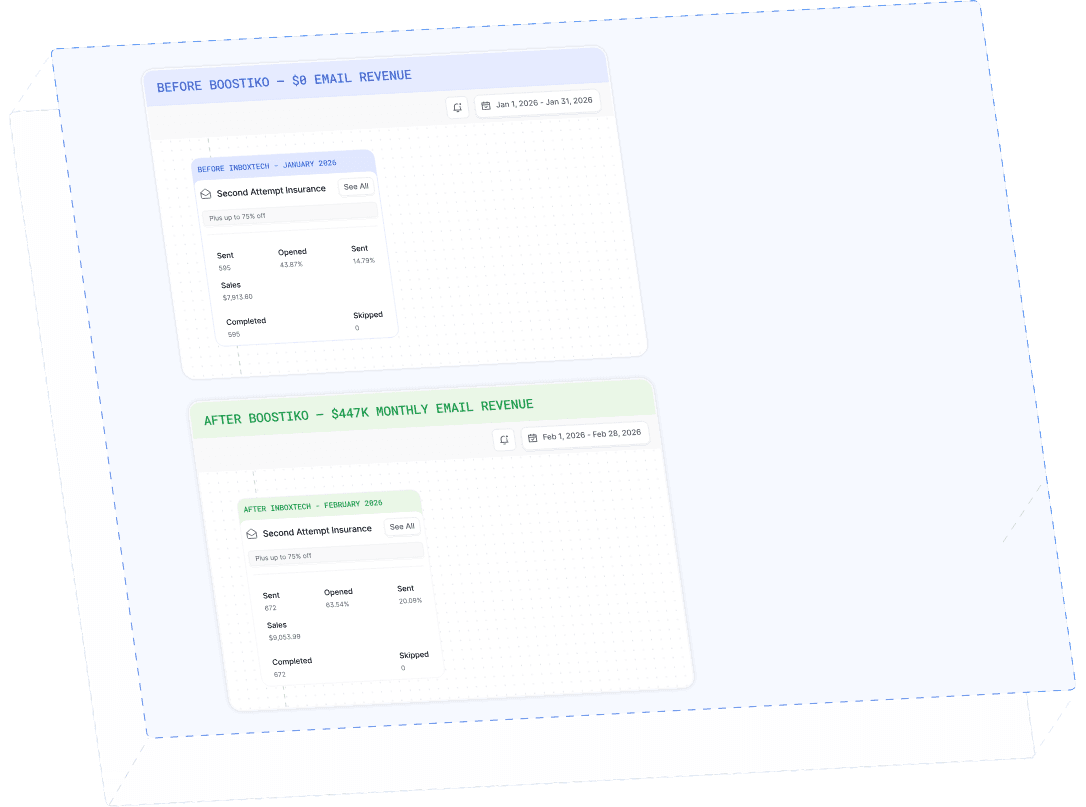
Case Study 01
Leading Prop Firm
$0 - $447K in 3 months
40.7% of total revenue
14 days time to first revenue
$0 to $447,115/month in Added Revenue in 90 Days