•
Boostiko Team

Perpetual Prop Firm Email Marketing: Build a Clear Risk Education Flow
Perpetual prop firm email marketing should make the product easier to understand before it asks someone to take the next step.
That means the first emails do not lead with a discount, a countdown, or a promise. They answer the questions a new trader actually has: What account am I opening? Where are the rules? What happens if the market moves quickly? How do I find my live account information? Who can help if I do not understand a term?
A perpetual contract product can be hard to explain in a short message. The markets can run continuously, terms differ between firms, and leverage can make a small price move matter more. The CFTC warns that volatility in virtual currency markets can be amplified in margined futures contracts, and that leverage amplifies underlying risk. 1
The right response is not a longer sales email. It is a clear education flow that gives each customer the current rule source, a simple next action, and a support route. This article is general operations guidance, not legal, financial, or trading advice. Every firm needs its own review of product terms, customer permissions, target markets, risk disclosures, and applicable rules before sending messages.
Make the first message useful
The first email after a signup or account creation should have one job: help the person understand where to begin.
It does not need to explain every rule in the body. In fact, trying to summarize every product condition in a single email can create a new problem. People skim it, key details get missed, and the email can go out of date when the product changes.
Instead, link to the current account dashboard, the approved terms, the risk page, the relevant rule guide, and support. Give each link a plain label. Do not make a trader guess whether “Learn more” leads to a marketing page or an actual rule explanation.
A good first message can be as simple as this:
Subject: Your account guide is ready
Your account details and current rules are available in your dashboard. Before you start, review the product terms, risk information, and account rules that apply to your plan.
Primary action: Open your dashboard
Second action: Review account rules
Need help? Contact support
This is clear because it does not pretend that a product tutorial is a substitute for the official terms. It helps the person find the information they need and makes support easy to reach.
Use separate emails for separate moments
One generic onboarding flow usually becomes messy. It mixes account setup, product education, support answers, promotions, and urgent updates into a long sequence. The customer cannot tell what requires attention and the operations team cannot tell which message helped.
A better system assigns one purpose to each email.
Account setup
Trigger: An account is created or a purchase is confirmed.
Purpose: Help the customer access the dashboard, find the current rules, and understand where support is available.
What to include: The official login route, current product terms, risk information, rule guide, and support contact.
What to avoid: Any suggestion that passing an evaluation or making a return is likely.
Product education
Trigger: The customer has completed the basic setup but has not completed the education step chosen by the business.
Purpose: Explain the product in plain language and direct people to the current source of truth.
What to include: A short explanation of the relevant account concept, one link to the applicable rule page, and an option to contact support.
What to avoid: Vague phrases such as “trade smarter” or “unlock your potential.” They do not tell the customer what to do.
First platform session
Trigger: A verified account has not logged in after a reasonable, approved period.
Purpose: Help a customer who may be stuck with platform access, account details, or basic setup.
What to include: The login link, supported platform guidance, the rule guide, and support.
What to avoid: A fabricated deadline. If a real deadline exists, show it only when it applies to that person and link to the approved term.
Rule or status reminder
Trigger: The account system reports a specific approved state that needs a reminder.
Purpose: Direct the customer to current account information and support.
What to include: The name of the relevant rule or status, a link to the dashboard, and a link to the detailed rule explanation.
What to avoid: Language that says the account has passed, failed, or is eligible unless the system has confirmed that exact state.
Separate marketing campaign
Trigger: The person is eligible to receive marketing under the firm’s current permission and suppression rules.
Purpose: Share a genuine offer or product update.
What to include: Clear offer terms, the audience condition, the expiry if one exists, and an obvious opt out.
What to avoid: Hiding a promotion inside an operational notice.
This structure reduces confusion. It also gives the team clear stop rules. A support ticket, account restriction, status change, hard bounce, opt out, or completed action can stop the next message before it sends.
Explain leverage and liquidation without selling fear
Risk education should be direct. It should not frighten people for the sake of creating urgency, but it should not hide the fact that leveraged products can move quickly.
The CFTC explains that leverage can amplify risk because customers fund contracts at a fraction of the underlying commodity value. It also states that a market move against a position may force a customer to refill a margin account or close out a position. 1
A perpetual prop firm can use that principle to improve its email content. Do not copy generic risk language into every message. Instead, use specific, approved wording that points the customer to the actual product conditions.
For instance, a product education email can say:
Subject: Review how your account limits work
Before using your account, review the current limits and risk conditions that apply to your plan. Your dashboard shows the latest account information. The rule guide explains how each limit is calculated and when it applies.
Primary action: Review current account rules
Secondary action: Contact support
The message does not promise a trading outcome. It does not claim that a certain strategy is safer. It does not tell the person how to trade. It tells them exactly where to find the approved account information.
Let the product, not email copy, hold the key terms
Email is an entry point, not the place to store a firm’s complete rule set.
Use the email to direct customers to an authenticated dashboard or a maintained rule page. The detailed source should show the current version, last updated date, account scope, and support route. When a condition changes, the product and support teams should update the source first. Only then should the email team decide whether a notice is required.
The lifecycle team needs a simple content control process:
A product owner confirms the current rule text and intended account audience.
A compliance owner reviews any material risk or marketing language where required.
The email team links to the exact source page rather than paraphrasing conditions that may change.
Support confirms that the customer help route matches the account product.
The message is tested on mobile, with working dashboard and support links.
The team sets a stop rule before the campaign is activated.
This is not slow work when it is built into the normal release process. It prevents an old email from sending a customer to terms that no longer apply.
Keep promotions outside account notices
A customer who has received an account update deserves a focused update. Adding a sales block to the top of that email can change the message’s purpose and make it harder for the person to find the information they need.
The FTC says that an email’s primary purpose determines whether it is commercial or transactional or relationship content. It also explains that a message that combines commercial and relationship content may be treated as commercial depending on the subject line, placement, and overall content. 3
That gives a practical rule for the email calendar: keep account notices operational. Keep product offers separate.
An account update can include a small support link. A support confirmation can include a direct route back to the dashboard. Neither needs a big sale banner. If the firm later sends an approved offer, it should go to the right eligible audience as a distinct campaign with clear terms and a visible opt out.
This protects clarity. It also protects the relationship with the customer. No one wants to open a message about an account status and find that the main message is an attempt to sell something else.
Build permission checks before the send button
A lifecycle event does not remove a person’s marketing choices.
For marketing emails to individuals in the UK, the ICO says specific consent is generally required, subject to a limited soft opt in for an organization’s own similar products where the conditions are met. The ICO also says organizations must identify themselves, provide a valid contact address, offer an opt out, and maintain a do not contact list. 4
The operational work is practical. Store the source of consent, the date it was captured, the market, the type of messages agreed to, and every later preference change. Before a marketing message sends, screen the audience against unsubscribes, spam complaints, hard bounces, account restrictions, and the relevant frequency cap.
For a perpetual prop firm, it is particularly important not to reuse account data as a shortcut for a broad campaign. An account holder may need a service message. That does not mean every person should receive an offer. Keep the permission logic clear and auditable.
Design for trust and deliverability
The strongest email flow still fails if customers cannot identify the sender or messages land in spam.
Google requires all senders to personal Gmail accounts to use SPF or DKIM. It requires bulk senders to use SPF, DKIM, and DMARC. For qualifying marketing and subscribed messages, Google also requires a one click unsubscribe option and a visible unsubscribe link in the message body. 5
Set up the technical basics before increasing volume. Then protect sender reputation with normal controls:
Use a stable sending domain and recognizable From name.
Keep account notices and marketing campaigns on clearly managed streams.
Check every link after a rule page or dashboard update.
Suppress people who opt out, complain, or hard bounce.
Set a frequency cap so a person does not receive several reminders about the same account moment.
Monitor spam complaints, bounces, opt outs, and support tickets by template.
Pause a flow if the source event becomes unreliable.
A small number of accurate messages is better than a long series of reminders that repeats the same information.
Review promotion copy by market
Where a firm markets qualifying cryptoasset promotions to UK consumers, the FCA says the financial promotions regime applies regardless of the technology used. The FCA says promotions should be fair, clear and not misleading, and notes the use of specific risk warnings and positive frictions in consumer journeys. 2
The exact legal position depends on the product, firm, activity, and location. The practical lesson for email teams is simple: do not use one general global template without review. Segment copy, risk language, landing pages, offer eligibility, and approval rules by the markets the firm serves.
That does not make copy weaker. It makes it more credible. A message that clearly names an offer, a rule, a support route, and the current source is easier for the customer to act on and easier for the firm to defend.
Measure whether the flow makes the journey clearer
Open rate is not enough. It does not tell you whether the customer reached the right page or understood the relevant condition.
Track whether each email was sent only to eligible people, whether dashboard and rule links were visited, whether support tickets after that message were resolved faster, and whether stop rules prevented unnecessary sends. Compare unsubscribes, complaints, and hard bounces across templates. Review any duplicate send or stale rule link as an operations issue, not just a creative issue.
If a large number of people open a message and ask the same question, improve the linked rule page, dashboard, or help article. A stronger subject line will not fix a product explanation that is still unclear.
What Boostiko builds for perpetual prop firms
Boostiko helps perpetual prop firms create email systems that make the customer journey clearer from signup through active account use.
We map customer events, define segments and stop rules, write direct copy, design the emails, build the lifecycle logic, check deliverability foundations, and support the ongoing campaign operation. Your team keeps ownership of product terms, customer data, compliance review, and final approvals.
That gives you the practical coverage of a strategist, designer, copywriter, operations lead, technical builder, and deliverability specialist without needing to assemble every role separately in house.
If your emails are too promotional, unclear, or disconnected from real account events, book a call with Boostiko. Bring your current templates, product rules, target markets, data events, support questions, and approval flow. We will help turn them into a clearer system that your team can run.
FAQs
What should be in a perpetual prop firm welcome email?
Include a verified route to the dashboard, the current rules, risk information, account terms, and support. Keep the message focused on setup and do not use it to promise any trading outcome.
Can an account update also promote a new offer?
It is better to keep them separate. Account notices should focus on the real customer status. Promotional messages need their own audience checks, terms, permissions, and opt out handling.
How do I know if a rule reminder should send?
Use a defined event from the approved account system. Give every rule reminder a source, timestamp, eligible audience, frequency cap, and stop rule. Do not send it because a general campaign calendar says it is time.
How can the email flow support deliverability?
Authenticate the sending domain, use clear sender identity, remove ineligible recipients, provide an easy unsubscribe route where required, and monitor complaints and bounces. Reduce volume when a flow produces negative signals or repeated confusion.
Should risk language be the same in every country?
No. Product terms, target markets, permissions, and rules can differ. Use the appropriate reviewed template and route people to the correct current source for their account and location.
References
Continue reading



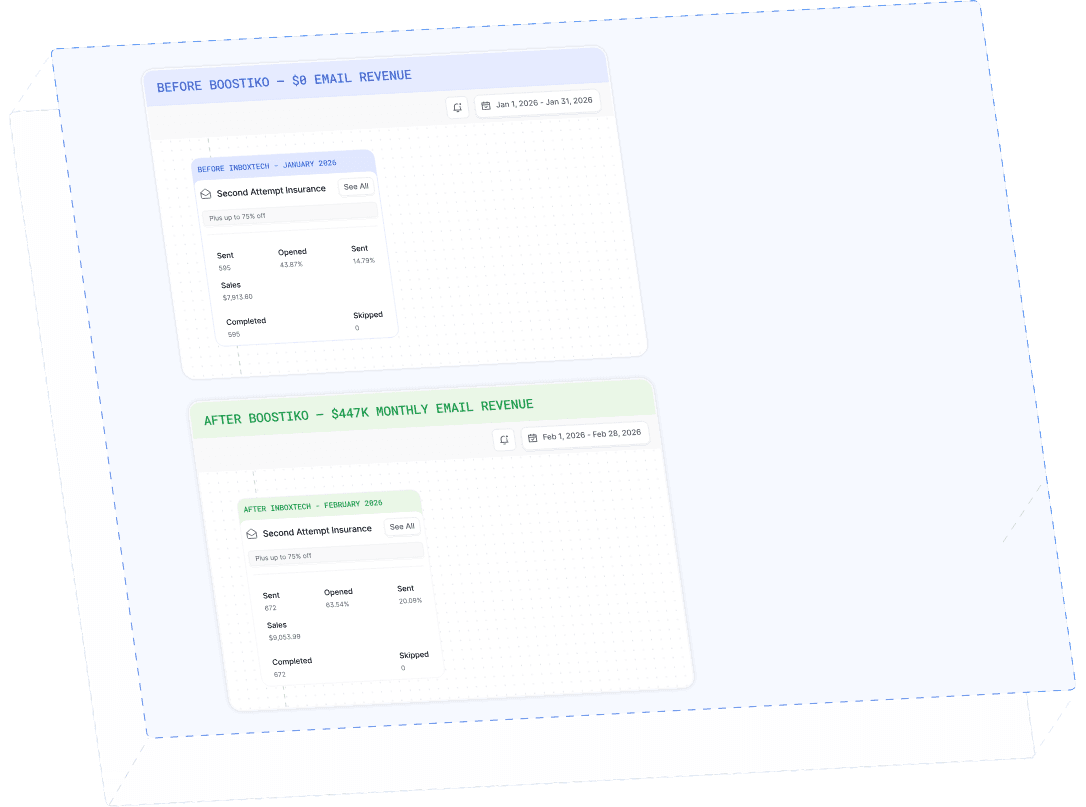
Case Study 01
Leading Prop Firm
$0 - $447K in 3 months
40.7% of total revenue
14 days time to first revenue
$0 to $447,115/month in Added Revenue in 90 Days