•
Boostiko Team

Prop Firm Email Segmentation: A Practical Guide
Email marketing for prop firms works when the message matches the trader’s actual stage. It fails when every contact receives the same offer, same reminder, and same urgency regardless of what they already did.
A prospect reading your rules page needs a useful explanation. Someone who started checkout may need help with an eligibility question or payment step. An active evaluator needs operational information that is clear and separate from promotion. A previous customer may be open to education or a relevant offer, but not a stream of messages that ignore their history.
Segmentation is how you make those differences operational. It is not a giant collection of tags for their own sake. It is a small set of reliable states, events, exclusions, and message rules that keep each send relevant.
This article is practical guidance, not legal advice. Prop firms can serve people in different countries and may need legal and compliance review for product claims, risk disclosures, eligibility, consent, privacy, and marketing rules before sending.
Start with four clear audience states
For most prop firms, the first useful lifecycle model is simple:
Lead: someone who requested information, joined a list, or viewed key pages without starting checkout.
Checkout starter: someone who began a purchase flow but did not complete it.
Evaluator or active customer: someone currently using the program or account.
Former customer: someone whose program, account, or paid relationship has ended.
These are business states, not personality labels. Do not infer intent from one email open or a social click. Use events your systems can verify, such as form submission, checkout start, purchase completion, account creation, support ticket, program status, or a clear preference selection.
Each state should answer one question: what is the next useful message for this person? That question prevents a broad campaign from becoming a source of confusion.
A lead may need a plain explanation of your program model and a link to current rules. A checkout starter may need a short answer about payment, eligibility, or account setup. An active evaluator may need a product notice or support route. A former customer may need a useful education message or a chance to update preferences before any promotion is considered.
This is also a deliverability decision. Gmail says senders should send to people who want the messages, make unsubscribing easy, and consider removing people who do not open or read them. It requires all senders to authenticate with SPF or DKIM, while larger senders need SPF, DKIM, and DMARC.1 Yahoo also tells senders to use authentication, send relevant mail to active audiences, keep spam complaints low, and make unsubscribe easy.2
Separate events from campaigns
A campaign starts because your team wants to say something. An event message starts because the recipient did something or needs something. Both have a place, but they should not use the same logic.
Build an event map before writing the first sequence. Common prop firm events include a guide request, new subscriber confirmation, rules page visit, checkout start, payment completion, account creation, evaluator start, support case opened, program status change, inactivity window, and cancellation.
Then decide what should happen after each event. Not every event needs email. Send only when the message helps the person complete a legitimate next step, understand a policy, or receive an agreed service update.
For example, a checkout recovery sequence can be helpful when it follows a genuine checkout start. The first message can ask whether the person needs help with a payment step, eligibility requirement, or account question. It should use one direct call to action. It should not claim that the recipient will earn money, imply guaranteed approval, or create artificial scarcity.
A rules update is different. Its primary job is to state what changed, when it takes effect, who it applies to, and where to read the complete policy. Keep it separate from a sale. When an important operational message is mixed with an offer, the recipient has to guess which part matters most.
The U.S. Federal Trade Commission explains that the primary purpose of a message matters. A commercial message needs accurate routing details, a truthful subject line, a valid postal address, a clear opt out method, and prompt opt out handling. A message with mixed commercial and relationship content can still be treated as commercial depending on its subject line and the placement of promotional material.3
Build the minimum data model
Email teams often start in the campaign builder. Start with the data instead. A useful segment is only as reliable as the event behind it.
Record the source, owner, and update rule for every lifecycle field. At a minimum, your team should know whether the person gave consent or otherwise has a valid basis to receive marketing, when and where that status was captured, their language and country where appropriate, their product interest, current account state, recent checkout activity, program status, and any reason they should be excluded.
Do not put sensitive support issues into a broad marketing segment. Do not let a contact keep receiving recovery messages after they buy. Do not send an active evaluator a sales sequence that refers to getting started. These errors are common when systems are not connected or fields are not maintained.
A simple setup can use a few rules:
A purchase immediately removes the contact from checkout recovery.
An active account removes the contact from broad new customer offers.
An unsubscribe applies across all marketing sends, including manual campaigns.
A hard bounce, complaint, or policy exclusion moves the contact into a global suppression group.
A recent support case can temporarily exclude the contact from nonessential promotion.
The technical goal is not perfect automation on day one. The goal is a controlled lifecycle that your team can explain, test, and change without creating contradictory sends.
For large volume senders, technical setup is part of that control. Gmail requires direct marketing and subscribed messages from higher volume senders to support one click unsubscribe and include a clear visible unsubscribe link. It also requires alignment between the From domain and SPF or DKIM domain for DMARC alignment.1 Yahoo requires a working unsubscribe process, a visible unsubscribe link, and says unsubscribe requests should be honored within two days.2
The four flows worth building first
The best first flows cover the points where uncertainty is highest. Build these before adding a large promotional calendar.
Lead education
A lead sequence should explain what the person asked for. If they downloaded a rules guide, deliver it, identify the sender, and offer the next useful resource. If they joined from a general form, explain what emails to expect and where they can update preferences.
Use plain language. Explain the product structure and link to the current source of truth. Do not turn an information request into a daily countdown. A reader who needs clarity about rules and eligibility should not have to scroll past repeated discount blocks to find it.
Checkout recovery
A checkout recovery flow should start from a verified checkout event. Keep it short. Acknowledge that the person did not complete the process and offer help. Possible reasons include a technical issue, a payment question, an eligibility question, or a need to review the terms.
Use suppression rules carefully. Stop the flow after a purchase, an opt out, a relevant support case, or a defined time window. Keep the message factual. Do not promise account results, guaranteed funding, or any specific trading outcome.
Customer and evaluator onboarding
Onboarding is operational. Its job is to help a customer take the first correct actions after signup. Cover login, where current program rules live, how support works, what information is needed, and where to find policy updates.
Keep promotions out of core service notices. A password reset, security notice, rules update, or account status message should make the needed action obvious. If you need a commercial email, send it as a separate message to a permitted segment.
Re engagement and preference control
Re engagement should not mean continuing to send more mail to people who stopped responding. Define inactivity in a way that fits your list and message cadence. Ask the recipient whether they still want education, product updates, offers, or no marketing at all.
This protects list quality and gives people a useful choice. It can also reduce the chance that an irrelevant message becomes a complaint. Yahoo recommends monitoring inactive recipients and considering reconfirmation. Google similarly recommends periodically confirming that recipients still want messages.1 2
Check consent and country before scaling
A prop firm may serve a cross border audience. That makes it risky to treat every email address the same way. The rules depend on the customer, country, message purpose, data source, and relationship with the firm.
For example, the UK Information Commissioner’s Office says marketing email to individuals generally requires specific consent, subject to a limited soft opt in for an organisation’s own similar products to previous customers when an opt out was offered at collection and in every message.4 That does not mean a single approach works everywhere. Have qualified reviewers determine which consent, privacy, financial promotion, and product rules apply to your audience.
Keep this review practical. For each campaign or flow, document the audience, trigger, purpose, product facts, claims, required disclosures, source links, sender identity, and exclusion rules. Give the product owner and compliance owner a defined approval point. This is more useful than asking someone to approve a vague idea called “the email campaign.”
In house versus agency execution
An in house owner can be the right choice when product data, customer support, and compliance approvals are easy to access. That person can react quickly when rules change or an account journey breaks. The risk is that one person becomes responsible for strategy, copy, design, data, technical setup, quality assurance, and deliverability at the same time.
An agency can bring specialist capacity when the firm needs a lifecycle audit, a new flow build, or deliverability support without hiring every role separately. The firm still needs to own its product facts, permissions, data access, disclosures, and final approval. The FTC says a company cannot contract away its responsibility for commercial email compliance simply by hiring another sender.3
The practical model is shared ownership. Your internal team owns the truth of the program. Your specialist partner helps turn that truth into a dependable email system.
How Boostiko builds prop firm email systems
Boostiko combines the work that is often split between several hires: strategy, copy, design, operations, technical integration, and deliverability. We map your current lead, checkout, customer, and evaluator states. Then we identify the messages that should exist, the messages that should stop, and the rules that keep them from colliding.
We do not start by sending more campaigns. We start by understanding what a prospect or trader needs to know next. From there, we build clear email templates, connect real events, set exclusions, review deliverability foundations, and create an approval process that your team can run.
If your prop firm sends the same message to every person on the list, book a call with Boostiko. Bring your current flows, sending platform, core program rules, and a short list of the markets you serve. We will help you turn that into a lifecycle that is clearer for traders and easier for your team to operate.
FAQs
What is the best first segment for a prop firm?
Start with the distinction between leads, checkout starters, active evaluators or customers, and former customers. Those groups have different needs and should not receive the same default sequence.
Can we send promotions to active evaluators?
Possibly, but treat it as a separate marketing and compliance decision. Do not allow promotion to obscure a service notice, rules update, security message, or account status communication. Review consent, the audience location, and the message purpose before sending.
Does segmentation improve deliverability?
Segmentation does not replace authentication, unsubscribe handling, or list hygiene. It can reduce irrelevant sends by matching messages to real states and events. That supports the relevance and recipient expectations emphasized in mailbox provider guidance.1 2
What should a checkout recovery email say?
State that the person started a checkout process, offer help with one likely blocker, and give one clear way to continue or contact support. Avoid unverified claims, artificial urgency, and statements that imply a trading result.
References
Continue reading



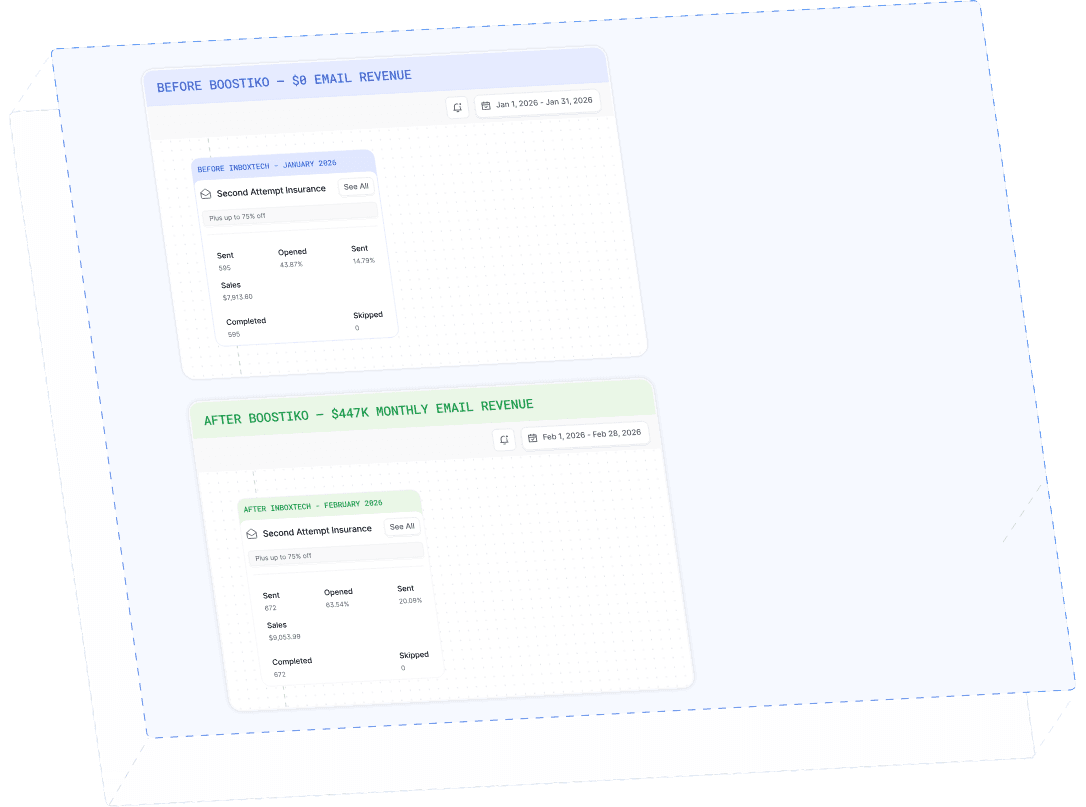
Case Study 01
Leading Prop Firm
$0 - $447K in 3 months
40.7% of total revenue
14 days time to first revenue
$0 to $447,115/month in Email Revenue in 90 Days