•
Boostiko Team

Crypto Prop Firm Email Delivery: A Trusted Lifecycle System
A crypto prop firm can spend heavily to acquire a lead, build a good challenge funnel, and produce polished email creative. None of that helps if the first message lands in spam, the account update looks like a promotion, or a recipient has no clear way to control what arrives next.
That is why crypto prop firm email deliverability is not a sender-score project. It is a lifecycle operating system. The technical setup matters, but so do permission, message classification, content review, data hygiene, and the handoff between marketing, product, support, and compliance.
This article explains how to build that system. It is practical marketing guidance, not legal advice. Crypto-related products, marketing rules, and customer protections can differ by jurisdiction. Review audience eligibility, product descriptions, incentive language, risk disclosures, consent, and local requirements with qualified compliance and legal teams before publishing a campaign.
The real deliverability problem: trust has to be visible
A recipient makes a fast judgment when an email arrives. Who sent it? Why did I receive it? Is this an account notice, an educational update, or a promotion? Can I stop receiving marketing emails without creating a support ticket?
Mailbox providers make similar assessments through technical and behavioral signals. Google says all senders to personal Gmail accounts need SPF or DKIM, valid forward and reverse DNS, TLS, RFC 5322-compliant messages, and a reported spam rate below 0.3%. For senders that send more than 5,000 messages per day to Gmail accounts, Google requires SPF, DKIM, DMARC, alignment, and one-click unsubscribe support for marketing or subscribed mail. 1
Yahoo requires senders to authenticate with SPF and DKIM, publish a valid DMARC policy for applicable traffic, align the visible From domain with SPF or DKIM, support easy unsubscribe, and maintain low complaint rates. It also recommends separating bulk marketing mail from user mail, transactional mail, and alerts. 2
Those are not isolated technical tasks. They point to one operating question: does the program earn the right to keep showing up in the inbox?
For a crypto prop firm, the answer depends on whether the message is expected and clear. A new lead may want a plain-language explanation of the evaluation model. An active trader may need a genuine account, platform, or policy update. A past customer may be open to a relevant reactivation message, but only when the subscription promise, location, and content category support it.
Start with a message map, not a campaign calendar
Before planning more sends, make one inventory of every message a trader or prospect can receive. Label each message by primary purpose, sender, audience, trigger, and required review.
Message type | Example | Primary owner | Operating rule |
|---|---|---|---|
Product or account notice | Platform maintenance, account change, security update | Product or support | Keep the content operational and easy to recognize |
Education | Platform walkthrough, risk education, evaluation explanation | Content or lifecycle | Send only where a clear subscription or relevant relationship exists |
Promotional marketing | Challenge offer, returning-trader campaign, bonus announcement | Marketing with compliance review | Use approved claims, visible terms, and marketing suppression |
Service recovery | Failed payment, incomplete verification, support follow-up | Operations or support | Do not turn the message into an unrelated promotion |
Re-engagement | A focused return prompt for an inactive, eligible segment | Lifecycle | Use recency rules, control frequency, and suppress disengaged recipients |
This map stops the common failure mode where every message is treated as a marketing opportunity. It also makes it easier to define which systems can send, which domain each stream uses, and where the unsubscribe record must apply.
The FTC states that the primary purpose of the message matters. A message with an ongoing customer relationship is not automatically a transactional message. If its primary purpose is commercial, it needs to meet commercial email requirements. 3 In practical terms, do not hide a challenge offer in a security alert, payout-process notice, or account-status message.
Build a sender identity a trader can recognize
Deliverability starts with a complete sender inventory. List every tool that sends as the business: your email platform, CRM, customer support system, product notifications, billing, authentication tools, surveys, form automations, and any agency or contractor workflow.
For each one, record:
The sending domain and subdomain
The visible From name and address
The reply-to address and who monitors it
The DKIM signing domain
The return path and tracking domain
The message category it can send
The owner who can approve or disable that stream
Then configure and test authentication deliberately. SPF authorizes the services that may send for a domain. DKIM provides a cryptographic signature. DMARC lets a domain publish a policy and receive reports about mail claiming to be from that domain. For DMARC alignment, the authenticated SPF or DKIM domain needs to align with the visible From domain for the relevant mail. 1 2
Do not treat this as a one-time DNS task. Add sender verification to launch QA. A new form tool, link tracker, helpdesk integration, or contractor account can create a sending path that is absent from the original setup.
A cautious rollout usually begins with monitoring. Review DMARC reports, identify legitimate sources, fix alignment gaps, and only then progress toward stronger enforcement based on what the domain actually sends. The right policy and timeline depend on the organization and its systems.
Separate marketing from essential trader communication
One of the clearest trust signals is functional separation. Marketing messages should not compete with security alerts, support messages, product notices, or account communication.
Yahoo explicitly advises against sending bulk or marketing mail from the same IPs used for user mail, transactional mail, and alerts. 2 The exact infrastructure design will vary by provider, but the operating principle is useful: build separate streams by function, and keep their audiences, suppression rules, and performance monitoring distinct.
A workable model can look like this:
Operational stream: account access, policy updates, platform notifications, and support communication. The messages should be factual, recognizable, and free from unrelated promotional pressure.
Lifecycle stream: welcome education, platform understanding, evaluation explanations, and message sequences tied to a stated interest or opt-in.
Marketing stream: offers, launch announcements, event invitations, and reactivation programs. This stream needs its own consent logic, frequency guardrails, suppression controls, and claims review.
This separation protects more than deliverability. It reduces confusion for traders and helps internal teams decide what must be reviewed before each send.
Permission, expectations, and list health belong together
A list is not an asset because it is large. It is valuable when recipients know why they are on it and continue to find the messages useful.
At signup, tell people what they will receive, who will send it, and how often. Capture the source, timestamp, form wording, selected preferences, and geographic or eligibility data where relevant and lawfully collected. Avoid automatically checked consent boxes and purchased lists. Yahoo recommends sending only to users who specifically requested the mail and setting frequency expectations at signup. 2
Create one marketing suppression record that applies to all promotional tools. It should not matter whether the message is launched from the email platform, CRM, a spreadsheet upload, or an agency account. If someone opts out of marketing, that choice must travel with the customer record.
The FTC requires a clear opt-out method in commercial email and says opt-outs must be honored within 10 business days. It also says the promoted company remains responsible even when another company sends the campaign. 3 Yahoo recommends processing unsubscribes within two days. 2 Treat the stricter operational target as the sensible working standard, while obtaining legal advice for the markets you serve.
Preference centers can be helpful, but they cannot make a full marketing opt-out hard to find. Use a visible unsubscribe link. For relevant bulk traffic, support one-click unsubscribe and test it from the recipient's perspective.
Design lifecycle messages around trader decisions
The best lifecycle email is not the one with the most urgency. It is the one that helps the recipient take the right next step.
For new leads, start with the basics: how the product works, who it may be relevant for, the core rules, key limitations, and where to find full terms. Do not use performance claims, implied outcomes, or urgency language that cannot be substantiated and approved.
For incomplete registrations, send one clear reminder tied to the actual next step. Avoid repeated blasts that treat every unfinished form as the same intent signal. Use behavior and recency: a person who opened an account guide yesterday is different from a person who has been inactive for six months.
For active traders, use timely operational education and product support. The email should be easy to identify as non-promotional when that is its purpose. If a campaign includes commercial content, classify and review it accordingly.
For reactivation, use conservative segmentation. Suppress invalid addresses, people who opted out, recipients with repeated delivery issues, and clearly disengaged audiences. Re-engagement is not permission to revive stale data indefinitely. It is an opportunity to ask whether a recipient still wants the relationship.
Monitor the signals that reveal a weak program
Open rates alone are not a deliverability score. Privacy features and mailbox behavior make them incomplete. Build a review around signals that lead to action:
Signal | What it can indicate | First response |
|---|---|---|
Spam complaints | Misaligned expectations, weak relevance, or unclear consent | Pause the affected segment and review the signup promise |
Hard bounces | Bad data, stale lists, or address quality issues | Remove or suppress promptly |
Soft bounces and deferrals | Provider throttling, temporary mailbox issues, or reputation pressure | Monitor the stream and avoid escalating volume blindly |
Unsubscribes | Frequency or content mismatch | Review cadence and message category, not just the creative |
Reply volume | Confusion, support need, or strong engagement | Route replies to an accountable team and use the insight |
Authentication failures | Sender setup drift or unauthorized traffic | Investigate the source before the next campaign |
Set a weekly operating review during active buildout. Review sender changes, complaint movement, bounces, unsubscribes, top segments, suppression exceptions, and planned campaigns. Hold a formal launch check for any new sending domain, major list import, automation, or promotional offer.
Agency versus in-house: the system needs five functions
A crypto prop firm does not need to hire a large internal department before it can run a sound email program. It does need clear ownership across five functions: design, copy, operations, technical integration, and deliverability.
Function | Why it matters | What must remain controlled by the crypto prop firm |
|---|---|---|
Design | Makes terms, actions, and important details easy to understand | Brand standards and final claim approval |
Copy | Turns a lifecycle moment into a direct, clear message | Product accuracy, risk language, and jurisdictional review |
Operations | Coordinates audience rules, timing, approvals, and measurement | Source-of-truth consent and suppression data |
Technical integration | Connects forms, CRM data, domains, product events, and email tools | Domain registrar, DNS, and platform administrator access |
Deliverability | Monitors authentication, reputation, list health, and escalation | Final decisions on sender reputation and risk tolerance |
An internal team can own every layer. An agency can add specialist capacity. Neither model works if no one owns the domain, suppression logic, compliance handoff, or final send approval.
The Boostiko solution: make every message earn its place
Boostiko gives crypto prop firms a connected email function rather than disconnected templates. We combine design, copy, operations, technical integration, and deliverability into one lifecycle system.
That means the signup experience, sender identity, audience logic, message classification, links, approvals, launches, and post-send review are planned together. We help build campaigns that are clear to recipients, practical for operations, and easier for internal compliance teams to review.
If you need a sender inventory, lifecycle map, authentication plan, or a cleaner way to separate trader communication from marketing, book a call with Boostiko.
FAQs
What is the fastest crypto prop firm email deliverability improvement?
Start with a complete sender inventory and authentication audit. Identify every system sending as the brand, verify SPF, DKIM, and DMARC configuration, remove invalid recipients, and make the marketing opt-out clear and reliable. New templates help only after the operating system is sound.
Can a crypto prop firm send promotions in account emails?
Treat the message according to its primary purpose. Avoid using account, security, support, or policy notices as containers for unrelated promotions. Keep essential communication recognizable, and have marketing messages follow the applicable consent and compliance workflow. 3
Is DMARC enough to keep campaigns out of spam?
No. DMARC helps receiving providers validate an authenticated sender identity. It does not create consent, relevance, healthy list data, useful content, or a reliable unsubscribe process. 1 2
Do agencies remove the firm's compliance responsibility?
No. The FTC says the promoted company can remain responsible even when another company sends the email. An agency can support operations, copy, design, and deliverability, but the firm should retain ownership of consent, product facts, claims review, domains, and final approval. 3
How often should a crypto prop firm email its list?
Match the frequency to what recipients were told at signup and what their lifecycle stage supports. Review complaints, unsubscribes, bounces, replies, and conversion quality. If a segment is disengaging, reduce pressure and reassess the value of the message before sending more.
References



Case Study 01
Leading Prop Firm
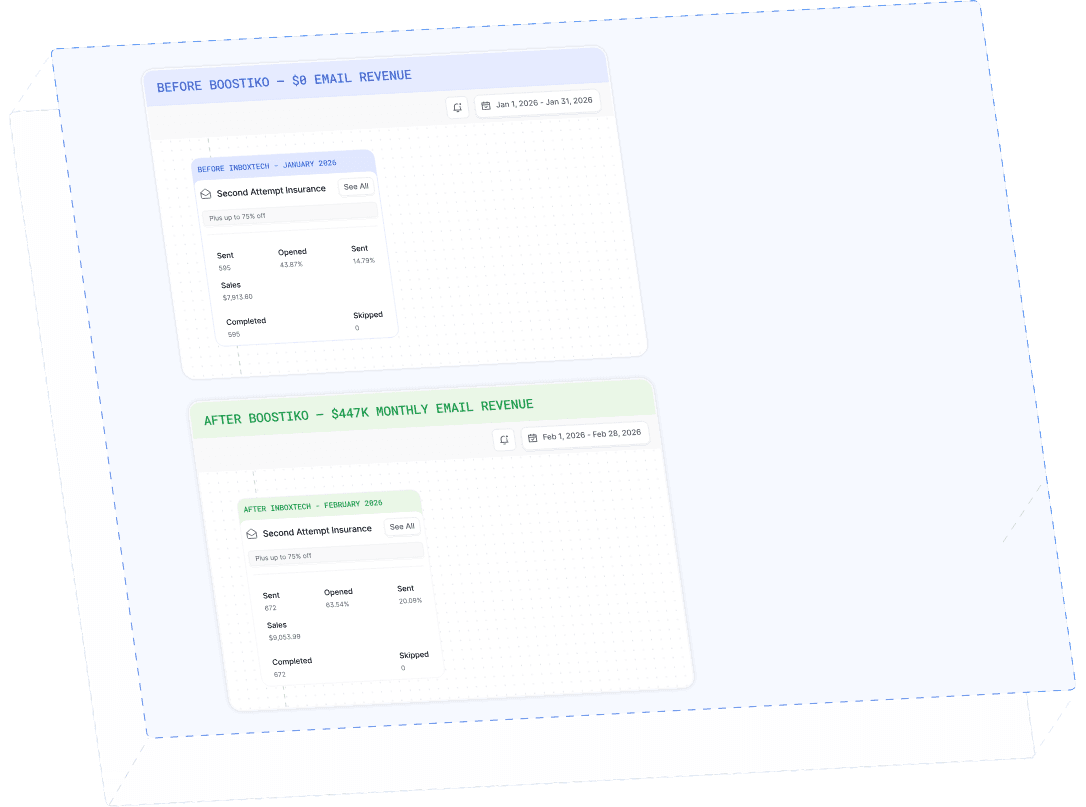
$0 - $447K in 3 months
40.7% of total revenue
14 days time to first revenue
$0 to $447,115/month in Email Revenue in 90 Days