•
Boostiko Team

Email Marketing for iGaming Brands: Build a Lifecycle System That Respects the Player
Email marketing for iGaming brands is not a stream of bonus announcements. It connects consented demand, player onboarding, promotional communication, preference management, and sender reputation.
This is a regulated and restricted-adjacent category. A lifecycle program must be built around the operator’s licences, markets, approved product information, safer-gambling controls, privacy obligations, and platform rules. In Great Britain, Gambling Commission rules require socially responsible marketing and informed, specific consent for direct electronic marketing unless law expressly permits otherwise. 1 This article is a marketing-operations guide, not legal advice or a compliance certification.
The business problem: a campaign calendar cannot run the player relationship
An iGaming brand may have acquisition activity, a strong product, and a capable CRM platform, yet still struggle to run coherent email. The problem is usually not a lack of ideas. It is that the data, decisions, and messages are fragmented.
A new opted-in lead needs a clear explanation of the brand and a next step. A newly verified player needs orientation and access information. An active player may need factual product updates or support routes. Someone who changes marketing preferences needs that decision respected immediately. A person covered by a self-exclusion, safer-gambling, or other protective control is not a reactivation opportunity. Those are different relationship states, but a generic blast treats them as one audience.
That creates commercial and operational debt. Unclear terms can weaken trust, and mixing promotion into a service message can make its purpose harder to assess. The Gambling Commission requires significant incentive conditions to be transparent and prominent, while CAP prohibits marketing that encourages irresponsible gambling, frames it as a solution to financial concerns, or exploits vulnerable people. 1 2
The practical objective is therefore not simply more email. It is a better system for deciding who should receive what, why, when, under which approval, and with which suppression rules.
Lifecycle theory: match the communication to the relationship state
Lifecycle theory begins with a simple premise: a contact is not just a row in a list. They are in a relationship state, and the message has a job within that state.
For a licensed iGaming brand, useful states may include visitor, consented lead, account holder, newly verified player, active player, marketing opt-out, dormant subscriber, and former customer. Labels vary by product and market. Each state needs a defined communication purpose, source of truth, and suppression rule.
Leads need clarity before persuasion. A welcome sequence can explain what the brand offers, where to find terms, how preferences work, and how to get help. It should use approved information and avoid suggesting a likely win, financial benefit, or risk-free experience. CAP rules specifically prohibit presenting gambling as an escape from problems, an alternative to employment, or a route to financial security. 2
Newly verified players need orientation. Their sequence should make the next legitimate steps easy to understand, distinguish operational information from marketing, and put support and responsible-gambling resources in an accessible place. The task is to reduce avoidable confusion, not to apply pressure.
Active players should not become a catch-all promotional segment. A relevant message could be an approved product update, a factual explanation of terms, a feature announcement, or an offer whose audience and conditions have passed the operator’s review. Frequency, message purpose, and preference history should shape eligibility.
Dormant subscribers call for restraint. A limited preference check can establish whether a person still wants marketing. Risk-related data must not be used for commercial pressure. Remote gambling licensees must take account of the Commission’s customer-interaction guidance. 3 Risk and safer-gambling signals belong in an operator-owned protection and suppression framework.
The core principle is simple: consent and customer protection override commercial eligibility. This makes the program more defensible and more useful to the team operating it.
Practical implementation: build the system before the campaign calendar
Start with a lifecycle map. For each event, record the data owner, message purpose, audience, suppressions, approver, and fallback for missing data. Typical events include a marketing opt-in, preference change, account creation, verification, promotion eligibility, unsubscribe, and protection-related status change.
Next, define communication classes. Account access, security, receipts, critical service updates, and required notices should be designed as operational communications. Newsletters, content, and offers are marketing communications. A mixed message needs careful review because adding a substantial promotional block may change how it should be treated. The ICO explains that routine customer-service messages are not direct marketing, but messages containing significant promotional material are covered by the direct-marketing rules. 4
Then make consent usable, not just collectable. Record the source, time, wording, channel, and scope of each marketing permission. Retain a global marketing opt-out that is simple to use. Apply a preference change across the relevant system without relying on manual campaign exclusions. The ICO says valid consent must be clear, specific, informed, freely given, and indicated by a positive action. It also says people must be able to withdraw consent at any time. 4
Promotional operations need a real review path. Before a campaign is built, confirm the market, audience, product, incentive, material conditions, terms location, and exclusions. Before sending, validate consent, preferences, age and market controls, and relevant suppressions. This prevents fundamental audience or claims issues after launch.
Creative and copy should make the next step obvious without hiding important information. Use a precise subject line, a single main idea, a clear call to action, and direct access to full terms where appropriate. Keep claims factual and approved. Avoid language that implies certainty, financial rescue, social status, personal transformation, or pressure to keep gambling. Those are not merely tone choices. They can conflict with the social-responsibility requirements that apply to gambling advertising. 2
Finally, treat deliverability as infrastructure. Use a stable sending identity, maintain authentication, remove invalid addresses, and monitor bounces, complaints, unsubscribes, delivery, and engagement. No single engagement metric proves commercial quality or compliance.
Agency versus in-house: choose coverage and accountability
An internal team has an advantage that no external partner can replace. It has direct access to product changes, customer-service themes, policy decisions, and the people who own final approvals. That proximity is valuable in iGaming, where the detail behind a message matters.
The constraint is coverage. A complete lifecycle program requires design, copy, operations, technical integration, and deliverability. When one internal CRM manager is expected to write campaigns, build automations, clean data, coordinate creative, debug integrations, and report on performance, the calendar tends to take priority over the system.
An agency can provide those five functions in one accountable team. Boostiko’s role is to turn operator-approved inputs into clear lifecycle strategy, email production, technical implementation, campaign operations, and deliverability discipline. The operator retains authority over licences, legal interpretation, approved claims, data use, safer-gambling controls, and final sends. The ICO notes that a business cannot remove its responsibility simply because another company sends the marketing. 4
The best model is usually shared accountability, not outsourced judgement. The brand supplies accurate source material and qualified reviewers. The lifecycle partner supplies the structure, specialist execution, documentation, and operating rhythm.
Theory-led teardown: the generic bonus blast
Consider a hypothetical campaign sent to every marketing contact with the subject line: “Your limited-time offer is waiting. Get back in the game.” It has a large incentive graphic, a countdown, a call to action, and a link to terms at the bottom.
The problem is not the color of the button. The theory is wrong.
First, the audience is assumed to have one job. A new lead may need factual information, a newly verified player may need orientation, and an active player may not be eligible for the offer. A dormant subscriber may not wish to receive marketing. A person under a relevant protection or exclusion rule must not be a campaign recipient.
Second, the message creates avoidable pressure. A countdown is appropriate only when it reflects a genuine, approved expiry and material conditions are clear. “Get back in the game” may be inappropriate for some audiences and must be reviewed in context, not only as creative. 1 2
Third, without an identifiable consent source, segment, suppression logic, terms, approval record, and response, the team cannot reliably improve the next message.
A better implementation starts with separate paths. Consented leads receive an educational sequence. Eligible, approved audiences receive a promotion with clear terms and a verified expiry. Operational and protection-related audiences are excluded or routed according to the operator’s controls. Dormant contacts receive a restrained preference check, not a rolling series of escalation emails. This approach may look less dramatic on a calendar, but it is a genuine lifecycle system.
The Boostiko solution: make email an operating system
Boostiko helps licensed iGaming teams build the work behind the send button. We audit the lifecycle, map communication purposes and ownership, document audience rules, and prioritise the flows that make the customer experience clearer. We then combine design, copy, campaign operations, technical implementation, and deliverability in one lifecycle plan.
We do not promise deposits, revenue, player activity, or regulatory outcomes. We build a more disciplined operating system around consent, preferences, onboarding, approved promotions, suppressions, production, and measurement. Sensitive content is routed through the client’s legal, compliance, privacy, and safer-gambling process. Boostiko does not replace those functions.
If your iGaming email program is held together by scattered campaigns and last-minute approvals, talk to Boostiko about an iGaming lifecycle and deliverability audit.
FAQs
What is different about email marketing for iGaming brands?
The category combines ongoing customer communication with rules about consent, audience protections, advertising content, incentive terms, and jurisdictional requirements. A generic retention playbook is not enough. The program needs clear message purpose, audience logic, documented approvals, suppressions, and a way to respect preference changes.
Can we use email to promote bonuses or offers?
Potentially, but the operator must confirm that the offer, market, audience, claims, significant conditions, and timing are permitted. Gambling Commission rules require significant incentive conditions to be transparent and prominent. CAP rules require gambling marketing to be socially responsible. 1 2 This article is not a substitute for market-specific legal or compliance review.
Should self-excluded or at-risk players receive reactivation emails?
No commercial reactivation logic should override the operator’s self-exclusion, safer-gambling, or other protective controls. Treat those statuses as part of the operator’s protection and suppression process. Confirm exact obligations, data flows, and decision ownership with the team responsible for the applicable programme and jurisdiction.
What should an iGaming team measure?
Measure operationally: consent-source quality, list growth, delivery, bounces, complaints, unsubscribes, clicks, preference changes, flow completion, support themes, and the correctness of audience and approval execution. Commercial measures can be reviewed within the operator’s governance framework, but no single metric establishes that a program is responsible or compliant.
Does Boostiko provide legal approval or compliance certification?
No. Boostiko provides lifecycle marketing strategy and execution. We work from client-approved product information and route sensitive work through the appropriate client stakeholders. The licensed operator remains responsible for its legal, regulatory, licensing, privacy, safer-gambling, and final deployment decisions.
References
Continue reading



Case Study 01
Leading Prop Firm
$0 - $447K in 3 months
40.7% of total revenue
14 days time to first revenue
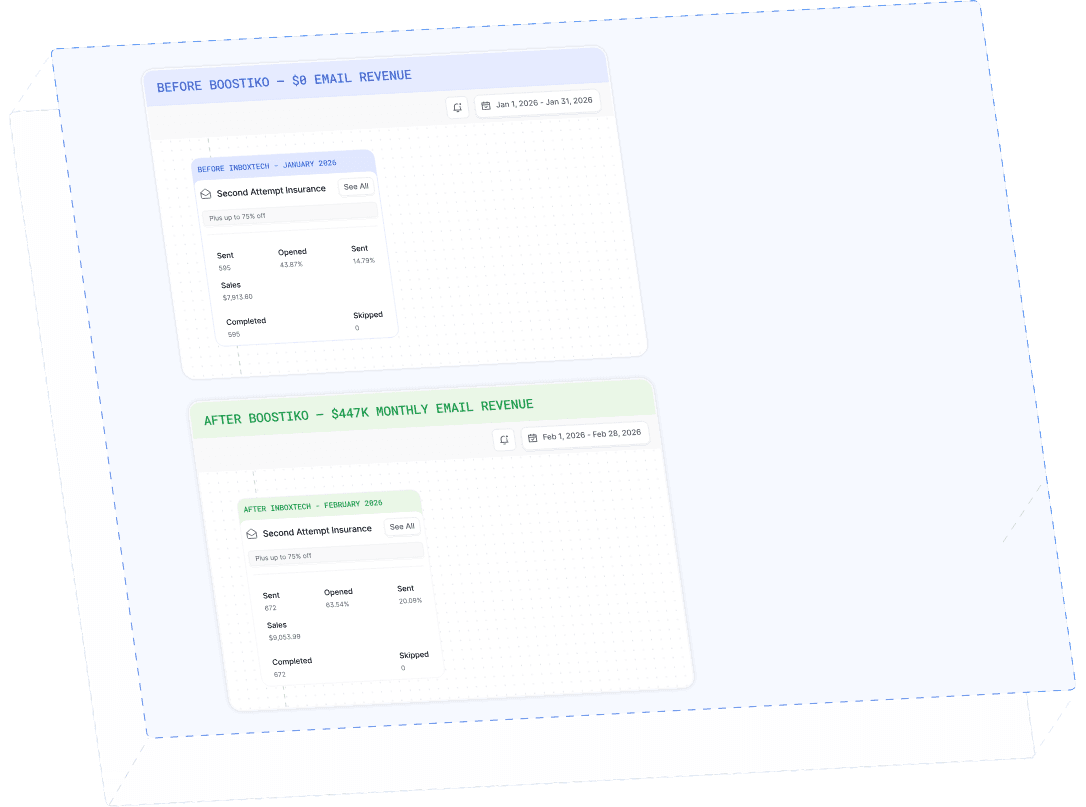
$0 to $447,115/month in Email Revenue in 90 Days