•
Boostiko Team

Prop Firm Email Marketing: The First Challenge Journey
A new prop firm lead usually has the same few questions.
What exactly do I get? What happens after I buy? Which rules matter first? Where do I log in? What should I do if I get stuck?
If the first email does not answer those questions, the next message should. A prop firm does not need a complicated funnel to move a serious lead forward. It needs a clear journey that removes confusion, shows the real next step, and keeps the message honest.
That is the job of prop firm email marketing in the period between a signup and a trader’s first challenge. The goal is not to pressure people into a purchase or imply that a challenge is a shortcut to trading profits. The goal is to help the right person understand the product, the process, the key conditions, and where to find the current terms.
This guide explains how to build that journey. It is general marketing and operations guidance, not legal, financial, trading, or compliance advice. Each firm needs its own review of its product, target market, customer terms, permissions, disclosures, and approval process.
The email journey starts before someone buys
Many prop firms only start talking to a customer after payment. That misses the most important period.
A prospect may have viewed a challenge page, compared account sizes, watched a video, or started checkout. They may understand the headline offer but not the details that affect their decision. If those details are hard to find, a generic discount email will not solve the problem.
Start with an opt-in or enquiry path that tells people what they are signing up to receive. Then use the early emails to explain the product in plain language. A prospect should not have to search through an old Discord announcement to learn what happens after a purchase.
The ICO says marketing email to individuals generally requires specific consent, subject to a limited exception for an organization’s own existing customers and similar services. It also says the sender must not hide its identity and must provide a valid way to opt out. 1 Your approval process should match the locations and audiences you serve.
For any consent-based prospect audience, keep the record simple and usable. Capture the source, the date, what the person asked to receive, their market or language where relevant, and their current preference status. That is enough to build a responsible starting audience without creating a database full of unusable tags.
Give every email one job
The fastest way to create a messy lifecycle is to make every email do everything. One message announces an offer, explains platform access, summarizes rules, asks for a review, and pushes a community link. The reader does not know what matters.
Each message should have one primary job.
The first email can confirm the signup and show where to read the challenge overview. The next can explain the basic product path. A later email can show how to find the official rules, dashboard access, and support. A commercial offer can stand on its own with clear current terms.
This separation also matters when you classify messages. The FTC explains that CAN-SPAM looks at an email’s primary purpose. Transactional or relationship email can facilitate an agreed transaction, provide security information, or update a customer about an ongoing account relationship. But the categories are narrow. If a message mainly promotes a product or service, it should be treated as commercial. 2
Do not hide an offer inside an account update. Do not label a sales email “Your account details” to force an open. Clear purpose builds more trust than a clever subject line.
The first challenge flow
A practical prop firm first-challenge journey can be built around six messages. The timing and content should be adjusted to the actual customer journey. These are not rules to copy without review. They are a clear starting structure.
Email one: confirm the signup and set expectations
Send this immediately after a person subscribes, creates an account, or asks for information. State what they will receive and who it is from. Link to the main challenge overview, published terms, and support route.
Keep the message short. The reader does not need every rule in a welcome email. They need a clear next step and confirmation that they can find the source material later.
A useful subject line is direct: “Your prop firm challenge overview” or “Here is how the evaluation works.” Do not use a false “Re:” or “Fwd:” format. Google says sender details, subjects, and content should accurately represent the sender and the message, and links should be visible and easy to understand. 3
Email two: explain the product path
The next message should explain the journey in the firm’s own terms. What are the stages? What happens after a purchase? Which dashboard or platform is used? Where can a customer see the current requirements?
Use a simple sequence. Avoid vague phrases like “unlock your potential” when a plain explanation is available. A person deciding whether to begin a challenge wants to know what they need to do next, not read a motivational speech.
This email can include a short “before you start” list: verify the account details, read the current rules, confirm access, and contact support with any question. It should link to sources that the firm owns and keeps up to date.
Email three: make the rules easier to find
Rules are often a source of preventable support tickets. The issue is not always that the rules are long. It is that the rules are spread across a landing page, FAQ, help centre, video, and community messages.
Send one email that takes the reader directly to the current source of truth. Explain where the rules live and when they were last updated if the site supports that information. Do not summarize a complex condition in a way that may become outdated. Use a short overview, then link to the complete current policy.
For a firm or communication within the scope of NFA Rule 2-29, the NFA says promotional material cannot be deceptive or materially misleading and prohibits high-pressure approaches. It also requires specific treatment of profit references, risk discussion, actual performance, testimonials, and hypothetical results. 4 Not every prop firm falls within that rule. The practical lesson is still useful: do not use a marketing email to reduce or bury material conditions.
Email four: help the person prepare to use the platform
The best time to explain basic account setup is before a customer gets frustrated. This message can cover where to log in, how to locate the dashboard, how to find support, and where a person can confirm their account status.
Use screenshots or a short video only when they help. The message should not depend on a social post that may disappear in a week. Link to a maintained help article or dashboard page.
If a firm sends account access or security information, keep it operational. Do not add a large promotional block that changes the character of the message. The FTC says a mixed message may be commercial when the subject or the main emphasis is promotional. 2
Email five: answer the real objections
This is the point where a prospect or new customer often needs clarity, not another price reminder.
Collect the real questions from support tickets, sales calls, account cancellations, and community moderation. Then answer the questions the team sees repeatedly. Is a specific platform supported? Where can someone find an approved payment option? What happens when they need help? Which page has the current challenge conditions?
Do not use fake scarcity to make the questions feel urgent. If a deadline is real, say what it is, who it applies to, and where the terms are published. If there is no deadline, do not invent one.
Email six: present an offer only when it is relevant
Offers are part of prop firm marketing. They work better when the person already understands the product.
An offer email should make a specific proposition. Say what is offered, who can use it, when it ends if there is a real end date, and where the current terms and exclusions are published. Keep the campaign separate from account access notices and rule updates.
Use an audience filter before every send. Exclude anyone who opted out, complained, hard bounced, is in an ineligible market, has an unresolved support issue that makes a promotion inappropriate, or has reached the frequency limit. The exclusion rules should be as deliberate as the inclusion rules.
Build the data around real events
Good prop firm email marketing is event driven. It responds to something that actually happened.
Useful events may include an opt-in, account creation, confirmed email address, checkout start, successful purchase, first dashboard login, support request, preference update, account status change, or expiry of a legitimate offer. Every event needs an owner and a definition.
For example, “first dashboard login” should mean the user completed the actual dashboard login, not that a marketing pixel fired on a page. “Checkout started” should be tied to the correct product and should stop if the person completes the purchase or asks to opt out. The less ambiguous the event, the less likely an automation is to send a confusing message.
The system also needs stop rules. A welcome series should stop when a person purchases, unsubscribes, or becomes ineligible. A checkout reminder should stop when the purchase completes. A product walkthrough should stop once the key activation step is completed. Without stop rules, automation turns a good message into noise.
Keep permission, account status, and marketing interest separate
A customer can have an active account and still choose not to receive promotional email. A prospect can want market education without receiving challenge offers. A user can be active in Discord without having opted into an email list.
Do not collapse these ideas into one field called “subscriber.” Keep account status, permission, and interest as separate fields. This makes it possible to send needed account communication while respecting marketing preferences. It also lets the marketing team build more relevant audiences without forcing operations to use marketing labels.
Google recommends sending subscription email to people who want it, confirming email addresses before subscribing recipients, and making it easy to leave. It requires SPF or DKIM for all senders to personal Gmail accounts, and SPF, DKIM, and DMARC for bulk senders. High-volume marketing and subscribed messages also need one-click unsubscribe. 3
The technical team owns authentication. The lifecycle team owns audience quality. Both are needed. Perfect email design cannot rescue a program that keeps sending unwanted messages, and a clean audience cannot fix a broken sending-domain setup.
Use a real approval checklist
A clear approval step protects both the customer and the team.
Before a campaign sends, the owner should confirm the audience definition, any suppression rules, the message’s primary purpose, the destination links, the current terms, and the source for every specific claim. For an offer, confirm the start and end time, market eligibility, and what happens if a code or page is unavailable. For an operational message, confirm that it sends from the right address and points to the correct account or help resource.
When the copy discusses trading, avoid broad promises. No email should imply that trading is suitable for everyone or that a challenge produces income. If copy uses performance information, testimonials, or risk-related statements, get the appropriate compliance review based on the firm’s product and jurisdiction.
Save the approval record with the campaign. If a customer, regulator, or internal team member later asks why a message was sent, the answer should be accessible. The team should not have to reconstruct the decision from Slack messages.
Measure whether the journey reduced friction
Do not judge the first-challenge flow only by one conversion number.
Track the path from opt-in to account creation, completed checkout, first login, first support contact, and product activation where those events are meaningful and appropriately tracked. Review the most common support questions after each major email. Look at unsubscribes and complaints by message type. Compare engagement for people who received the complete education flow against those who did not, but do not treat engagement as proof of trading outcomes.
The most valuable signal may be that customers know what to do next. If the same rule question disappears after a clear rules email, the message has done its job. If new customers reach the dashboard without contacting support, the setup email may be removing friction. That is more useful than making every report about open rates.
Why the right team matters
A solid first-challenge journey needs more than copy. It needs lifecycle strategy, email design, operational logic, tracking, a reliable technical setup, and deliverability work. Building that in house can mean hiring or coordinating a designer, copywriter, lifecycle operator, technical builder, and deliverability specialist.
Boostiko gives prop firms one team for that work. We map the journey, write the emails, create the designs, build the flows, connect the relevant approved events, set up suppression rules, and improve sending quality. Your internal team remains responsible for the product, customer data, account rules, trading-related disclosures, legal and compliance review, and final approval.
If your first emails are mostly discount codes and generic welcome copy, book a call with Boostiko. Bring your current flows, main support questions, product stages, data events, published rules, target markets, and approval process. We will help you create a clearer prop firm email journey that customers can follow.
FAQs
What should a prop firm send after someone signs up?
Start with a concise confirmation, a clear explanation of what the person can expect, and links to the current product overview, rules, and support route. Follow with useful education based on actual events, not a long series of general promotions.
Can a prop firm send offers inside account emails?
Treat the messages separately whenever possible. An account email should focus on the account event. An offer should clearly identify its commercial purpose, use a qualified audience, include current terms, and comply with the rules that apply to the sender and recipients.
How many emails should the first-challenge journey have?
There is no universal number. Six focused messages are a useful starting structure, but a firm should send only when it has a clear reason, a relevant audience, and a defined stop rule.
What must be checked before a promotional email sends?
Check the audience, permissions, exclusions, sender identity, subject line, links, claim support, current terms, opt-out route, market eligibility, and the firm’s required approval process. The exact legal requirements depend on the recipient and jurisdiction.
Does a clear lifecycle flow assure more sales?
No. A well-built flow makes information easier to understand and can reduce customer friction. It does not assure any business or trading result.
References
Continue reading



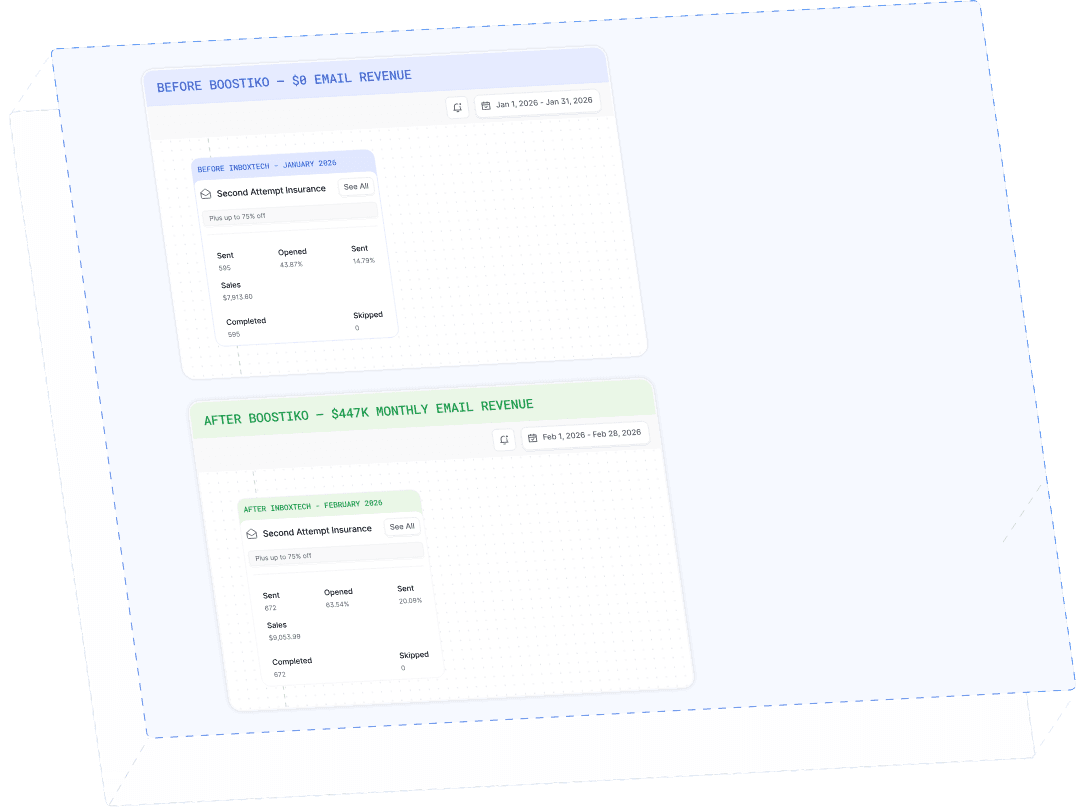
Case Study 01
Leading Prop Firm
$0 - $447K in 3 months
40.7% of total revenue
14 days time to first revenue
$0 to $447,115/month in Added Revenue in 90 Days