•
Boostiko Team

Web3 Prop Firm Email Segmentation: Separate Community, Account, and Offer Messages
Web3 prop firms often have a strong community before they have a clear lifecycle system.
There may be a busy Discord, an X account, a waitlist, a trading dashboard, support tickets, account updates, wallet-related actions, product announcements, and occasional offers. All of those touchpoints can create momentum. They can also create confusion when every person receives the same message through every channel.
That is where segmentation matters.
Email marketing for Web3 prop firms should not be a single newsletter list with more tags added over time. It should be a simple operating system that separates what a person needs to know from what they may want to receive. Community updates, account notices, product education, and promotional offers need different audiences, different triggers, and different stop rules.
The payoff is not just a cleaner campaign calendar. Customers get messages that match their relationship with the firm. Support gets fewer avoidable questions. The marketing team can see what is actually working. And the firm is less likely to turn an important account message into something that looks like an offer.
This article is general operational guidance, not legal, financial, trading, or data-protection advice. Each firm needs its own review of its product, audience, customer terms, markets, permissions, technology, and approval process.
Start with message purpose, not a list of tags
Most segmentation projects begin in the wrong place. A team opens the email platform and starts adding labels: Discord member, funded, affiliate, active, inactive, buyer, trader, Web3, crypto, campaign one, campaign two.
Tags are useful, but they are not the strategy. Start by defining why each category of message exists.
A practical Web3 prop firm can usually separate its messages into four lanes:
Community: education, public updates, event invitations, content, and discussion prompts.
Account: verification, login, account state, support, product access, and rule changes that affect an existing customer.
Product education: onboarding, platform walkthroughs, risk education, and helpful material that makes the service easier to use.
Offers: a clear commercial message about a product, plan, challenge, upgrade, or limited promotion.
The same person may be eligible for more than one lane. The important part is that an email has one primary purpose. Do not treat every logged-in user, Discord member, or past buyer as a reason to send every message.
Community activity is not an email permission record
A person can follow a Web3 prop firm on social media, join a Discord server, watch a livestream, or participate in a community thread. None of that should be treated as an automatic signal that they asked for promotional email.
The ICO says electronic mail marketing to individuals generally requires specific consent, subject to a limited exception for a firm’s own existing customers when conditions are met. It also notes that the rules cover direct messages through social media and other stored electronic messages. 1
That is a useful operating principle even beyond the UK. Keep community participation and email permission as separate fields. A community member can opt into a market update series. A newsletter subscriber can decide not to receive offers. An existing account holder may need an operational account notice without being placed into a broad promotional audience.
The database should record where the permission came from, what the person agreed to receive, when it was captured, and what later preference changes were made. A vague field called “subscribed” is not enough for a growing program.
Build three core audiences first
You do not need dozens of audiences to get started. Three clear groups can cover most of the lifecycle.
1. Community and education audience
This group contains people who asked to receive educational content, product updates, community news, or event invitations. It may include waitlist sign-ups, content subscribers, and community members who separately opted into email.
The messages can cover how a challenge works, what a new platform feature does, what a dashboard metric means, or where to find a published rule source. They should not assume the recipient has an active account.
Use frequency limits here. Community audiences often include people who are curious but not ready to buy. Sending every announcement to them can make a firm feel noisy fast.
2. Active account audience
This group contains people with a defined relationship to a current account or an approved account action. It is for useful account information: an onboarding step, a change to a documented condition, a support confirmation, a verification update, or a relevant product education sequence.
The message should point customers to the authenticated dashboard or the official source of truth. It should not overload a security alert with a large sales block. If the message becomes promotional, route it into the offer lane instead.
The FTC explains that email is classified by its primary purpose. A message with only qualifying transactional or relationship content can include information about an agreed transaction, security information, or a change to an ongoing account relationship. A mixed message may be commercial depending on the subject line and how much emphasis is placed on promotional content. 2
That makes the content design simpler. Keep account messages focused on the account. Keep offers separate.
3. Offer audience
This group contains people who are eligible for a particular commercial email based on the firm’s documented permission and market rules. It can include subscribers who asked for promotions, prospects who meet the firm’s approved sending criteria, or customers who are eligible under an approved policy.
The audience logic should include more than interest. It should check exclusions before send: unsubscribe status, complaints, hard bounces, ineligible markets, recent support issues, account restrictions, and any frequency cap.
An offer email needs a clear premise. It should state what is being offered, who it is for, when it ends if there is a genuine deadline, and where to read the current terms. Do not manufacture urgency just to increase clicks.
Use event-driven triggers for the moments that matter
A real lifecycle program responds to customer events. It does not send a newsletter every time the team has something to say.
For a Web3 prop firm, useful events often include a completed signup, a verified account, a first dashboard visit, a support ticket, a product education milestone, a documented rule update, or a customer preference change. The exact events depend on the product and data architecture.
Each trigger should have five parts: a clear event definition, an eligible audience, the message purpose, a stop condition, and an owner. For example, a platform walkthrough might start after a first confirmed login and stop after the relevant dashboard action. A product education sequence might stop if the account becomes inactive or if the customer chooses not to receive that type of content.
Avoid triggers that rely on vague engagement alone. “Has not clicked in 30 days” may be a helpful review signal, but it does not tell you why a person did not engage. They may have read the information in a community channel, logged in directly, or simply have no current need. Do not turn every quiet subscriber into a high-pressure win-back campaign.
Make the preference centre useful
A preference centre works when it gives people choices they can understand.
For a Web3 prop firm, those choices can be simple: product education, community updates, account-related communications, and offers. You may also separate email frequency for non-essential content or distinguish different product lines when that is useful.
The goal is not to overwhelm customers with twenty checkboxes. The goal is to let them reduce noise without forcing a full unsubscribe. Someone who wants platform education but not offers should be able to say that clearly.
The ICO says organizations should not conceal their identity, should give recipients a valid contact address for an opt-out, and should maintain and screen against a do-not-contact list. 1 Build those controls into the actual audience logic, not only into the footer copy.
A preference update should take effect quickly. If someone turns off offers, the next campaign audience should exclude them. If someone fully unsubscribes, downstream automations must respect that choice. The system needs a single source of truth so that the email platform, CRM, support desk, and exported reporting lists do not drift apart.
Separate product education from hype
Web3 prop firms need to explain how their product works. That can include onboarding, platform navigation, account conditions, risk education, and reminders about where customers can find current documentation.
That is different from making a promotional claim.
Product education should use straightforward language. Explain the action, show the official source, and make it easy for a customer to ask a question. Avoid presenting education as a disguised price push. If there is an offer, send an offer message with a clear commercial purpose instead.
This distinction also makes internal approvals easier. Product and support teams can review educational content for accuracy. Marketing can review offer copy and audience eligibility. Compliance or legal reviewers can assess messages in the right context rather than trying to untangle several purposes in one email.
Review offers by audience and market
The same offer may not be appropriate for every recipient. That is especially important when a Web3 prop firm has a global audience.
The FCA says that its financial promotions regime applies to qualifying cryptoasset promotions to UK consumers regardless of where the firm is based or which technology carries the promotion. For messages within scope, it says communications must be fair, clear, and not misleading and that consumer journeys may need risk warnings and positive frictions. 3
This does not mean every email from every Web3 prop firm is a UK cryptoasset promotion. It means teams should not use a broad global list without considering the offer, product, recipient location, and applicable approval process. A firm should route that decision to the people responsible for its legal and compliance review.
An operational team can make this practical with a market eligibility field and an approval record. Before an offer sends, the campaign owner confirms the audience, terms, landing page, current disclosures, and stop conditions. That is much safer than copying a previous campaign and changing the discount code.
Treat deliverability as part of segmentation
Good segmentation makes email more relevant. It also supports better sending quality.
Google says senders to personal Gmail accounts need SPF or DKIM, while high-volume senders need SPF, DKIM, and DMARC. It says marketing and subscribed messages for high-volume senders must support one-click unsubscribe and include a visible unsubscribe link. Google also recommends sending subscription email to people who want it and making it easy to leave the list. 4
The infrastructure team owns the technical setup. The lifecycle team owns the audience. Both sides need to work together. An authenticated domain will not make an unwanted message welcome. A well-segmented campaign can still face delivery problems if sending authentication is misconfigured.
Use the same sending-domain standards across community announcements, education, and promotional programs. Keep an eye on hard bounces, complaints, unsubscribes, and repeated non-engagement. These are not just report metrics. They are signals that the audience or message needs attention.
Use a simple message brief before every send
Before a campaign, an automation, or a major announcement goes live, write a short brief. It should answer four questions in plain language.
Who is this for? Define the audience and the exclusions.
Why are they receiving it? State the actual event or permission that makes the send appropriate.
What should they do next? Give one clear action, such as visiting the dashboard, reading the official product page, updating preferences, or booking a call.
When should this stop? Define the completion event, suppression rule, expiry date, or frequency cap.
If the team cannot answer those questions, the message is not ready. This simple check prevents many common mistakes: sending an offer to a person who opted out, sending a stale rule reminder after the source changed, or continuing an onboarding flow after a customer already completed the key action.
Measure the program by clarity, not just revenue
Revenue matters. But if a Web3 prop firm only measures last-click sales, it will miss the work that makes customer communication reliable.
Track the quality of each lane. For community messages, look at new opt-ins, steady engagement, and unsubscribe patterns. For product education, look at help-centre visits, dashboard completion, support topics, and repeat questions. For account communications, look at delivery, confirmation, and unresolved support requests. For offers, look at eligible audience size, terms-page visits, conversions, complaints, and opt-outs.
Use these signals to improve the system. A high unsubscribe rate after a community announcement may mean the audience was too broad. A customer who repeatedly opens education emails but never takes the next in-product step may need a clearer walkthrough. A large number of support questions after an account update may mean the message needs a more direct explanation or a better dashboard link.
What Boostiko builds for Web3 prop firms
Boostiko helps Web3 prop firms turn scattered community activity and campaign ideas into an email system with a real structure.
We map the lifecycle, build the audience logic, write and design the emails, connect approved data events, set up automation and suppression rules, and improve deliverability. Your team remains responsible for the product, customer data, legal and compliance review, account security, published terms, and final approvals.
That gives you the practical work of a strategist, designer, copywriter, lifecycle operator, technical builder, and deliverability specialist without needing to assemble every role in house.
If your community, account, and promotional messages are running through the same list, book a call with Boostiko. Bring your current email platform, community setup, permission fields, product events, support questions, target markets, and approval flow. We will help you build a simpler program that customers can understand.
FAQs
Can a Discord member receive promotional email automatically?
Do not treat community membership as an automatic marketing-email permission. Store a clear email permission record that matches the actual relationship and the markets you serve. Review the applicable rules for your audience and get the correct approval before sending.
Should account messages include offers?
Usually, keep them separate. An account message should focus on the account event. An offer should have a clear commercial purpose, its own audience rule, appropriate terms, and an easy opt-out route where required.
What is the minimum segmentation setup for a Web3 prop firm?
Start with three groups: a community and education audience, an active account audience, and an offer audience. Add detail only when the team can explain why a field changes who should receive a message.
How should a Web3 prop firm handle unsubscribes?
Use one source of truth for marketing preferences, update it promptly, and screen each outbound marketing audience before send. Operational account communications should be defined separately and reviewed for their actual purpose.
Does email authentication replace permission controls?
No. SPF, DKIM, and DMARC help receiving systems validate sending domains. They do not replace audience permission, clear message purpose, relevant content, or opt-out processing.
References
Continue reading



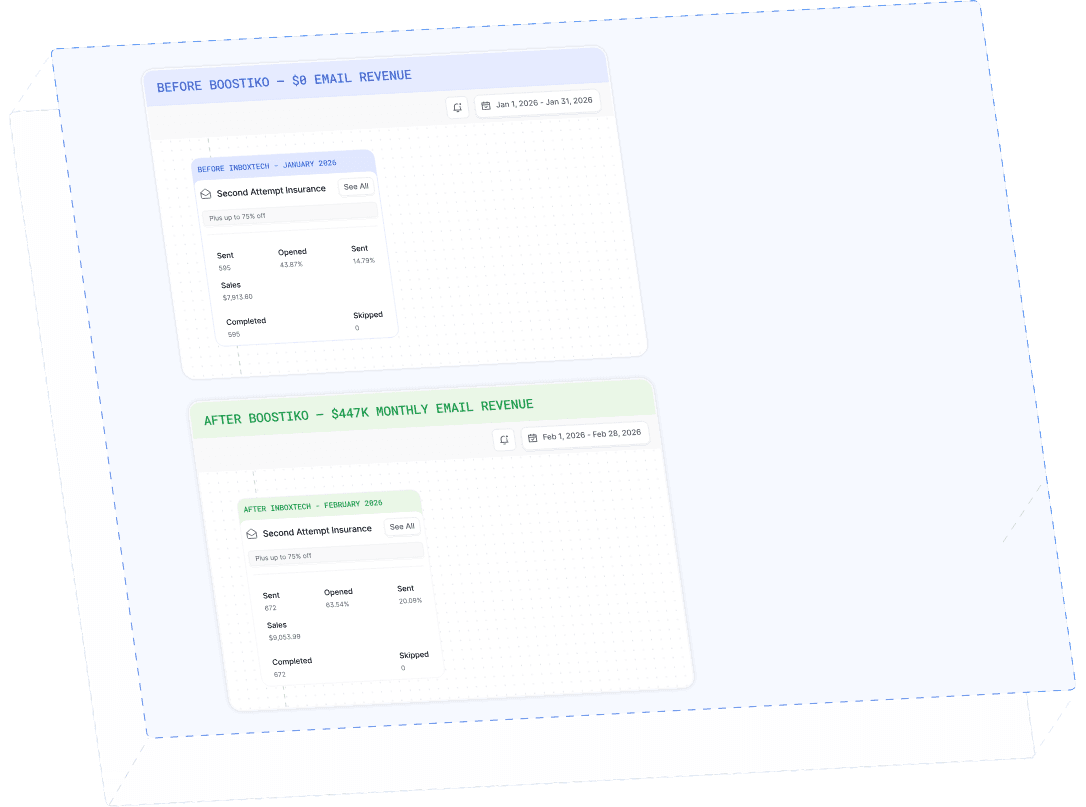
Case Study 01
Leading Prop Firm
$0 - $447K in 3 months
40.7% of total revenue
14 days time to first revenue
$0 to $447,115/month in Added Revenue in 90 Days