•
Boostiko Team

Web3 Prop Firm Email Marketing: A Consent-Aware Reactivation Flow
An inactive subscriber is not a signal to send more pressure.
For a Web3 prop firm, inactivity can mean many different things. Someone may have joined a waitlist before a product update. They may have looked at a challenge but not started. They may be using a community channel instead of email. They may have changed email addresses, lost interest, or simply stopped opening messages.
A good reactivation flow does not guess which one is true. It gives the person a clear reason to re-engage, a simple choice about what they want to receive, and an easy way to stop marketing messages. It also protects the sending domain from repeated mail to people who are no longer interested.
This is general email marketing and operations guidance. It is not legal, financial, trading, or compliance advice. Each firm should review its product, markets, consent records, risk language, terms, and approval process with the appropriate advisers before launching a campaign.
Start with a real definition of inactive
Do not build a reactivation segment from one vague label in a spreadsheet. The email platform, product database, support desk, and community tools can all show different versions of activity.
Start by defining inactivity for the specific message you want to send. A subscriber who has not opened a newsletter for 90 days is different from a customer who has not used a dashboard for 30 days. A person with an unresolved support request should not enter the same campaign as a prospect who has never started checkout.
A practical first pass uses a few simple checks:
The person can receive marketing email under the firm's consent and preference rules.
The address has not hard bounced, complained, or opted out.
There is no open security, account, payment, or support issue that should suppress promotional mail.
The audience has not received a recent reactivation campaign.
The campaign has a current and approved reason for contact.
This keeps the segment honest. It also gives the team a record of why someone received the message.
The most important rule is to separate customer status from email engagement. A customer may be active in the product but not open marketing email. Another person may open every message but never complete an account step. Treat those as different signals and build different paths for them.
Make the first email useful on its own
A reactivation email needs one clear job. It should not try to explain every platform feature, promote every available offer, and ask for a sale in the same message.
For example, a first message can say that the firm has refreshed its product education, community updates, or challenge guidance and invite the subscriber to choose what they want to receive. That is more useful than pretending the person missed a once-in-a-lifetime opportunity.
The opening should make it clear why the email arrived. The subject line and first paragraph should match. If the message is about preferences, the main button should lead to a preference center. If it is about a new education resource, the button should lead to that resource. If it is commercial, it should be written and reviewed as commercial email.
The FTC says commercial email is determined by its primary purpose. It also explains that transactional or relationship categories are narrow. A message that mixes a promotion with account content may still be commercial, especially when the subject line or the most prominent content looks promotional. 1
That matters for a Web3 prop firm because customers may receive account notices, community messages, education, and campaigns from the same brand. A product update should not disguise an offer. A security email should not carry a large sales block. A reactivation campaign should not be sent as if it were an account requirement.
A simple first-email structure can work well:
Say why the person is hearing from you now.
Give one useful resource, update, or choice.
Link to a clear destination on the official domain.
State how the person can change preferences or stop marketing email.
Keep the message short enough that a reader can understand the next step without scrolling through a long product pitch.
Use a preference check before a sales sequence
A reactivation flow should not assume that every old subscriber wants the same thing.
Some people may want product education. Some may want community news. Some may want occasional commercial updates. Others may not want any more marketing messages at all. The system should make these options understandable and should honor them across the email platform and connected marketing tools.
A useful preference center does not need dozens of categories. Start with the categories the firm can actually maintain. For example:
Product and platform education
Community and event updates
General company updates
Commercial offers and promotions
Do not create a category that has no owner or no reliable suppression logic. A preference center that looks detailed but still sends everything to everyone creates more distrust, not less.
The main action in a reactivation email can be “Choose your updates” or “Keep me on the list.” The wording should describe the real action. Avoid buttons that imply a trading result, account approval, or time-sensitive benefit if the email is only asking for a communication preference.
Yahoo recommends setting clear expectations when people subscribe, honoring the intended frequency, avoiding purchased lists, and using clear unsubscribe processes. It also recommends monitoring inactive recipients and separating bulk or marketing traffic from user and transactional mail. 2
Those recommendations make a preference check more than a design element. It is part of sender reputation management. When people can choose what they receive, the firm has a better chance of sending relevant email to an audience that still wants it.
Build a short decision tree, not an endless chase
A reactivation series should have a defined beginning and end. A three-email structure is often enough for a first release.
The first email gives the person a useful reason to re-engage and a preference choice. The second email can offer one helpful piece of product education or a clear explanation of a current feature, as long as that content is accurate and approved. The final email can ask the person to confirm they still want marketing updates.
After that, stop.
If the person clicks a preference link, update their fields and route them into the selected content stream. If they opt out, apply the suppression quickly. If they do not engage after the final message, place them in an inactive segment and stop regular promotional sends until there is a valid, approved reason to contact them again.
The exact timing should match the list's existing expectations. Do not turn a monthly newsletter list into a daily campaign just because the person has not opened recent messages. Repeated email to disengaged recipients can raise complaint risk and make future delivery harder.
Google says senders to personal Gmail accounts need email authentication and that bulk senders have additional requirements for SPF, DKIM, DMARC, alignment, one-click unsubscribe, visible unsubscribe links, and low spam rates. Google also recommends sending subscription email to people who want it and considering the removal of recipients who do not read messages. 3
This does not mean every firm needs the same volume or infrastructure. It does mean that reactivation has a deliverability cost when it is not managed carefully. Start small, watch complaints and bounces, and do not keep extending the sequence just because the audience is large.
Keep product facts and promotions on separate tracks
A Web3 prop firm may need to tell customers about product changes, program terms, education, community events, or offers. These messages do not all belong in the same flow.
Product or account information should come from an approved source of truth. If a rule, feature, eligibility condition, or access process changes, the email should state the effective date, summarize only what has been approved, and point the customer to the current official page or secure dashboard. Support should be able to see the exact version that was sent.
Commercial campaigns should use a separate template and review path. They should have an accurate subject line, proper sender information, a clear opt-out method, and approved claims. Do not place an unreviewed promotion inside a message that looks like a required product notice.
For firms marketing qualifying cryptoassets to UK consumers, the FCA says financial promotions must be fair, clear, and not misleading. Its policy statement describes restrictions that include clear risk warnings and limits on incentives. 4 Whether a specific Web3 prop firm message falls under those rules depends on the product, audience, location, and facts. That decision belongs with qualified legal and compliance reviewers.
The operational lesson is simple. If a message can influence a financial or trading decision, use the approved communication process. Do not treat reactivation copy as an exception because it is sent from an email platform.
Protect people with open account or support issues
Before a subscriber enters a reactivation campaign, check for conditions that should pause it.
Someone with an open support ticket may need a direct answer, not a campaign. Someone receiving a security or access notice should not see a promotion in the same period. Someone who has opted out of marketing must not be added back through a list upload or automation error.
A basic suppression map can include:
Unsubscribed or globally suppressed contacts
Hard bounces and spam complaints
Open support cases
Pending payment, refund, or dispute events
Active security or account-verification events
Recent purchasers or customers in an onboarding sequence
Recipients who completed the reactivation flow already
The goal is not to create a huge set of rules on day one. The goal is to prevent the obvious bad experiences that damage trust. Add more logic only when the data is reliable and the team knows who owns it.
Measure relevance, not just clicks
A reactivation campaign is not successful just because it produces clicks.
Look at replies, support questions, bounces, spam complaints, unsubscribes, preference selections, and the number of people who remain engaged after the series ends. A campaign that creates a short burst of traffic but also drives complaints is not a good trade.
Review each email with a simple question: did this make the next legitimate customer step easier to understand?
If the answer is no, simplify the message. The best reactivation email may be a preference check, a useful guide, or a clear path back to an official product page. It does not need urgency language or a broad promise about outcomes.
A practical first build
Start with one audience, one preference check, and one short series.
Map the consent field, marketing suppression field, last engagement date, current customer status, open support status, and relevant product events. Decide who is allowed to enter the flow. Write the first message in plain language. Add a preference link and an obvious unsubscribe route. Test the destination, mobile layout, and suppression logic. Then send to a small, approved group before expanding.
Document the owner for every moving part. Marketing can own the campaign calendar. Product can own product facts. Support can own case suppressions. Compliance or legal reviewers can own the approval path for claims and market-specific communications. Deliverability can own sender authentication, reputation monitoring, and list hygiene.
That division makes the program easier to run. It also prevents an old list from becoming a blind reactivation blast.
Where Boostiko fits
Web3 prop firm email marketing needs more than a few campaign templates. It needs clear audience rules, useful customer journeys, readable design, working preference logic, careful sender setup, and a process that keeps product facts and commercial messages separate.
Boostiko helps teams audit their existing lifecycle, identify inactive audience risks, design reactivation and preference flows, build the automation logic, write the copy, create the email design, and improve deliverability operations. You get strategy, copy, design, technical implementation, and deliverability expertise in one team instead of coordinating separate hires for each part.
If your old list is receiving the same campaigns as active customers, book a call with Boostiko. We can help you turn it into a simpler, consent-aware lifecycle that is built for long-term sender trust.
References
Continue reading



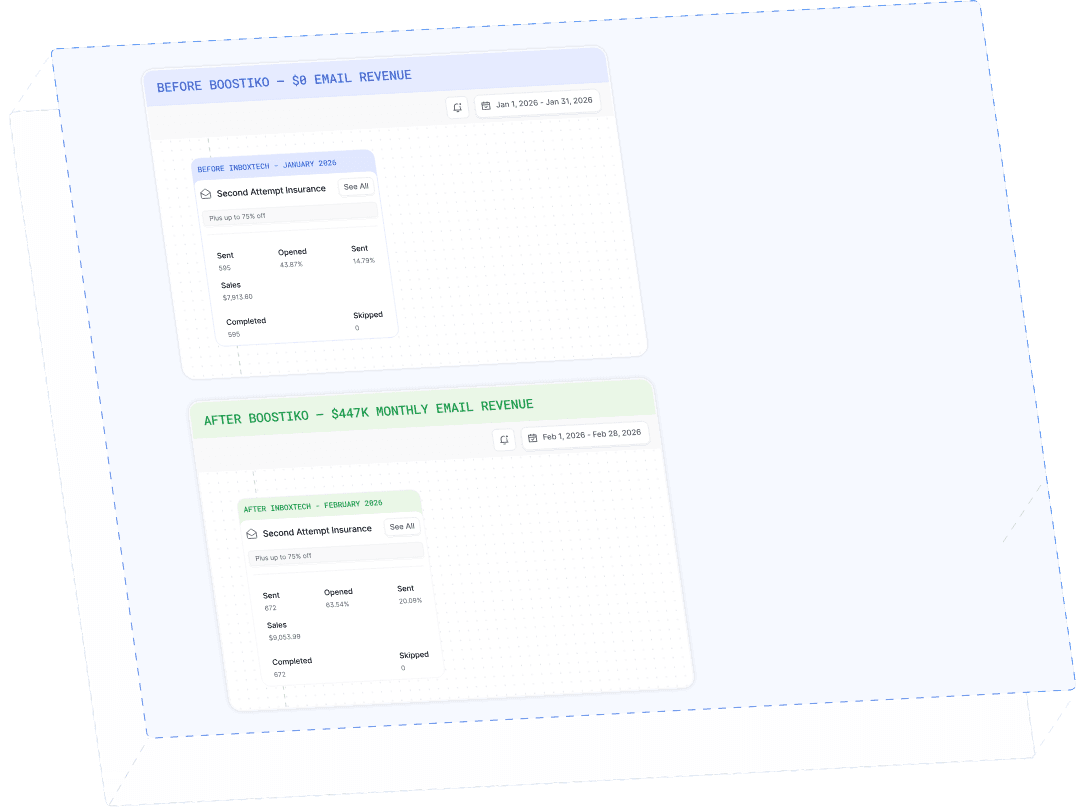
Case Study 01
Leading Prop Firm
$0 - $447K in 3 months
40.7% of total revenue
14 days time to first revenue
$0 to $447,115/month in Added Revenue in 90 Days