•
Boostiko Team
Email Marketing for Web3 Brands
Email marketing for Web3 brands should make the next legitimate customer step easier to understand. It should not turn a wallet, token, protocol, marketplace, or crypto service into a promise of returns, access, or approval.
That distinction is where many programs break. A brand may have a community calendar, launch announcements, social posts, and a list of addresses, yet still lack a lifecycle. The person who joined a waitlist, the customer who needs an account-access notice, the user who completed onboarding, and the subscriber who wants product education are placed into the same promotional audience. The inbox receives pressure when it needs clarity.
For Web3 teams, this is not only a conversion problem. It can be a compliance and trust problem. Rules vary by product and market. In the UK, cryptoasset promotions to consumers are subject to the financial promotions regime when in scope, including an overarching requirement for communications to be fair, clear, and not misleading.1 In EU contexts covered by MiCA, a crypto-asset marketing communication may require prescribed language and, where a white paper is required, cannot be disseminated before that white paper is published.2 The answer is not generic small print. It is a lifecycle that can be reviewed against the real product, audience, jurisdiction, and claims.
This is practical marketing guidance, not legal advice. Qualified legal and compliance reviewers should assess product classification, markets, recipient eligibility, privacy basis, risk disclosures, incentives, and final claims before launch.
The business problem: product attention is not customer progression
Web3 teams rarely lack reasons to communicate. The hard part is deciding who should receive a message, why it is useful now, and whether it belongs in a marketing program at all.
Someone can request a resource, join a waitlist, create an account, activate a product, contact support, or opt out of promotion while still needing a service notice. Those states have different needs and permissions. Treating them as one list makes every message less relevant.
Mixing operational and commercial communication makes the issue worse. A security warning, account-access update, policy change, or incident notice needs factual delivery. Adding an offer or token-related pitch can change how the message should be handled. The FTC says an email that combines commercial and transactional or relationship content is judged by its primary purpose, including the subject line and where promotional material appears.3
Deliverability exposes the weakness. Gmail requires SPF or DKIM for all senders to personal accounts. Bulk senders also need SPF, DKIM, DMARC, low reported spam rates, and one-click unsubscribe for marketing messages.4 The operating lesson is simple: send expected messages, identify the sender, and make leaving easy.
Lifecycle theory: state plus event plus permission
Build the lifecycle from three inputs: the customer’s state, the event that changed it, and the permission that makes a message appropriate. This is more durable than organising email around a weekly promotion calendar.
State is the current relationship with the brand: prospective subscriber, waitlist member, onboarding customer, active user, support case, or marketing opt-out. Use reliable system data, not assumptions about wealth, investing sophistication, or future value.
Event is the action or change that makes a message timely. It could be a resource request, product activation, support resolution, or policy update. It tells the team what question the recipient may have now. It does not automatically justify an email.
Permission determines whether an email can be sent and what category it belongs in. It includes consent or another lawful basis where relevant, message purpose, recipient location, preferences, and suppressions. The ICO explains that valid consent for direct marketing must be clear, freely given, and affirmative, and that people must be able to withdraw it easily.5
Use one decision rule: send only when an approved event meets a defined state and a permitted purpose. The resulting email should answer three questions:
Why am I receiving this now?
What is the one thing I need to understand or do?
How can I act, manage my preference, or get help?
This makes review practical. Product owners validate facts, reviewers inspect the audience and claims, CRM teams test conditions, and creative knows the job before writing a subject line.
Practical implementation: build the control layer first
Do not start in the email editor. Map each targeting field or event to its source, owner, update frequency, allowed purpose, and limitations. Document permission status, source and time, market, account state, preferences, suppressions, and lifecycle timestamps.
Set exclusions before building flows. A global suppression should cover unsubscribes, hard bounces, complaints, legal or policy exclusions, and sensitive support cases. Check it before every automation and campaign. A person who opts out should not reappear because a spreadsheet was uploaded or a partner used a separate segment.
Then launch a compact set of flows.
Welcome and education. Confirm what the person requested, deliver the promised resource, and explain what they will receive. Follow with short, useful education that links to current documentation. Do not lead with high pressure or imply a financial outcome.
Onboarding and activation. Separate practical setup from promotion. Explain access, security basics, where current terms are held, the support route, and the next step. Where a product has financial, custody, token, or crypto-asset features, link to client-approved disclosures and risk information. Do not condense material limitations into marketing copy.
Product education and feature adoption. Use reliable interaction data. Teach one action per email with a factual product explanation.
Checkout or application recovery. Trigger this only after a real, permitted abandoned process. Suppress completed customers and unresolved support cases. Identify the stage, surface a genuine blocker such as a technical or documentation question, and offer help. Avoid manufactured countdowns, false scarcity, value-appreciation claims, or claims that a person will qualify, be accepted, or profit.
Re-engagement. Define inactivity in the system. Ask recipients whether they still want product education, product updates, or permitted marketing. Google recommends confirming periodically that recipients still want messages and considering removal of people who do not read them.4 Re-engagement is list maintenance, not a reason to increase pressure.
The technical plan belongs in the launch plan too. Authenticate each sending domain with SPF, DKIM, and DMARC. Use aligned From domains, secure transport, stable sender names, and a preference centre that offers real choices. Monitor bounces, complaints, unsubscribe patterns, and domain reputation before raising volume. These controls do not promise inbox placement. They create the sender conditions mailbox providers expect.
Agency versus in-house: assign the five jobs explicitly
A complete retention program needs five functions: design, copy, operations, technical integration, and deliverability. The key question is whether each has an accountable owner.
An internal owner has product context, but cannot sustainably cover strategy, creative, operations, integrations, and deliverability alone. An agency provides cross-functional capacity and operating rhythm, while the client keeps product facts, customer data, approvals, and final decisions. The FTC makes clear that an advertiser cannot contract away responsibility for commercial email, and both the advertiser and sender may be responsible.3
A hybrid is often strongest. Keep product truth, jurisdiction decisions, and final compliance approval internally. Use a specialist partner to build and operate the lifecycle system. For the price of one internal hire, Boostiko gives clients a designer, copywriter, operations lead, technical implementer, and deliverability specialist working from one lifecycle plan. Confirm scope and cost through a proposal based on real requirements.
A theory-led teardown: repair the generic launch sequence
Consider a weak launch flow. A visitor signs up for a product update, receives a limited-opportunity pitch, then sees an offer beneath a wallet-security warning. A final-call email goes to everyone, including people with support tickets and promotional opt-outs.
The program has abandoned state, event, and permission. The welcome email ignores the request, claims lack reviewed product facts, the service message is mixed with promotion, and the audience ignores suppressions.
Repair it in order. Deliver the promised update, separate service and marketing templates, and segment confirmed subscribers, active customers, support cases, and opt-outs. Use a campaign approval sheet covering audience, trigger, purpose, product facts, risk links, claims, CTA, markets, exclusions, and approver.
If a planned message relates to a crypto-asset offer or service, add a jurisdiction review before creative is final. The FCA notes that the UK regime covers a broad range of communications, including websites, apps, social posts, and online advertising, not just conventional ads.1 Email is not exempt simply because a person is already on a list. Legal review should decide whether the rules apply and what the message needs.
The repaired program may look less dramatic in a campaign calendar. It is more useful. Every send has a known owner, stated reason, supportable claim, and controlled audience. That is how a team improves a lifecycle without creating a new risk every time volume rises.
The Boostiko solution for Web3 email marketing
Boostiko helps Web3 teams turn fragmented communication into a lifecycle system. Strategy maps states, events, preferences, approvals, and priorities. Design and copy turn approved product facts into clear emails. Operations establish audience rules and QA. Technical integration connects forms, CRM records, product events, and support signals. Deliverability covers authentication, list hygiene, preferences, reputation monitoring, and launch discipline.
We do not provide legal advice, decide regulatory classification, approve financial promotions, or promise revenue, inbox placement, token performance, or a regulatory outcome. We create a practical email system that your internal owners and advisors can review and operate.
If you run a Web3 brand and need a customer lifecycle that is clearer, more controlled, and built for a real operating environment, book a call with Boostiko. Bring your email platform, customer journey, target markets, product documentation, and approval process. We will identify the gap between what your team intends to send and what customers actually receive.
FAQs
Is email marketing suitable for every Web3 product?
Email can support many Web3 customer journeys, but suitability depends on the product, audience, markets served, available permission, and message purpose. Do not use a generic sequence to bypass product disclosures, eligibility rules, or local requirements.
Can we email people who join a waitlist or download a guide?
That depends on the permission collected, what the person was told at collection, the relationship, and applicable law. Confirm the request first. Keep the promised resource or update separate from broader promotion unless appropriate permission and review support the send.
Should we put promotions in security or service emails?
Usually, no. Security, access, account, and policy messages should be factual and easy to act on. Promotional content can confuse the recipient and affect the message’s classification. Use a separate campaign when a promotion is appropriate and approved.
Do SPF, DKIM, and DMARC guarantee inbox placement?
No. They are important authentication controls, not a guarantee. Inbox placement also depends on recipient engagement, complaints, sending patterns, list quality, and mailbox-provider decisions. Build the technical foundation, then monitor it.
What does Boostiko need to start?
We need your email platform, customer journey, source systems, product documentation, markets served, current consent and preference approach, existing flows, and internal approval process. From there, we can build a scoped lifecycle plan with clear ownership.
References
1. Cryptoasset firms marketing to UK consumers, Financial Conduct Authority
2. Article 7: Marketing communications, European Securities and Markets Authority
3. CAN-SPAM Act: A Compliance Guide for Business, Federal Trade Commission
5. Marketing and data protection in detail, Information Commissioner’s Office
Continue reading



Case Study 01
Leading Prop Firm
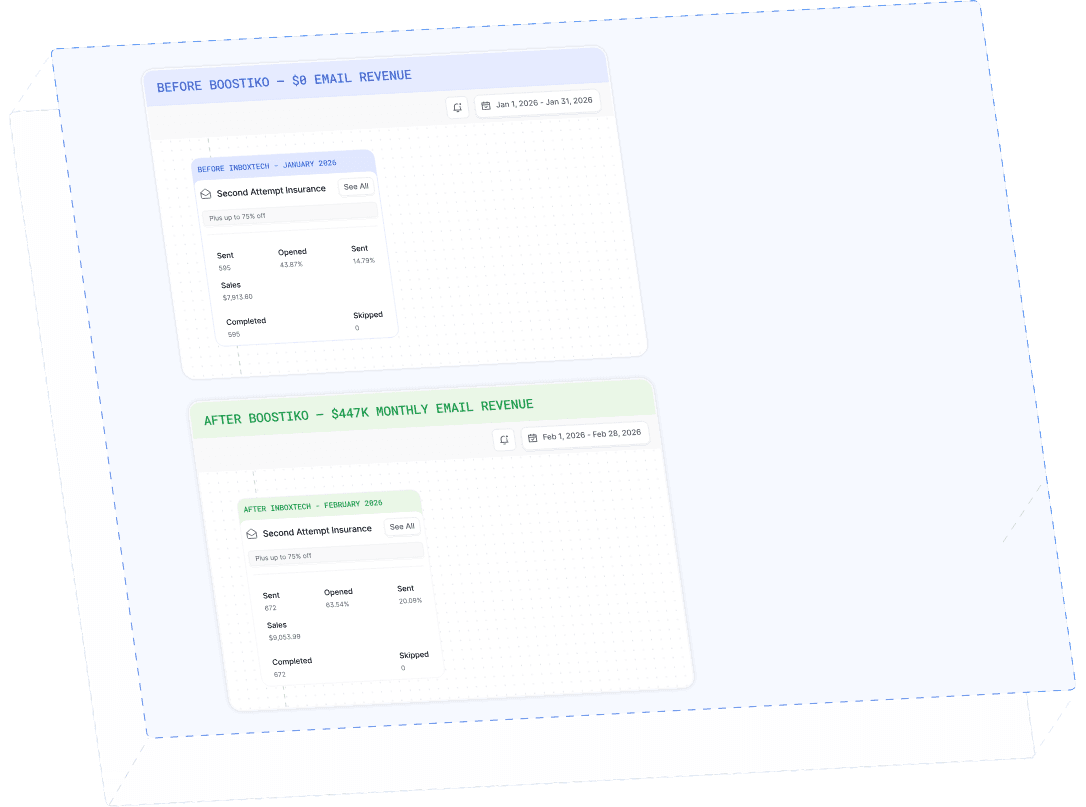
$0 - $447K in 3 months
40.7% of total revenue
14 days time to first revenue
$0 to $447,115/month in Email Revenue in 90 Days