•
Boostiko Team

Web3 Prop Firm Email Operations: Keep Every Update Aligned
Web3 prop firms usually communicate in more than one place. There is email, a community server, a support desk, product pages, account notices, and sometimes social channels. That is useful when every channel tells the same story. It becomes a problem when each team publishes its own version of a rule, launch, or promotion.
A trader may read a short community post, open an email with different terms, then contact support and get a third explanation. The issue is not just poor copy. It is an operations problem.
A strong Web3 prop firm email strategy gives every update one approved source. Email does not replace community. Community does not replace product documentation. Support does not have to guess. Each channel gets a clear role, and every message points back to the same current information.
This guide explains how to run that system. It is not legal, financial, or investment advice. Each firm needs qualified review of its product, customer markets, permissions, disclosures, and promotional claims.
Start with one source of truth
A source of truth is the current, approved place where a team can confirm what is being said. It is not a folder full of old campaign drafts. It is not a message that was posted last month. It is a living record with an owner.
For a Web3 prop firm, the record should cover the details that customers need before they take action. That can include account rules, evaluation steps, access requirements, current pricing, supported markets, event dates, customer support routes, and approved risk language. It should also identify what is not yet approved for public communication.
Give each item a version number and an effective date. When a product rule changes, the team can see exactly what changed and when it should be communicated. This helps email, community, support, and product teams avoid publishing conflicting messages.
The working rule is simple: no campaign starts from a blank page when the message relates to product facts or customer conditions. It starts from the current approved record.
This does not slow teams down. It removes the time spent correcting messages after they go live.
Give every channel a clear job
A channel is more useful when the customer knows what to expect from it. Email is good for a durable record, a direct explanation, and a clear link to current details. A community server is useful for discussion, reminders, and routing people to official information. A product page is the source for complete rules. Support is the route for individual questions.
Problems start when a quick community post becomes the only place a material update is explained. A short post can announce that something changed. It should not be the only document that explains who is affected, when the change applies, or where a person can check the complete current terms.
Use a basic message map:
Product page or rulebook: complete current information and effective dates.
Email: clear explanation, audience specific context, and a link to the official update.
Community channel: concise alert, discussion guidance, and a link back to the official update.
Support desk: individual help and escalation, not new policy interpretation.
Marketing channels: offers and education for people who are eligible to receive them.
The same update can appear across channels. It should not become a different update each time.
Separate operational email from marketing email
Web3 prop firms often need to send account related messages and marketing messages at the same time. An access notice, a security alert, a policy change, an educational guide, and an offer are not the same thing. Treating them as one message type confuses customers and creates unnecessary risk.
The Federal Trade Commission says the primary purpose of an email determines whether it is commercial or transactional under CAN SPAM. A message that promotes a product may be commercial even when it also includes relationship content. 1
This is a useful design test. If the email starts with an offer, has a promotional subject line, or gives most of the space to selling a product, treat it as marketing and apply the controls for marketing. Do not add an account update at the bottom and call it operational.
Create two separate template families.
Operational templates are for access, security, terms changes, confirmed transactions, and service notices. They should be factual, easy to understand, and connected to the official current information.
Marketing templates are for education, product discovery, new program announcements, and offers. They should go only to people who are eligible to receive marketing and should include the correct unsubscribe controls.
This separation makes the customer experience cleaner. It also makes internal approval simpler because the team knows which review path applies.
Build a change communication brief before publishing
Every meaningful update should begin with a short brief. It can be one page. The value is not the length. The value is that every owner sees the same inputs before copy is written.
The brief should answer these questions:
What changed?
Why did it change?
Who is affected?
When does it take effect?
What action, if any, does the customer need to take?
Where is the complete official information?
Which channels will communicate it?
Is the message operational, marketing, or both as separate sends?
Which customer groups must be excluded?
Who gives final approval?
The brief should also include the approved wording for risk, eligibility, and product claims. If a person writes a community post or support macro later, they use the same approved language.
A simple approval chain is better than a crowded one. The product owner confirms facts. The compliance or legal owner confirms restricted content and applicable disclosures. The lifecycle owner confirms audience and sending logic. The support owner confirms the customer help route. One designated person approves the final version.
Make consent and preferences visible in the workflow
The goal is not to collect a large list that receives every type of message. The goal is to know what people asked to receive and to respect that choice.
The Information Commissioner’s Office says marketing email to individuals normally needs specific consent, with a limited soft opt in for a firm’s own similar products and existing customers. It also says senders must not conceal their identity and must provide a valid contact address for opt out or unsubscribe. 2
For a Web3 prop firm, a practical preference center can separate:
product and program updates
educational emails
events or community news
commercial offers
service notices where applicable
Only show choices that the team can actually honor. Do not offer a category that still sends every campaign. Do not make people log in or complete a survey before they can stop marketing messages.
If you use direct messages in a social channel for marketing, do not treat them as an exception. The ICO says electronic mail rules can apply to social media direct messages as well as email and text messages. 2
Build one suppression list that is shared across email and any other marketing tool. An unsubscribe, objection, complaint, or deletion request needs to reach every relevant sending system. A contact should not stop getting email only to receive the same promotion through a direct message.
Do not let a community message become a pressure tactic
Community channels move quickly. That can be good for announcements and support. It can also tempt a team to use urgency before the full information is ready.
Avoid claims that suggest a person will be guaranteed access, a funded result, a payout, a trading outcome, or a return. Avoid countdowns that imply a product will disappear when that is not true. Avoid a short announcement that hides material conditions behind a vague call to action.
The FCA says cryptoasset promotions in its stated scope must be fair, clear, and not misleading. It also describes specific risk warnings and positive friction for applicable consumer journeys. 3
Not every Web3 prop firm communication falls within the FCA’s rules. That is a question for qualified advisers. The operational lesson is still useful: a campaign should give people a real chance to understand the product before asking them to act.
When you post a community announcement, link it to the full official page. If the announcement is promotional, use only the approved marketing copy. If it is about a product change, state the effective date and route people to the rulebook or support. Keep the community post as a doorway, not a substitute for complete information.
Protect the sender reputation that supports the whole system
When an important account or rule update lands in spam, customers lose access to information they may need. Deliverability is therefore part of operations, not a final technical check.
Google requires all senders to personal Gmail accounts to set up SPF or DKIM. Higher volume senders need SPF, DKIM, DMARC, domain alignment, one click unsubscribe for marketing and subscribed messages, and reported spam rates below 0.3 percent. 4
This does not mean every Web3 prop firm needs the same sending architecture. It means every firm should know which domain sends which type of email, who owns authentication, how complaints are monitored, and how inactive or invalid contacts are handled.
Keep operational mail and bulk marketing mail logically separated. Give each stream a clear sender name and clear purpose. A customer should know whether a message is about account access, support, education, or an offer before opening it.
Also keep links easy to understand. Google says sender information, subject lines, and message content should accurately represent the sender and the message. 4 A confusing redirect chain or generic link does not help the customer or the sender reputation.
Give support a reliable escalation route
Support is often where inconsistent messaging becomes visible first. A customer arrives with an email screenshot, a community quote, and a product page that does not match. The support agent then has to decide which version is correct.
Do not ask support to decide policy in the ticket. Give the team a live escalation route.
For each material change, provide a short support note with the current official link, a plain explanation, an effective date, affected customer groups, a list of questions that support can answer, and a list of questions that require escalation. Update the note when the public source changes.
Review support tickets after a campaign or policy update. If the same question appears repeatedly, the message was probably unclear or hard to find. Improve the official page and the next email rather than writing a longer support macro.
Use a release checklist that can stop a campaign
An effective checklist is allowed to stop publication. If a campaign has no confirmed audience, no current product source, no approved risk wording, or no working unsubscribe route, it is not ready.
Use a release checklist that includes:
current source link tested
audience eligibility checked
marketing suppressions applied
claim and risk wording approved
subject line matches message purpose
community post links to the full information
support brief is live
owner and effective date are included
test send reviewed on desktop and phone
unsubscribe and preference links work
The last two points matter. A technically correct message can still be unreadable on a phone or send a broken link to a customer. Test the actual journey before sending the campaign to the full segment.
In house ownership with a full execution team
A Web3 prop firm must keep ownership of product facts, permissions, customer data, applicable rules, risk disclosures, and final approvals. An agency should not invent or approve those decisions.
The work around those decisions still spans many roles. Someone has to map audiences, build data rules, write and design email, manage the automation, maintain deliverability, coordinate community messaging, test every release, and read the support signal afterward.
Boostiko gives a Web3 prop firm access to the lifecycle strategist, copywriter, designer, technical operator, and deliverability specialist in one team. Your internal team stays in control of the product and compliance decisions. We turn the approved facts into a working communications system.
The Boostiko solution
Boostiko helps Web3 prop firms build email operations that stay aligned when the product moves quickly. We map the customer states, separate operational and marketing messaging, create the preference and suppression logic, build the templates and automations, connect support feedback, and protect the sending reputation.
We do not promise trading performance, funded accounts, payouts, or returns. We help brands communicate clearly and run a stronger lifecycle operation.
If your email, community, product, and support teams are telling different versions of the same story, book a call with Boostiko.
FAQs
Why does a Web3 prop firm need a source of truth for email?
A single approved source keeps product details, effective dates, eligibility language, and support routes consistent across email, community, support, and product pages.
Should a Web3 prop firm send a marketing offer inside an account notice?
It is safer to separate operational notices from commercial offers. A message with a promotional primary purpose may need to follow commercial email requirements even if it also contains service information.
Can community updates replace an email about a rule change?
A community update can alert customers, but it should link to the current official information. Material details should not exist only in a fast moving chat post.
What should a preference center include?
It should include only categories that the firm can honor, such as product updates, educational content, community news, and commercial offers. It should always provide a simple route to stop marketing messages.
Can Boostiko make legal or regulatory decisions for a Web3 prop firm?
No. Boostiko builds lifecycle strategy and execution. The client owns legal and compliance review, product facts, customer permissions, disclosures, and final approval.
References
Continue reading



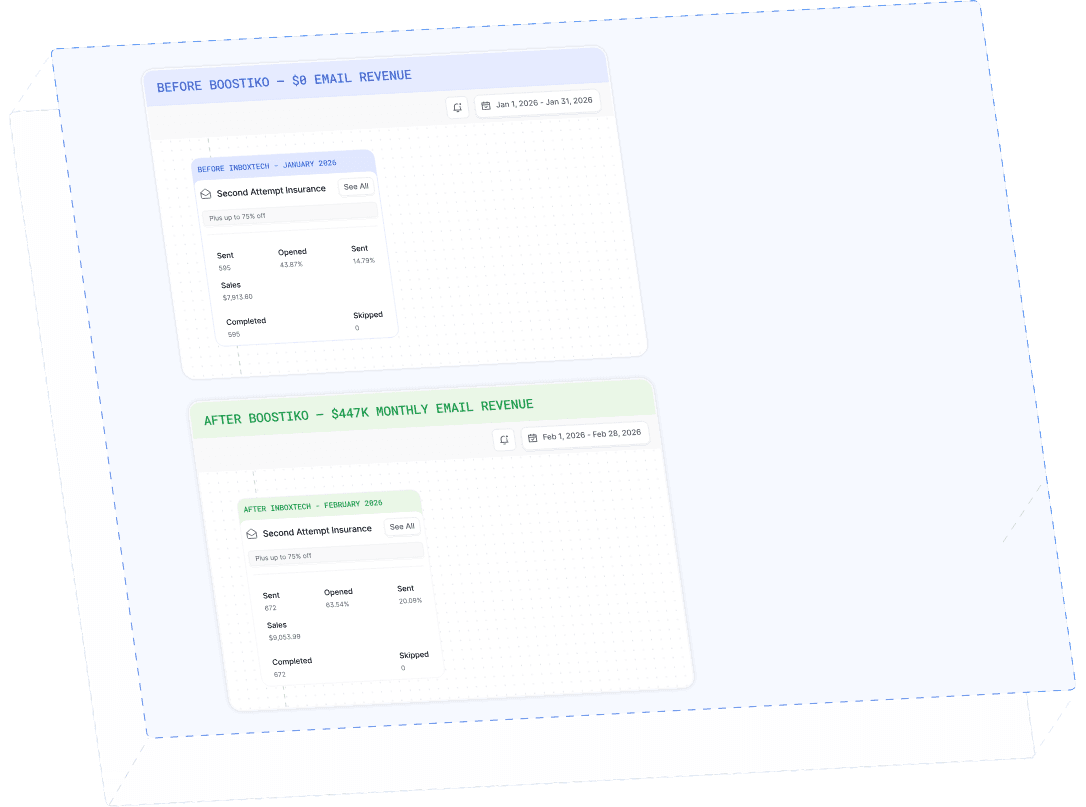
Case Study 01
Leading Prop Firm
$0 - $447K in 3 months
40.7% of total revenue
14 days time to first revenue
$0 to $447,115/month in Email Revenue in 90 Days