•
Boostiko Team

Forex Broker Email Localization: Keep Language, Region, and Offers Aligned
A client selects Spanish, then receives a Spanish promotion linking to an English page. The page displays a different currency, and its offer belongs to another broker entity. The translation may be accurate, but the communication is not.
Forex broker email localization means aligning the message with the reader's chosen language while preserving the rules that determine what they can receive and use. It covers copy, destinations, subscriber controls, technical rendering, and offer approval. Changing the words is only one part.
Keep language separate from eligibility
A language preference answers one question: which language does this person want to read? It does not establish residence, the entity serving their account, available products, or marketing permission.
Keep these as distinct records:
Preferred communication language.
Residence and applicable regional restrictions.
Serving entity and account relationship.
Product access and offer eligibility.
Marketing subscription status and category preferences.
A French speaker could live outside France. A client travelling abroad could open an email from a different country without changing residence. Neither situation should automatically alter the offer they receive.
Use the broker's approved records and eligibility rules for commercial decisions. If a required field is unresolved, hold the promotion rather than selecting a permissive region from the language setting. Localization should not bypass an existing restriction.
Ask for preferences instead of guessing
Let subscribers choose their language through a clear preference control. Make the current choice visible and explain which communications it affects. A label such as “Email language” is clearer than an unexplained flag.
IP location and browser language may provide a suggestion, but should not silently replace an explicit choice. They also should not determine residence, consent, or product access.
Keep preference changes distinct from subscription changes. Switching from English to Arabic must not subscribe someone to promotions, remove a suppression, or restore an opted out category. Google advises senders to obtain recipient opt in and not subscribe recipients by default; these are provider expectations, not a universal statement of consent law. 2
Translate approved meaning, not unfinished copy
Start from one approved source version. Include the subject, preheader, body, button labels, offer terms, risk text, footer, and linked destination copy in the review package.
Give translators a glossary covering product names, account terminology, financial terms, currencies, and words that should remain unchanged. Add context where a literal translation could mislead. “Available balance,” for example, should not become a phrase suggesting money is freely withdrawable if that is not what the source means.
Record the source version, localized version, reviewer, relevant entity, and approval date. When an offer changes, identify every dependent language version before sending again.
Machine translation can assist drafting, but a reviewer must check meaning, omissions, and tone. It must not introduce guaranteed profits, remove qualifications, or make a conditional benefit sound certain.
For relevant UK financial promotions, FCA guidance requires communications to be clear, fair, and not misleading, with additional product specific rules potentially applying. 4 This is UK scoped guidance, not universal legal advice. A qualified compliance owner should determine the requirements for the entity, product, audience, and jurisdiction.
Approve offers separately from translations
An approved translation does not grant permission to promote an offer in every market. Treat language review and commercial approval as separate checks.
For each offer, record the permitted entities, audiences, products, dates, and conditions. Match these against the recipient's records before selecting localized content. Review the complete presentation, including whether a prominent benefit is balanced by readable qualifications and risk information.
Do not let a translator substitute a local incentive or remove a condition because it sounds awkward. Return unclear source language for clarification. If the offer is unavailable to a segment, suppress that promotion rather than disguising the difference with softer wording.
Translation does not turn a financial promotion into a nonpromotion. Where UK FCA guidance applies, its expectations extend across media, so email wording still needs the relevant review. 4
Localize the whole reading journey
A localized email should not strand readers at an untranslated next step. Check the destination page, offer details, preference center, unsubscribe confirmation, and help route alongside the message.
The subject and preheader need review together. A short translated subject can still be undermined by an English preheader or unrelated fallback text. Button labels should accurately describe the action and lead to the correct entity's destination.
Help language matters too. If support is unavailable in the selected language, state the available options plainly. Do not promise Spanish support merely because the promotion is in Spanish.
Check subscriber controls for understandable labels and successful completion, not just visual presence. US CAN-SPAM guidance requires clear opt out instructions and honoring opt outs within 10 business days, alongside accurate headers, truthful subjects, and a valid postal address. 3 These are US commercial email requirements, not a complete global permission framework.
For related account communications, see our guide to forex broker KYC verification emails. The same language choice may be useful there, but a marketing translation should not overwrite a separate document or support requirement.
Define fallback behavior before anything is missing
Decide what happens when a translation, destination, or required term is unavailable. Avoid letting the sending platform choose an arbitrary default.
A reviewed fallback language may be suitable when the subscriber understands it and the offer remains valid. Make the fallback clear. If understanding or approval is uncertain, hold the marketing message for review.
Do not substitute another entity's page merely because it has the right language. Do not use missing content as a reason to reset preferences or resubscribe someone. Suppressions and category choices must survive language changes and fallback handling.
Include missing translations and broken localized links in preflight checks, with a named owner who can resolve them.
Remove ambiguity from dates, time zones, and money
“Ends Friday” means little without a date and time zone. Numeric dates can also reverse meaning across locales. Spell out the month where useful and state the applicable time zone for deadlines.
Use unambiguous currency identifiers when a symbol could refer to multiple currencies. Keep the offer currency distinct from a display conversion. If a converted amount is shown, explain its basis and any relevant limitation rather than presenting it as a fixed charge.
Review decimal separators, number grouping, and percentage formatting. A localized format must preserve the actual value. Confirm that deadlines and amounts match the landing page, not just the source email.
Test language markup and real mailbox behavior
W3C's HTML guidance recommends declaring the default text language with lang and marking passages in another language appropriately. It also distinguishes language, character encoding, and text direction. 1
This is guidance for HTML, primarily in a browser context. For email, use appropriate markup as a starting point, then test actual mailbox clients. A lang attribute alone does not ensure correct rendering or accessibility across every client.
Use UTF-8 and check accented characters and non Latin scripts. Test right to left content independently, especially mixed text containing account numbers, currency codes, links, and English product names.
Inspect desktop and mobile clients your audience uses. Look for clipped subjects, long buttons, broken line wrapping, reversed punctuation, and footers that become difficult to read. Test with images disabled so essential terms, actions, and risk information remain available. Check the plain text version too.
Keep sender identity stable and categories distinct
Readers should recognize the broker across languages. Maintain an accurate visible sender identity and a documented From address policy by message category. A localized display name should not conceal the entity or make the message resemble a different organization.
Google recommends consistent From addresses for categories and warns against mixing promotions into receipts. 2 Keep marketing separate from necessary account communications rather than inserting an offer into a service message to reach someone who unsubscribed.
For personal Gmail delivery, Google's guidelines require SPF or DKIM for all senders and SPF, DKIM, and DMARC for bulk senders. Its bulk marketing and subscribed message requirements also include one click unsubscribe at the stated sending threshold. 2 These are Gmail provider rules, not guarantees of inbox placement. Translation does not replace authentication, permission checks, or sender monitoring.
Compare outcomes within the right context
Report results by language and relevant eligible audience, rather than treating every translated version as an identical test. Compare meaningful conversions, destination errors, preference changes, unsubscribes, and complaints.
Use consistent conversion definitions and comparable periods. Account for different offers, audience sizes, products, and approval restrictions before attributing a difference to wording. Label small samples as uncertain.
Investigate practical friction first: wrong destination language, rejected eligibility, confusing currency, or an unsubscribe route that fails. A translated email getting more clicks is not automatically a better result if readers cannot complete the intended action.
For broader relationship measurement, our guide to forex broker retention emails provides related context. Localization still needs its own quality checks, not assumed performance gains.
A realistic localization decision
Consider a subscriber who chooses Spanish, lives in Germany, and has an account with the broker's European entity. This is an illustrative situation, not a reported client case.
The team selects Spanish copy but evaluates the offer using that person's residence, entity, product access, and subscription status. An incentive approved only for a different entity is not sent.
If a permitted offer has a reviewed Spanish email but only an English terms page, the team checks its fallback policy. It either uses a suitable, clearly disclosed approved destination or holds the message. It does not silently redirect to a Spanish page owned by another entity. The language choice remains Spanish, and existing unsubscribe settings remain unchanged.
Where Boostiko fits
Localization works best when copy, design, operations, technical, and deliverability teams share one release checklist. Copy owns meaning, design checks readability, operations verifies recipient rules, technical staff validate links and rendering, and deliverability specialists review sender setup and monitoring. Qualified compliance reviewers retain responsibility for applicable approvals.
Boostiko can help coordinate these disciplines around broker marketing emails, without promising legal compliance, inbox placement, or invented uplift. Contact Boostiko to discuss your localized email production and review process.
FAQs
Does choosing a language establish regional eligibility?
No. Language preference is separate from residence, serving entity, product access, offer permissions, and marketing subscription status.
Can we send English when a translation is missing?
Only under a suitable reviewed fallback policy. If understanding, destination suitability, or approval is uncertain, hold the promotion. Never reset subscription choices.
Is adding lang enough for localized HTML email?
No. It is useful markup, but encoding, text direction, layout, and actual mailbox behavior need separate testing. 1
References
Continue reading



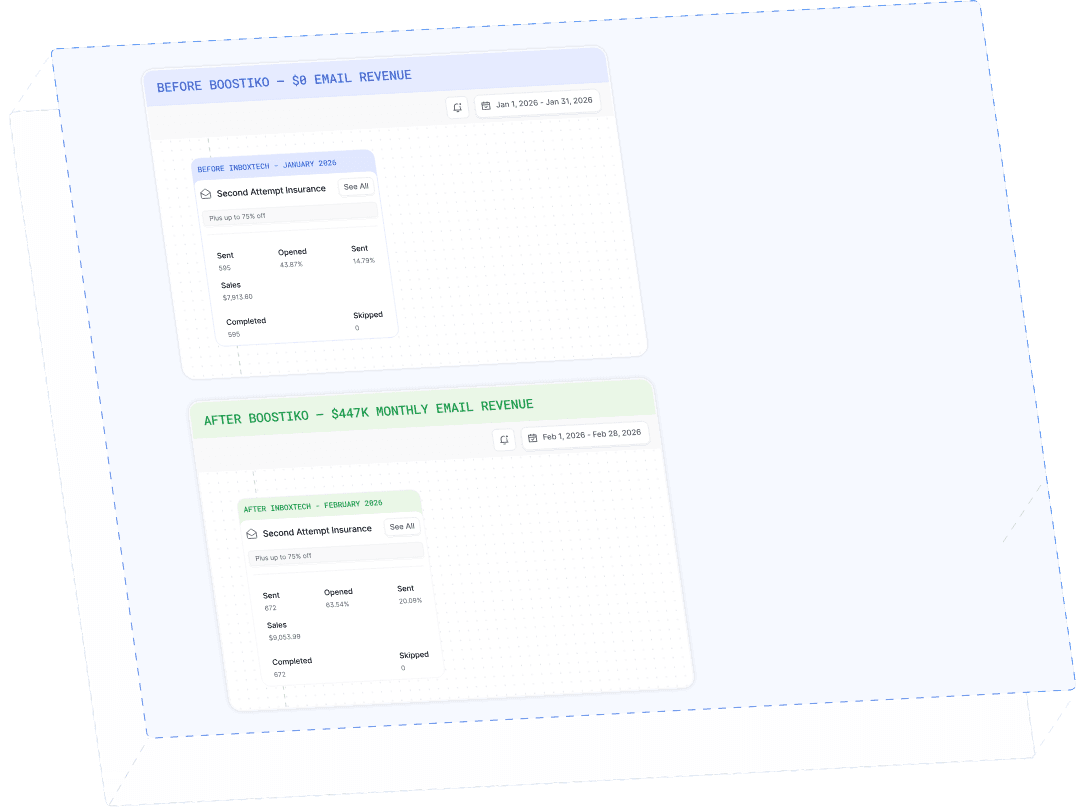
Case Study 01
Leading Prop Firm
$0 - $447K in 3 months
40.7% of total revenue
14 days time to first revenue
$0 to $447,115/month in Added Revenue in 90 Days