•
Boostiko Team

Crypto Prop Firm Email A/B Testing: Choose a Winner Beyond Opens
An email platform can name a winner without answering the question your team actually cares about. More recorded opens do not necessarily mean more people read the account requirements. More clicks do not necessarily mean more valid paid purchases.
Useful crypto prop firm email A/B testing starts before either variant goes out. Define the decision, create a fair comparison and agree on what evidence would justify changing the next campaign. The goal is not to collect a winning badge. It is to learn which message better serves a specific purpose without weakening consent, clarity or account disclosures.
1. Turn one campaign question into one change
Start with an optional marketing campaign, such as an invitation to read an evaluation guide. Do not withhold essential security warnings or account notices to create a control group.
Write a narrow question: does a clearer description of the guide encourage more recipients to visit it? Then change only the element needed to answer that question. Keep the subject, offer, layout, sender and destination consistent if the button wording is the variable.
For a clearly hypothetical test, variant A could say “Read the evaluation guide” and variant B “Review the account requirements.” Both must lead to the same guide page, and both descriptions must accurately reflect its content. This is an illustrative pair, not a reported client result.
Changing the button, discount and landing page together might compare two campaign packages, but it cannot tell you which individual change helped. Keep the first test simple enough that its result can guide one concrete decision.
2. Build a fair audience before splitting it
Choose recipients who have opted into the relevant marketing and are eligible for the campaign. A consistent account stage, product, market and language make the comparison easier to interpret. Start with your crypto prop firm email segmentation rules rather than assembling a convenient mixture of unrelated recipients.
Randomly allocate the eligible audience and enforce one person, one variant. Where a customer has multiple account records, check that those records cannot put the same person into both arms. Record the audience snapshot, allocation method and exclusions, then recheck marketing eligibility before sending.
Keep suppression rules and frequency caps consistent. Do not let one arm bypass a cap or receive extra promotional reminders. Isolate competing campaigns and flows where possible; otherwise, record the overlap.
Preference choices also matter. Your crypto prop firm email preference center should determine which optional messages someone receives, not become an obstacle that testing overrides. Record actual skips and deliveries as well as the planned split.
3. Choose the business metric before launch
For a guide campaign, the primary metric can be the rate of recipients clicking the intended guide link. Specify that link rather than treating every footer or unsubscribe click as success. Clicks are useful signals, but validate downstream behavior before calling them meaningful engagement.
For an optional purchase campaign, a validated paid purchase rate can be appropriate when the platform actually receives an accurate event for the eligible, confirmed payment. An account creation, checkout start or pending transaction is not interchangeable with a paid fee. Confirm the event mapping before selecting it.
Klaviyo reports the chosen winning metric and supports conversion reporting, but the actual conversion metric must be inspected. Do not assume every account has a suitable paid purchase metric available. 1
If the native test cannot select your business metric, document the mismatch. Its automatic winner answers its configured question, not automatically yours. Review the relevant business outcomes separately under a policy agreed before launch, rather than switching to whichever metric looks best afterward.
4. Keep recorded opens in their proper place
Apple Mail Privacy Protection can preload the images used to track opens. In Klaviyo, an Apple Privacy Open value of true identifies an event associated with that protection; it cannot distinguish a human view from an automatic load. A false value does not prove that a person read the email. 3
Klaviyo allows segment conditions that filter open events using this property. That audience filter does not automatically change the campaign A/B test's winning metric or remove privacy affected opens from its calculation. Inspect the actual test configuration and report. 3
Avoid excluding all Apple users or labelling them unengaged. A recipient may qualify through a recent opt in or a meaningful click instead.
An open focused test can still answer a limited question about recorded opens. However, Klaviyo's open based winning metric includes MPP opens, and a statistical significance label does not turn them into verified human attention. Use that limitation when deciding what the result supports. 2
5. Fix the observation window and campaign context
Write the observation window into the plan before results arrive. Both arms need the same opportunity to generate the chosen outcome, using a documented timezone and reporting cutoff. Allow time appropriate to the decision: clicking a guide and completing a paid purchase are different behaviors.
Do not stop early because one variant briefly leads or receives a purchase first. Repeatedly checking the dashboard and ending at a convenient moment changes the decision rule after seeing evidence. A delivery or safety issue can justify pausing, but record that interruption rather than presenting it as a normal completed test.
Keep sender identity, authentication, frequency rules and surrounding promotions consistent. Avoid unusual periods unless that context is deliberately part of the question. A holiday campaign result need not describe an ordinary week.
Decide whether rates will use assigned recipients or successful deliveries, and record both counts. Compare like denominators and windows, not raw clicks from arms with unequal exposure.
6. Check the real send, not just the mockup
Before launch, inspect desktop and mobile rendering, subject lines, preheaders, button destinations and tracking. Confirm that the intended event appears under the metric you selected. Use authorized test records rather than live customer addresses for internal checks, and keep personal information out of tracking identifiers.
Check the platform's actual allocation, exclusions, skips and frequency settings. Also verify what happens after the initial test: does the tool send a winning variant to the remaining audience, and when? That behavior affects how you will read the report.
Both variants should retain accurate pricing, eligibility conditions, risk terms and required disclosures. Keep unsubscribe access equally visible and functional. Gmail's guidance for personal Gmail recipients includes sender requirements and additional requirements for bulk senders, including one click unsubscribe and a visible body link for marketing or subscribed messages. Those are provider scoped requirements, not a promise of inbox placement. 4
Customer confusion, bounces, complaints and unsubscribes are guardrails. Investigate problems; do not hide costs, remove risk terms or weaken unsubscribe access to improve a result.
7. Treat the winner label as evidence, not permission
Read the counts before celebrating the label. How many people were delivered each variant? How many completed the primary action? Was the difference supported by enough relevant outcomes to justify the proposed change?
Klaviyo's win probability concerns which variation has the highest chosen rate based on observed data. Its labels include statistically significant, promising, not significant and inconclusive. A highest performing variation can still be selected without statistical significance. The platform's classification uses delivery counts and win probability; it is not a universal sample rule for paid conversions. 2
That distinction matters for smaller audiences. Sparse purchase outcomes do not become strong evidence because a dashboard displays a leader. Nor does a vendor probability guarantee that the same variant will win future campaigns.
An inconclusive result is a legitimate outcome. Keep the clear, compliant control or plan a fresh test within the same eligible cohort and similar context. Do not add suppressed, nonconsenting or different account stage recipients merely to chase a label. Record why the evidence was insufficient and what a planned retest would change.
8. Separate the original test from later results
Klaviyo distinguishes the original test period, continuous results from later interactions by the same test group, and a winning send summary for the remaining audience. Those views answer different questions. The continuous view can change as the original recipients act later; the remaining audience's send is a separate exposure. 1
Use the original test window for the decision you planned. Later activity can add context, but label it clearly. Do not compare the winning remainder's total purchases against the smaller original losing arm and call that an A/B result.
Archive the hypothesis, exact variant difference, audience, exclusions, assigned and delivered counts, metric, cutoff and report view. Add relevant complaint or confusion notes and the decision: adopt, keep the control or retest. If later results change your interpretation, preserve the original conclusion alongside the update. This makes email marketing for crypto prop firms a repeatable learning process rather than a collection of disconnected winners.
9. Where Boostiko fits
Boostiko can help turn a campaign question into a practical testing brief, with focused copy variations, consistent design and a review process that separates native platform results from business outcomes. Technical collaboration can establish which events and reports are actually usable before the campaign runs.
If your team needs a clearer testing process, contact Boostiko to discuss campaign planning, copy and email operations. The aim is a decision you can explain, including when the evidence says to keep the control, not a promise that every test will produce a winner.
References
Continue reading



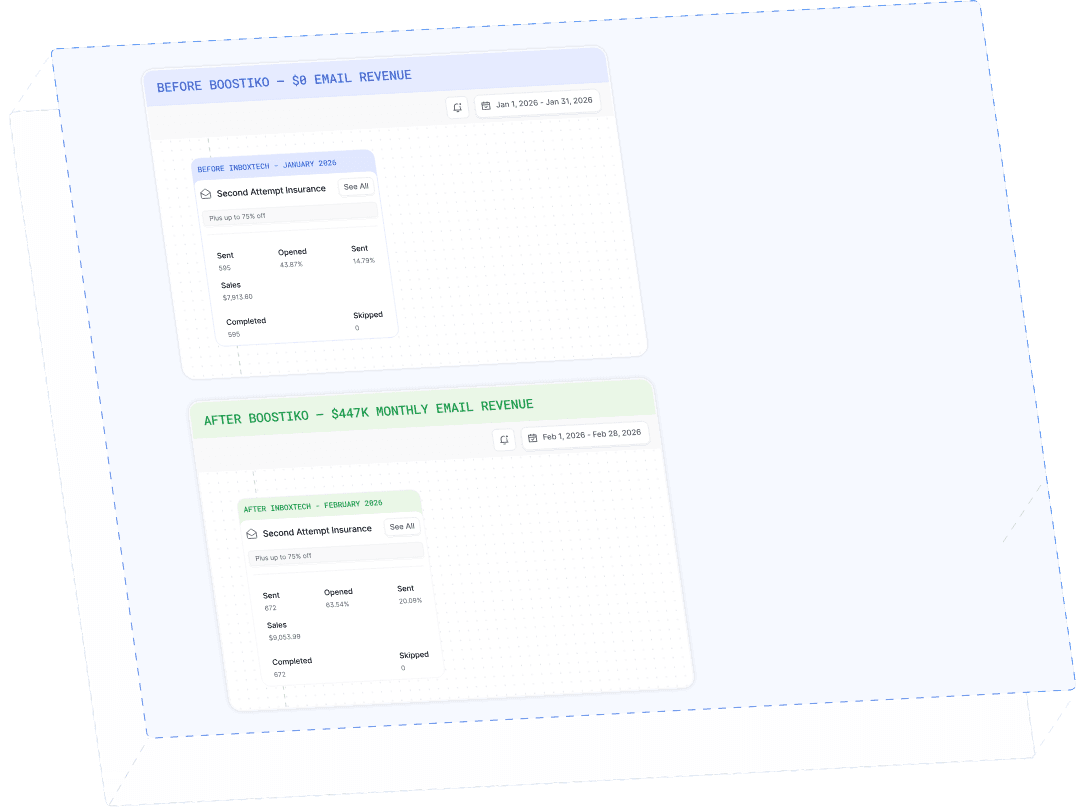
Case Study 01
Leading Prop Firm
$0 - $447K in 3 months
40.7% of total revenue
14 days time to first revenue
$0 to $447,115/month in Added Revenue in 90 Days