•
Boostiko Team

Crypto Prop Firm Email Preferences: Give Subscribers Control Without Losing Account Alerts
A subscriber may want fewer promotions without missing a password reset or evaluation account notice. A preference center should make that distinction clear, not turn an unsubscribe request into a negotiation.
For a crypto prop firm, the challenge is making those choices govern campaigns, automated flows, imports and account messages consistently. That requires message classification, a reliable permission record and checks at the moment of sending.
Here is how to build that system without confusing optional content with necessary alerts.
Separate consent, suppression and preferences
These are three different controls, not interchangeable profile fields.
Marketing consent records whether someone has agreed to receive marketing through a particular channel. An email signup does not grant permission for SMS or WhatsApp. Each channel needs its own permission process and records. A profile that exists in your database is not automatically a marketing subscriber.
Global marketing suppression blocks all marketing email, regardless of topic selections. Other suppression reasons, such as complaints or hard bounces, need separate handling and must not be cleared by preference edits. In Klaviyo, consent and suppression are distinct: even a subscribed profile can be suppressed. Technical eligibility inside a platform does not establish legal permission.2
Preferences describe what an eligible subscriber wants: promotions, product news, educational content or a particular frequency. They narrow the eligible audience. They do not create consent or reverse suppression.
A useful rule is: permission first, suppression second, preferences third. Selecting “Education” must never reactivate someone who previously unsubscribed from all marketing. Resubscription requires explicit new agreement, not a checked topic box.2
Classify messages before building the page
Create a message register covering every campaign and automated flow. For each message, record its purpose, audience, subscription status, owner and delivery route.
Product news belongs with subscription content. A new evaluation product, optional dashboard feature or newsletter about available markets is not automatically a mandatory account alert. Google includes marketing, newsletters and some notifications within subscription messages; requested password resets, receipts and one-time passwords are examples of non-subscription transactional messages.1
Necessary account messages require a specific account or user event, not merely an existing customer relationship. Under US CAN-SPAM guidance, transactional and relationship categories are narrow. Having an account does not make every email operational, and messages mixing commercial and transactional content need assessment.4
Keep promotional blocks out of necessary alerts. Review changes to templates so a discount banner does not quietly alter an operational message's purpose.
For market notices, distinguish an optional roundup from an account-specific notice affecting access. The workflow in crypto prop firm market access update emails provides a related planning framework. Classification still depends on the actual message and applicable requirements.
Show subscribers a small, honest set of choices
Use labels that describe the content rather than internal campaign names. A practical preference center might offer:
Promotions: offers and evaluation product campaigns.
Product news: optional announcements about products and platform features.
Education: guides about platform use and understanding evaluation rules.
Frequency: a weekly summary or a maximum of two marketing emails per week.
Only offer frequencies your sending system can enforce. State whether the limit covers all marketing topics combined. Otherwise, “weekly” can become three weekly emails from three different teams.
Place “Unsubscribe from all marketing emails” beside the topic controls, visibly and without requiring login. Category choices must not replace the stop-all-marketing option. FTC guidance permits category menus but requires a way to stop all commercial messages.4
Explain separately that specific account or security messages may still be necessary. Do not describe this as an unconditional delivery promise or an exemption for every account-related email.
For a Klaviyo implementation, check both account default and list-specific consent pages. Their scope differs: default pages cover segments, multi-list sends and most event-triggered flows; list-specific pages cover exactly-one-list sends and list-triggered flows. Preference fields store profile properties, so the page alone does not enforce sending eligibility.3
Build a backend source of truth
Choose an authoritative permission store rather than letting the website, CRM and email platform independently decide who is subscribed. An ESP may be part of that architecture, but ownership and synchronization rules must be explicit.
Maintain channel-specific consent status with its timestamp, collection source and the notice version shown. Store global marketing opt-out separately from topic selections. Record suppression reason, frequency choice and last qualifying marketing send time. Use a stable subscriber identifier to connect records without treating an email address change as fresh consent.
Preference submissions should update this store through a controlled endpoint. Write the change and an audit event together, then synchronize downstream systems. If synchronization fails, hold affected marketing sends rather than assuming the old state remains valid. Process unsubscribe events immediately in the system.
Keep account state authoritative in the product backend. Whether an evaluation account exists, an access change occurred or a reset was requested should come from that system, not a marketing segment or stale profile property.
Imports must preserve opt-outs and suppression. A newer row containing “Education: yes” is not proof of new consent. Define which fields an import may update, and prohibit it from silently resubscribing or unsuppressing profiles.
Enforce decisions immediately before sending
Audience selection yesterday is not permission to send today. Every campaign and flow needs a final eligibility check close to dispatch.
For marketing, check channel permission, global marketing suppression, applicable delivery suppression, selected topic and remaining frequency allowance. Also check any jurisdiction or product eligibility restrictions relevant to the message. Missing or conflicting permission data should block marketing until resolved.
Apply the same rules to scheduled campaigns, event-triggered flows and staff-created sends. A manual segment should not become a workaround for a blocked recipient.
Reserve frequency capacity atomically when dispatching so simultaneous flows cannot both claim the final available slot. Count messages across marketing topics, not just within each campaign. Decide how delayed messages expire: a time-sensitive promotion should not sit in a queue until its claims become outdated.
For necessary alerts, verify the actual event, recipient and account state through a separate operational route. A marketing opt-out is not itself a reason to remove a required account notice, but that route must not bypass complaints, hard bounces or other delivery restrictions. Establish handling with the provider for each suppression reason. Where permitted, make relevant notices available in the authenticated account interface too.
Use event identifiers for idempotency. Retrying an account event or preference webhook should not send duplicate alerts or undo a newer opt-out.
A hypothetical crypto prop firm workflow
Consider a hypothetical crypto prop firm offering simulated evaluation accounts. This is an implementation example, not a client case study.
A subscriber explicitly joins its email newsletter, then selects Education and Product news with a weekly marketing limit. They leave Promotions off. A separate product event records that they later create a simulated evaluation account.
The next promotion fails the topic check. An educational email can pass if permission remains valid and the weekly allowance is unused. Optional product news competes for that same allowance. A requested password reset follows the operational route because of the request, not because the profile has an Education preference.
The subscriber then chooses unsubscribe-all. The system records global marketing suppression immediately and cancels pending subscription sends. Education and Product news selections can remain recorded, but neither grants permission to send.
Later, a CRM import updates the subscriber's account details. It does not remove suppression. If the person explicitly agrees to marketing again through an appropriate resubscription process, that agreement is recorded separately before eligibility is reassessed. It does not automatically clear complaint or hard-bounce restrictions.
Make unsubscribe and privacy part of QA
Google's Gmail subscription guidance recommends correctly implemented one-click unsubscribe without extra action and honoring requests within 48 hours. The US CAN-SPAM deadline is 10 business days. These are different standards, not interchangeable deadlines; immediate internal processing avoids using either as a waiting period.1 4
Keep the inbox one-click unsubscribe mechanism separate from the preference-page experience. A one-click request should not open a form that requires another confirmation. Google also recommends double consent to confirm addresses, separate subscription and non-subscription From addresses, and a unique list identifier or sender. These are sender guidelines, not guarantees of inbox placement.1
Protect preference pages with secure, unguessable subscriber tokens. Do not put account secrets, trading details or unnecessary personal data in emails or URLs. Store only information needed to establish permission, apply choices and investigate changes. Limit staff access and define retention rules, including the suppression record needed to prevent accidental reimports.
Before release, test these scenarios:
Unsubscribe-all blocks a campaign already queued and every marketing flow.
A topic edit does not restore an unsubscribed profile or another channel's permission.
Duplicate and delayed events cannot overwrite a newer opt-out.
Imports preserve suppression, and complaints or hard bounces remain blocked.
Two simultaneous sends respect one shared frequency allowance.
Default and list-specific pages retain visible unsubscribe-all controls.
Necessary alerts use valid product events without promotional additions.
Retest when flows, forms or integrations change. Country-specific laws and platform suitability require separate review; an ESP configuration example does not establish acceptance of every crypto or prop firm.2 4
Measure control, not just clicks
Track whether preferences were applied successfully, how quickly opt-outs propagated, how many sends frequency limits prevented and whether any marketing reached suppressed profiles. Investigate permission violations as operational defects, not normal campaign variance.
Compare topic engagement only among eligible recipients. Do not report suppressed subscribers as a pool the team should “recover” through ordinary campaigns. The approach in prop firm email revenue reporting can support commercial reporting, while consent and suppression checks remain independent safeguards.
Where Boostiko fits
A preference center works when its copy, design, data and sending rules agree. Clear labels are not enough if an old flow ignores them; correct backend rules are not enough if unsubscribe-all is hidden.
Boostiko's team can bring those operational pieces together: message classification and plain-English copy, accessible preference-page and email design, technical consent mapping and flow checks, plus deliverability review and launch QA. The scope includes testing imports, suppression handling and frequency enforcement rather than treating the page as a standalone creative asset. Legal requirements and provider eligibility still need their own review.
For a crypto prop firm that needs subscriber choices connected to real sending controls, contact Boostiko to discuss the copy, design, technical implementation and deliverability work together.
References
Continue reading



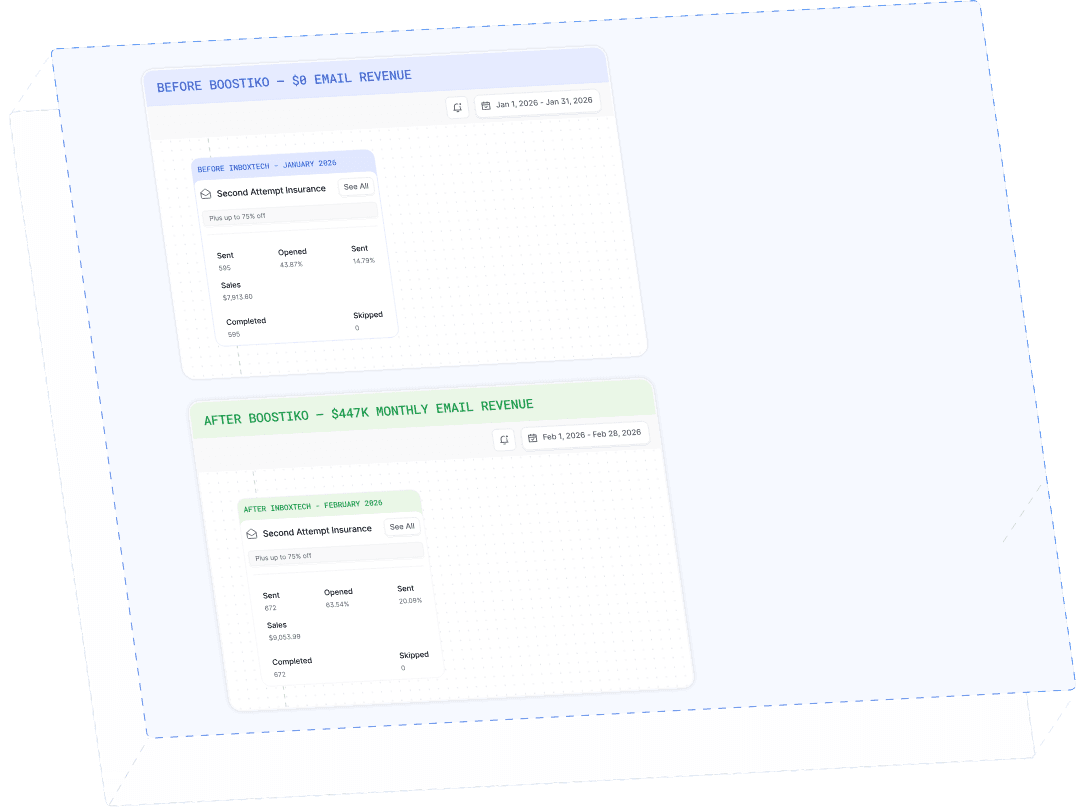
Case Study 01
Leading Prop Firm
$0 - $447K in 3 months
40.7% of total revenue
14 days time to first revenue
$0 to $447,115/month in Added Revenue in 90 Days