•
Boostiko Team

A customer passes an evaluation. Your dashboard shows a result, support asks for another step, and an automated email says the customer is already funded. Then a discount campaign arrives before the agreement is signed.
That is a retention problem before it is a copy problem. The customer needs one clear answer about what happens next.
Retention marketing for crypto prop firms should make the relationship easier to understand. Confirm real milestones, explain unfinished steps, and offer relevant education when the customer wants it. Promotional campaigns belong in that system, but they should not contradict the account experience.
Define what each customer milestone actually means
Start with your own programme terms. Do not copy another firm's definition of funded, verified or eligible for a payout.
HyroTrader provides a useful example of why wording matters. Its current terms say trading is simulated in the Challenge, Verification and Funded Trader phases. Performance rewards are paid in real funds, but calculated from simulated results. Passing the evaluation does not itself create a funded account or a reward entitlement. A separate Funded Trader Agreement governs the next phase and its reward terms. 1
That is HyroTrader's model, not a statement about every crypto prop firm. Your lifecycle copy should explain your own model just as clearly.
Write a short approved description for each step in your programme. For example, evaluation completed means the result has been confirmed. Agreement completed means the required agreement has been signed. Account ready means the customer has actually received access. Those states should not share the same congratulations email.
Give operations ownership of the definitions. Marketing can simplify the language, but it should not invent the account status.
Connect messages to confirmed events
An email click is not proof that someone has completed verification. Opening a congratulations email is not proof that their next account is ready.
Use the system that owns the action to trigger the message. A signed agreement should come from the agreement record. A confirmed evaluation result should come from the account system. A paid reward should come from the payment record.
For each event, retain the customer and account reference, the event time, the programme and the current status. Include the relevant rules or agreement version where it affects the explanation. Send only the information the recipient needs. Keep identity documents and sensitive financial details out of the marketing platform unless there is a justified, secure process for them.
Before sending a queued email, check that its instruction is still true. If the customer has already signed, cancel the signing reminder. If support has placed an account under review, stop an automated message that assumes everything is ready.
Also give each event a unique reference. If an integration retries the same event, it should not send the same notice twice.
Treat payout communication as a sequence, not a sales opportunity
A payout request received, a payout approved and a payout paid are different things. Customers should not have to guess which one an email means.
HyroTrader's terms state that payout schedules, minimums, currencies and payment rails belong to the applicable Funded Trader Agreement. Verification is a payout condition, and compliance checks can delay or withhold rewards. Those details cannot be replaced with a universal promise of instant payment. 1
Use the customer's actual agreement and recorded status. A request receipt can explain where to check progress. An action required notice can explain the secure next step. A payment confirmation should only go out after the payment has been confirmed.
Here is an illustrative service message, not a claim about a particular firm's payout process:
Your payout request has been received. It has not yet been approved. Open your account through your saved bookmark to check the current status and any required steps. The payout terms in your agreement apply. If something looks wrong, contact support through the account area.
The next action is clear. There is no invented deadline, payment promise or offer for another challenge.
Make legitimate messages easy to verify
Crypto customers are familiar with fake account alerts. Your legitimate lifecycle emails should not train them to follow the same pattern as a scam.
Kraken's security guidance identifies urgent account alerts and withdrawal messages leading to fake sign in pages as phishing examples. It recommends opening the platform independently and checking the domain. It also says Kraken will not ask customers to share passwords, two factor authentication codes or seed phrases, or pay to release funds. These are Kraken's stated practices. 2
Document your firm's own security policy before making promises about what your team will never request. Then use consistent sender names, recognisable domains and a clear account route across onboarding, support and payout notices.
Where sensitive action is required, tell customers how to reach the known account area independently. Do not ask them to reply with credentials or identity documents. Use the firm's approved secure verification process.
Our guide to crypto prop firm security emails covers the message details. The retention task is to apply that standard throughout the relationship, not just to a single security template.
Keep customer help separate from optional marketing
An account customer and a marketing subscriber are not the same status. Build the distinction into your contact records and sending rules.
The UK ICO says purely administrative or customer service messages are not direct marketing when they do not promote anything. Adding promotional material can change that classification. A discount inside a payout update is not made administrative by calling the email an account notice. 3
For unsolicited electronic mail marketing to individual subscribers in the UK, consent or a qualifying soft opt in is required. An existing customer relationship alone is not enough. Other markets have their own rules, so review the actual audience and jurisdiction rather than treating this as a global checklist. 4
Let people choose optional education topics and promotional frequency. Keep a clear unsubscribe route. Do not require marketing signup to receive necessary account administration.
A customer who wants platform tutorials may not want weekly offers. Someone waiting for an account review may need support, not another campaign. Our crypto prop firm email preference center guide explains how to make those choices usable.
Use quiet periods to offer help without trading pressure
Inactivity can mean many things. A customer may be busy, unsure how to access the platform, or choosing not to trade.
Do not turn every quiet account into an urgent offer. First check whether there is an unresolved access issue or support request. If an optional help message is appropriate and permitted, point to the relevant instructions and let the customer decide whether to use them.
Avoid making a loss, drawdown or failed evaluation the trigger for a reset discount. Do not tell someone to buy again to recover what they lost. Keep any future offer separate, permission based and subject to the firm's eligibility and compliance review.
Useful education can explain the platform, programme rules or support process. It does not need to recommend a trade or imply that another purchase will improve the customer's outcome.
Measure whether the lifecycle is doing its job
Give service messages and promotional campaigns different success measures.
For account help, track whether the intended step was completed and how many customers needed support to understand it. Review duplicate notices, stale instructions and repeated questions. A high click rate means little if the link leads to the wrong account step.
For eligible marketing subscribers, track engagement, opt outs and attributable purchases. Where practical, compare a campaign with a similar group that did not receive it. Separate verified purchases from an email platform's attribution report instead of treating every reported sale as added revenue.
Test one meaningful change at a time, such as a clearer next step or a more relevant education topic. The crypto prop firm email testing guide gives a practical starting point.
Build the system with Boostiko
A retention marketing agency for crypto prop firms needs to handle more than campaign design. The work includes connecting account events, checking message rules, writing clear copy, building templates and maintaining delivery quality.
When comparing an agency with an in house hire, compare the full scope. One person may write campaigns well but still need a designer, operations support, a technical specialist and a deliverability expert. Boostiko brings those roles together with copywriting in one team. Compare the agreed package with the budget for one hire, rather than comparing a complete service with a salary that excludes the rest of the work.
Boostiko also uses InboxTech™, our proprietary software for improving how managed emails reach the inbox, with a focus on Primary rather than Spam or Promotions. Our website reports a +44.8% open rate lift and a +35.8% click rate lift. These are published engagement figures, not inbox placement percentages, crypto specific results or a forecast for your firm. Mailbox providers still decide placement for each recipient. 5
We can help turn your account milestones, support needs and customer preferences into a useful retention programme, then build the campaigns around it.
Book a call with Boostiko to plan a customer lifecycle that makes the next step clear and gives your team a reliable system to run.
References
Continue reading



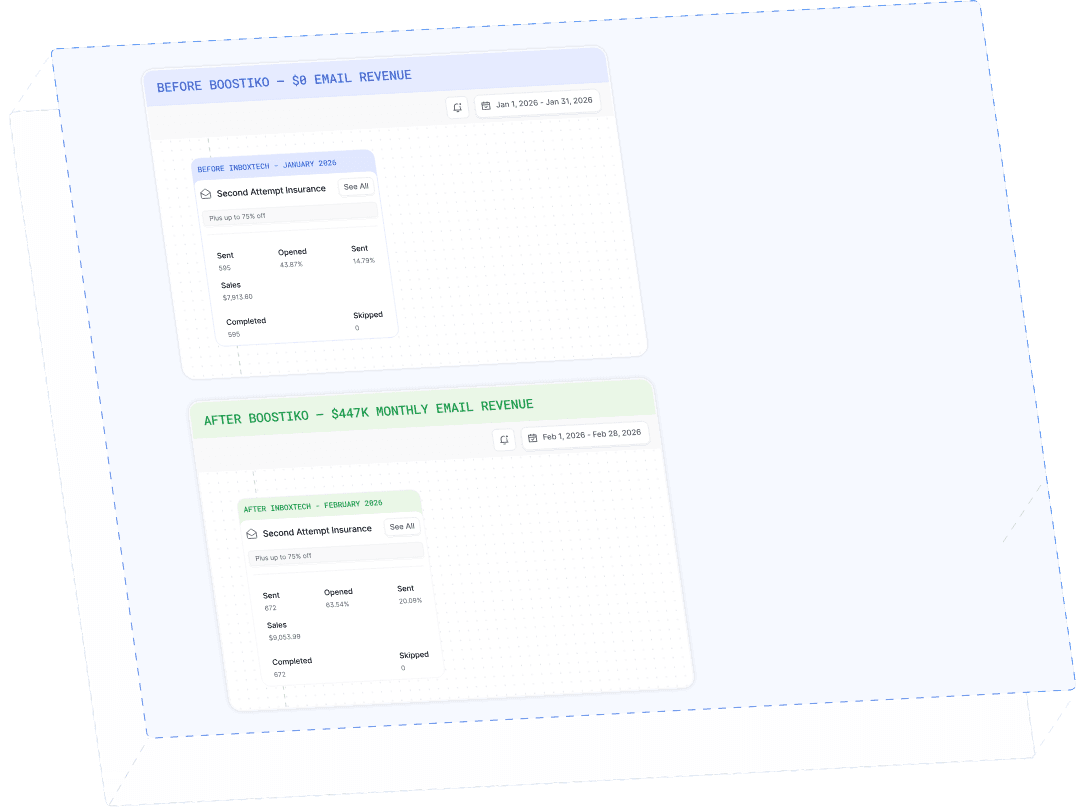
Case Study 01
Leading Prop Firm
$0 - $447K in 3 months
40.7% of total revenue
14 days time to first revenue
$0 to $447,115/month in Added Revenue in 90 Days